
Published Nov 03, 2026 | 7:00 AM ⚊ Updated Nov 03, 2026 | 7:00 AM

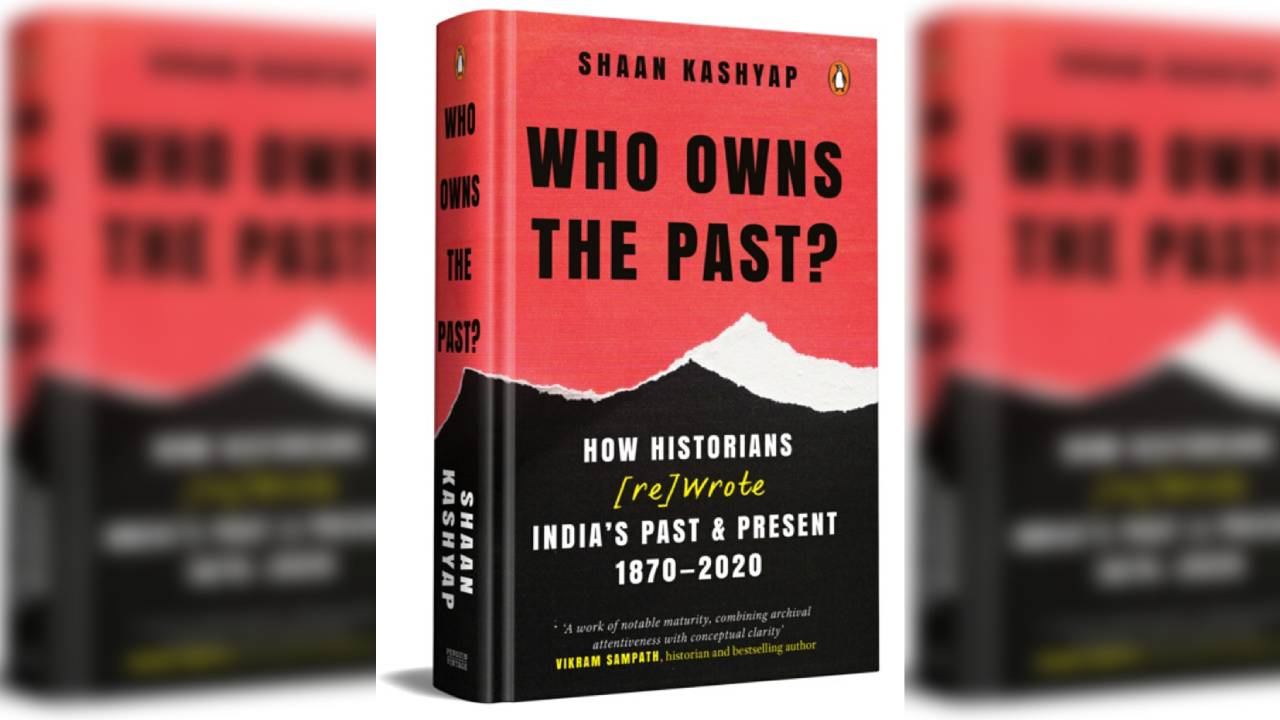
The book asks how historians, institutions and political formations acquired the authority to define the past.

Synopsis: Regional languages have their own historical traditions, archives and arguments. Bengali, Marathi, Tamil, Telugu, Malayalam, Kannada, Urdu, Hindi, Maithili and other literary cultures have produced ways of remembering the past that do not always fit comfortably into national historiographical categories. Local histories, family memories, oral traditions, regional archives and literary works can preserve historical experiences that professional institutions overlook.
Few intellectual disputes in contemporary India have remained confined to the academy. The argument over the past has travelled from archives and university departments into classrooms, courts, newspapers, television studios and, increasingly, social media. Questions about rulers, religions, communities, historical sites and national memory are rarely just questions about what happened. They also ask who has the authority to decide what happened and what that history should mean in the present.
It is this complicated relationship between historical knowledge and political authority that Shaan Kashyap examines in Who Owns the Past?: How Historians [Re]Wrote India’s Past & Present, 1870–2020.
Published by Vintage Books, the 336-page book traces nearly a century and a half of Indian historiography, beginning with colonial and nationalist engagements with the past, moving through the institutionalisation of history after Independence, and ending with the increasingly public conflicts of the late twentieth and early twenty-first centuries.
Kashyap’s central concern is not simply that history has been politicised. That observation is hardly new. His more interesting question is how historians, institutions and political formations acquired the authority to define the past.
Also Read: How Shivani Sibal’s Moms reveals the cracks in a perfect life
The familiar account of India’s historiographical conflicts tends to begin somewhere in the post-Independence period, with the rise of Marxist historians and the subsequent challenge from nationalist historians. Kashyap’s longer chronology makes such a neat division difficult to sustain.
His story begins in the nineteenth century, when colonial scholarship actively classified and interpreted India’s past. Orientalism, archaeology, philology, administrative histories and textbook writing produced particular ways of seeing Indian civilisation. Indian intellectuals did not simply accept these accounts. They contested them, recovered sources and developed their own narratives of India’s antiquity and historical agency.
Nationalist historiography consequently emerged in an uneasy relationship with colonial knowledge. It challenged colonial conclusions while sometimes retaining the categories through which the colonial past had itself been organised. This early encounter is important because it establishes one of the book’s larger arguments: the contest over history did not begin with contemporary electoral politics. The political uses of the past are embedded in the longer history of modern Indian knowledge production.
Also Read: The Grande Matriarch of Malabar explores the fading legacy of the matrilineal household
After Independence, the question changed. The problem was no longer how Indians should respond to colonial representations. It became a question of what kind of historical narrative the new Republic required.
Universities, research institutions, archives, textbook committees and organisations such as the Indian History Congress acquired considerable influence in deciding what constituted legitimate historical knowledge. The state was an important patron of this intellectual infrastructure. New approaches to economic history, social history, agrarian relations and the experiences of groups outside political elites broadened the discipline. Still, professional history also became increasingly connected to the institutional life of the Republic.
This is among the book’s most useful contributions. Historiographical debates are often presented as clashes between individual historians and their ideas. Kashyap highlights the structures that give those ideas authority. Departments, fellowships, research councils, conferences, publishing houses and textbooks are not neutral spaces. They determine which questions receive attention, which scholars become influential and which interpretations travel beyond the academy.
The publisher describes the book as an examination of how textbooks are crafted, institutions influence memory, and political shifts leave their imprint on national narratives. Kashyap’s extended historical account gives these questions a much larger context.
The book therefore asks us to look not only at historians but also at the institutional architecture within which historians work.
Also Read: Reclaiming human agency in the age of artificial intelligence
This becomes particularly consequential when history leaves the seminar room and enters political controversy. The Ayodhya dispute is perhaps the most obvious example, but Kashyap’s larger narrative suggests that the process began much earlier.
Once historians are invited to testify before courts, participate in public campaigns, sign statements, intervene in textbook controversies or appear in mass media, their professional authority acquires a different character. They are no longer simply interpreting evidence for other scholars. They are participating in arguments whose consequences extend well beyond the discipline.
Kashyap is most effective when he examines this uncomfortable position without reducing historians to political representatives. The question is not whether historians have political opinions. They inevitably do. The more difficult question is what happens to historical method when scholarly authority becomes part of political mobilisation.
This also complicates the familiar picture of an intellectually uniform academic establishment. Kashyap’s attention to dissenting voices, including the interventions of Majid Hayat Siddiqi, shows that historians themselves have disagreed over the limits of political engagement. Such disagreements matter because academic communities are often presented retrospectively as more unified than they actually were.
The book’s strength here lies in its refusal to turn historiography into a simple contest between heroes and villains. It asks us instead to examine the choices, silences and institutional loyalties of historians themselves.
Also Read: The Stolen Necklace — extraordinary story of an ordinary Malayali who lost 54 days of his life
Perhaps nowhere is the political character of historical knowledge more visible than in the school textbook. For many Indians, the textbook is the first organised account of the country’s past. What appears in it, what disappears from it and how particular events are described can influence the historical imagination of entire generations.
Kashyap’s treatment of textbook controversies consequently acquires significance beyond curriculum policy. The textbook becomes a meeting point between scholarship and citizenship. It is where academic interpretations become narratives for young citizens.
The difficulty is that historical scholarship is inherently open to revision. New evidence can change an interpretation; previously marginalised sources can alter an established account. Political revision often operates differently. It may demand clarity, certainty and symbolic affirmation precisely where historical inquiry finds contradiction and ambiguity.
This tension helps explain why textbook controversies become so emotionally charged. They are not simply disputes over paragraphs in a schoolbook. They concern the kind of national memory that a society wishes to transmit.
Also Read: The Sunday Book Bazaar: When the pavement became a library
The book’s national institutional focus, however, also leaves an important question insufficiently explored. India’s historical imagination has never been produced only in Delhi, in English-language universities or through national research institutions.
Regional languages have their own historical traditions, archives and arguments. Bengali, Marathi, Tamil, Telugu, Malayalam, Kannada, Urdu, Hindi, Maithili and other literary cultures have produced ways of remembering the past that do not always fit comfortably into national historiographical categories. Local histories, family memories, oral traditions, regional archives and literary works can preserve historical experiences that professional institutions overlook.
This absence matters particularly in a book asking who owns the past. Ownership is not exercised only by professional historians.
Communities also construct historical memory, sometimes through literature rather than scholarship, sometimes through oral transmission rather than archives. Regional political movements have likewise produced their own historical vocabularies, often challenging narratives produced by national institutions.
A fuller engagement with these vernacular traditions would have made Kashyap’s argument even more expansive. It would have shown that India’s history wars are not merely battles between academic schools or ideological camps. They are also contests between different linguistic and regional ways of remembering.
Also Read: Register Me as Kulbhushan: The long search for belonging
There is a productive tension at the heart of Who Owns the Past?. Historians have frequently criticised political actors for instrumentalising history, yet historians themselves have sometimes entered political struggles over historical interpretation. Kashyap neither excuses nor demonises them. He asks what happens when the professional historian becomes a public actor.
That question has acquired another dimension in the digital age. The authority once exercised by universities, journals and established historians has been dispersed across digital platforms. More people can access archives and historical material, but this has also blurred the distinction between evidence, interpretation, memory and assertion.
The challenge, therefore, is not to imagine a past untouched by politics. Such a past probably never existed. The challenge is to preserve standards by which historical claims can be tested.
This is where Kashyap’s book moves beyond familiar history wars. It asks us to think about historical authority itself. Who decides which sources matter? Who determines what becomes public knowledge? Which institutions acquire the power to certify a version of the past?
Who Owns the Past? does not resolve these questions, and that is perhaps appropriate. Its value lies in making them difficult to avoid.
The past cannot simply be owned. It is inherited, interpreted, disputed and repeatedly reconstructed. Every generation enters an archive already shaped by earlier choices, and every attempt to rewrite history reveals something about the anxieties of the present.
Kashyap’s book is therefore more than a history of historians. It studies how historical authority became part of India’s political life. Its lasting contribution may be its insistence that the historian’s task is neither to possess the past nor retreat from public life, but to remain answerable to evidence while recognising the consequences of historical interpretation.
At a time when competing claims seek to turn the past into political certainty, that distinction matters. History may belong to everyone, but historical claims still require scrutiny. That is where the historian’s responsibility begins.
Title: Who Owns the Past?: How Historians [Re]Wrote India’s Past & Present, 1870–2020
Author: Shaan Kashyap
Publisher: Penguin Random House India
Price: ₹799.00
(Views are personal. Edited by Majnu Babu).



