

Published Nov 17, 2026 | 7:00 AM ⚊ Updated Nov 17, 2026 | 7:00 AM

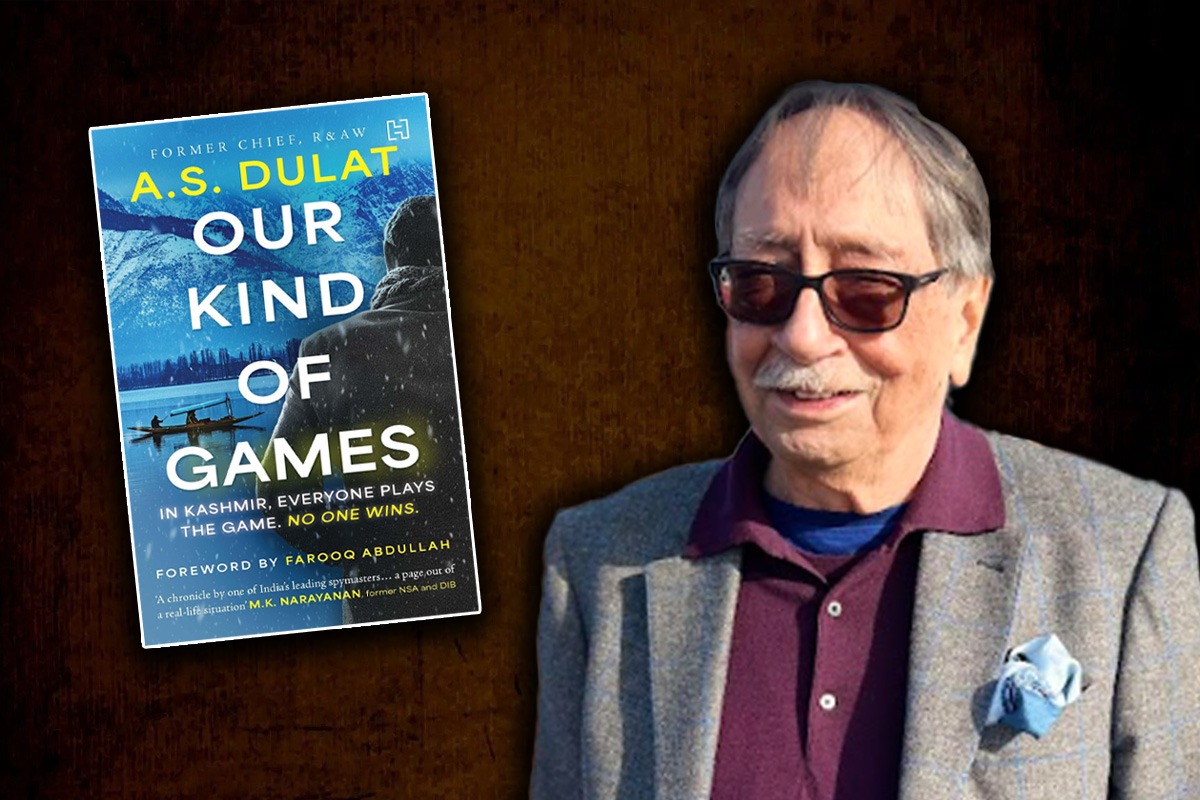
Ex-top spy AS Dulat's Our Kind of Games draws you deep into the Kashmir of the early 90s, to the height of the Pakistani insurgency and infiltration.

If there’s one book that harks back to John le Carré’s enduring masterpiece Tinker, Tailor, Soldier, Spy, it has to be this one – AS Dulat’s Our Kind of Games, peopled with turncoats, double agents and many an Alice Huang. It’s a page-turner. Unputdownable.
Not least because it is the insider’s view of a Kashmir that few first-time visitors, blown away by the sheer beauty of the landscape and the warmth of the Kashmiris, see beyond.
Our Kind of Games is the fifth book by India’s top spy since he turned author some ten years ago.
What sets it apart is how, in breaking with his previously preferred non-fiction narrative rooted in events in the public domain when he served as top adviser in the Vajpayee government, Dulat treads a perilous but captivating new path.
Like Tinker, Tailor…, Our Kind of Games is about an ageing spymaster and the shadowy world of espionage that he inhabits. And author Dulat, in this, his first book of fiction, sails so close to the real world that you can all but identify not just his fictional doppelganger, but many of the spies and spooks and double agents and the seductive honey-traps who jump out of the pages.
Our Kind of Games is a clear departure from the backroom diplomacy of books past like The Spy Chronicles that he co-wrote with Pakistan’s intelligence chief Asad Durrani and A Life in the Shadows. Dulat’s compelling turn to fiction not only mirrors reality, with many of the characters eerily familiar, but the main protagonist, Ranjit Soni, the top dog in Kashmir who runs the intelligence operation in the state, is just short of a tortured self-portrayal.
Ranjit Soni is the ‘Spymaster’, aka ‘Mr. Kashmir’, the popular nickname used by the rank and file in the Research and Analysis Wing (R&AW) for Dulat when he headed the counter-intelligence unit.
And the book draws you deep into the Kashmir of the early 90s, to the height of the insurgency and infiltration by Pakistan – which, as the Baisaran Valley attack that claimed 26 lives in 2025 showed, continues to this day – when young Kashmiris were targets, pressed to choose sides, becoming martyrs to a lost cause; and in the case of the Pandit community, fleeing their homes.
Many of Dulat’s insights into Pakistan’s strategy on Kashmir still hold true. Ranjit Soni mouths the popular credo that Pakistan ‘cared more about bleeding India than freeing Kashmir’ and how deeply embedded Pakistan’s intelligence agencies were in the heart of the Kashmiri capital, Srinagar. ‘Pakistan wasn’t just supporting militancy from a distance but had people on the ground…’
It’s Dulat’s lived experience of the Kashmiri informants, shepherded to safe houses, only for the Pakistan Inter-Services Intelligence (ISI) agents tapping ‘the boys’ to bump them off, and the trail of blood and bodies – the portly Qureshi; Shahbaz, the insider; the suave Imran – that makes this book a ticking bomb.
As Dulat writes, “Guilt is harder to contain than fear… and in Kashmir, both were fatal.”
His protagonist Soni’s take on Kashmiris being more pliable but also more complicated is another telling insight. “The Kashmiris were more sophisticated in their evasions. They told you partial truths, truths wrapped in lies, lies that contained seeds of truth. You had to learn to listen for what wasn’t said, to read the spaces between the words…”
One of the more unnerving chapters in the book is Soni surviving an actual assassination attempt and admitting it was a message that they knew where he was at all times. “They were always watching,” he writes. Dulat, drawing from real life?
In a perceptive foreword about the haunting sorrow that the book leaves you with, former Chief Minister Farooq Abdullah says ‘Our Kind of Games’ is that “rare book on Kashmir that doesn’t reduce Kashmiris to victims or villains… Kashmir deserves to be understood…”
But can they? Who is the real Kashmiri?
There’s Soni passing the buck, blaming the CIA for entrapping Kashmiris, saying, “It suits the US and the CIA to keep the terror trap open… and use Pakistan as a proxy.”
And there is the shikariwala on Dal Lake who tells Soni – of a Kashmir that is “beautiful and broken… paradise and prison… but still home…”
And where everyone plays the game, but no one wins.
Also Read:
Who is a Kashmiri? The contradictions in Pakistan’s Kashmir discourse
Sixth extinction: Humanity’s assault on Earth’s biodiversity
(Neena Gopal is a senior journalist and author of ‘The Assassination of Rajiv Gandhi’. Edited by R Rajesh Kumar.)



