

Published Jul 12, 2026 | 11:00 AM ⚊ Updated Jul 12, 2026 | 11:00 AM

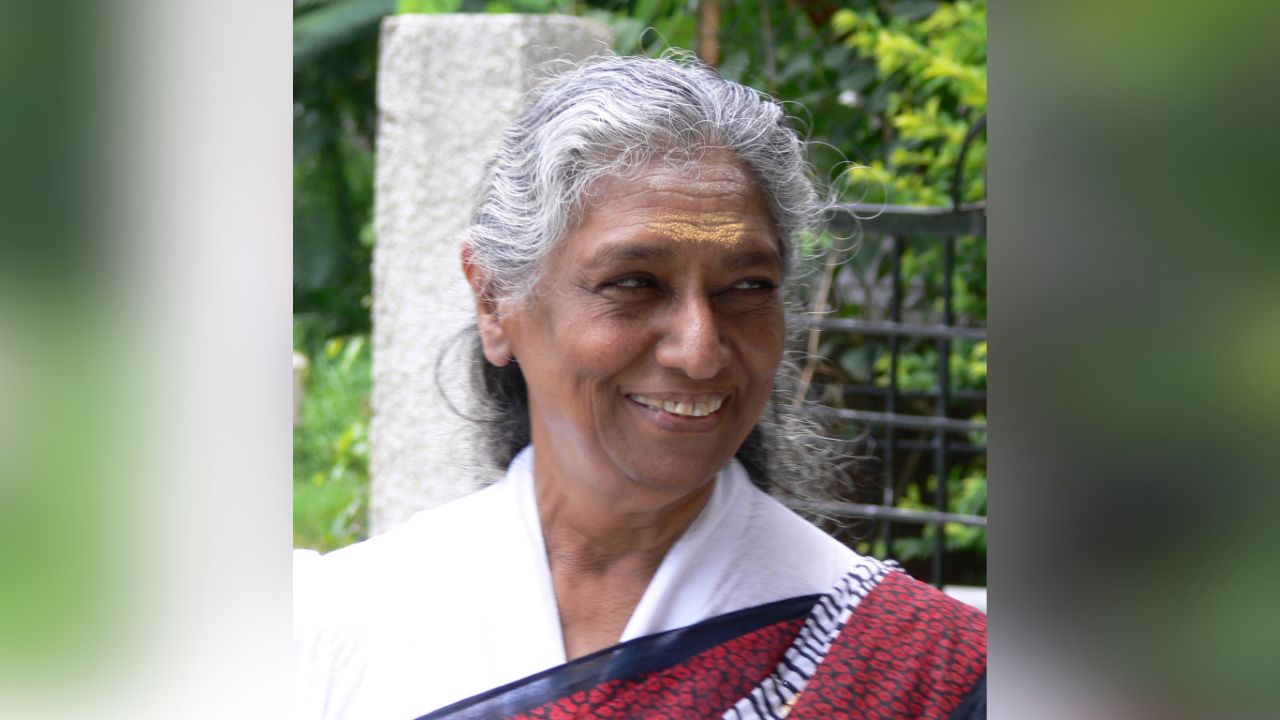
S Janaki.

Synopsis: The passing of S Janaki marks not merely the end of a profound musical career but also the close of one of the most remarkable chapters in India’s modern cultural history. Janaki gave psychological depth to fictional lives through voice alone. Whether singing for a village girl, a queen, a grieving mother, a mischievous child, or a woman discovering love, she altered not just her pitch but her very vocal personality.
With the passing of S Janaki, widely known as Janaki Amma, India marks not merely the end of a profound musical career but also the close of one of the most remarkable chapters in its modern cultural history.
Few artists have so completely dissolved the boundaries of language, region, genre, and generation as she did. For more than six decades, her voice accompanied the emotional lives of millions, becoming inseparable from the memories of childhood, romance, devotion, separation, celebration and grief across South India and far beyond.
Her death on Saturday, 11 July, at the age of 88 leaves behind an inheritance that cannot be measured by the astonishing number of songs she recorded in more than 18 languages, nor even by the many honours she received. It lies instead in the rare capacity of her singing to disappear into the emotional truth of every composition, making listeners forget the singer while remembering the song forever.
Indian playback industry has produced many gifted voices, but Janaki occupied a category almost entirely her own. She belonged to that small fraternity of artists who transformed the art from a supporting craft into an independent form of musical interpretation. Cinema required songs that advanced stories, reflected characters, and intensified emotion.
Janaki did much more by giving psychological depth to fictional lives through voice alone. Whether singing for a village girl, a queen, a grieving mother, a mischievous child, or a woman discovering love, she altered not just her pitch but her very vocal personality.
The listener encountered not S Janaki but the character. Such vocal acting remains among the least appreciated yet most sophisticated dimensions of Indian film music, and Janaki mastered it to a degree that few have approached.
Also Read: S Janaki — Southern Nightingale falls silent, but her songs will echo forever
Born on 23 April 1938 in Repalle, present-day Andhra Pradesh, Janaki entered cinema at a time when playback singing was undergoing rapid professionalisation. The decades following Independence witnessed the emergence of large studio systems, increasingly complex orchestration, and an expanding film industry across multiple linguistic regions.
It demanded singers who possessed not only classical grounding but exceptional adaptability. Janaki answered that demand with uncommon discipline. She entered the space without the advantages of metropolitan privilege or family lineage in cinema, gradually building a reputation through relentless work rather than celebrity. What followed was one of the longest and most productive recording careers in world popular music.
Her achievements are widely summarised through statistics, yet numbers scarcely explain her versatility. Recording thousands of songs is impressive; recording thousands that remain culturally alive decades later is extraordinary. Janaki possessed an unusually elastic voice capable of traversing an astonishing emotional and technical range.
She could render intricate classical compositions without sacrificing accessibility, sing delicate lullabies with almost whispered tenderness, execute exuberant folk melodies with earthy authenticity, and inhabit modern orchestral arrangements with equal conviction. Unlike singers whose voices remained recognisably constant across compositions, Janaki reshaped tone, texture, diction and expression according to the dramatic demands of each piece.
Her collaborations with composers represent one of the richest creative partnerships in Indian cinema. MS Viswanathan found in her a voice capable of balancing melodic sophistication with emotional immediacy. KV Mahadevan drew upon her command over classical idioms.
Salil Chowdhury admired her sensitivity to complex arrangements. Ramesh Naidu, MB Sreenivasan, Rajan-Nagendra, Hamsalekha, and many others discovered dimensions of musical expression through her interpretative intelligence.
Yet it was with Ilaiyaraaja that Janaki entered an altogether different artistic universe. Together, they helped redefine the soundscape of South Indian cinema from the late 1970s onwards. As we all know, Ilaiyaraaja’s compositions demanded precision, emotional restraint, effortless modulation, and the ability to deal with intricate melodic architecture.
Janaki met those demands with astonishing ease, producing songs that have since become part of the cultural vocabulary of entire generations. Even AR Rahman, whose musical language represented a distinct departure, continued to rely upon her voice when emotional authenticity mattered more than fashionable novelty.
Her contribution to Malayalam cinema deserves particular mention. Kerala’s musical culture has historically occupied a distinctive position, drawing simultaneously from Carnatic traditions, literary lyricism, and regional folk sensibilities. Janaki entered this landscape as an artist who absorbed its linguistic and emotional nuances with remarkable sensitivity.
Songs such as “Anjana Kannezhuthi,” “Pottatha Ponnin Kinaavu,” “Malarkodipole,” “Manjani Kombil,” “Thenum Vayambum,” “Swarna Mukile,” “Thumbi Vaa,” “Moham Kondu Njan Doore Eatho,” “Kiliye Kiliye,” “Konchi Karayalle,” “Olathumbathirunnuyalaadum Chella Pynkile,” “Akale Akale,” and “Azhakadalinte Ange Karayilai,” among countless others, got woven into our collective memory.
Those who may never have known the names of composers or lyricists nevertheless recognised Janaki’s voice instantly; it became an inseparable part of Kerala’s sonic identity.
Perhaps her greatest artistic achievement lay in language itself. India often celebrates multilingualism as an abstract ideal, but Janaki practised it as lived art. From Tamil classics such as “Senthoora Poove,” “Kaatril Endhan Geetham,” “Putham Pudhu Kaalai,” “Ooru Sanam,” “Inji Iduppazhagi,” “Paadava Un Paadalai,” “Aasai Athigam Vachu,” “Swamikitte Solli Vachu,” “Sundari Neeyum,” “Sundari Kannal Oru Sethi,” “Kanmani Anbodu,” “Malare Mounama,” and “Chinna Chinna Vanna Kuyil,” to Telugu favourites like “Sirimalle Puvva” and Kannada gems such as “Baanallu Neene,” alongside her immortal Malayalam repertoire and beyond, she sang in a remarkable range of languages with astonishing clarity of pronunciation.
Native speakers embraced her as one of their own. She approached every language with meticulous care for its unique rhythm and emotional cadence, demonstrating how artistic excellence could unite a nation without diminishing its linguistic diversity.
Recognition eventually followed, though not always proportionate to her contribution. Janaki received four National Film Awards for Best Female Playback Singer, numerous State awards, and multiple lifetime achievement honours.
Yet public discussion repeatedly returned to the uneasy relationship between artistic merit and official recognition. Her decision in 2013 to decline the Padma Bhushan, stating that the honour had come too late and failed adequately to acknowledge her lifetime’s contribution, generated widespread debate.
Whether one agreed with her position or not, it reflected an artist’s conviction that cultural labour deserved timely recognition rather than ceremonial gratitude at the twilight of a career. It also reopened larger questions about how India values regional artistic excellence within national frameworks.
Janaki herself remained remarkably detached from the machinery of celebrity. She rarely cultivated public spectacle, avoided unnecessary controversy, and allowed her work to speak for itself.
In an age increasingly dominated by visibility, branding, and relentless self-promotion, she represented an older ethic of artistic professionalism. Her retirement from public performances in 2017 was similarly characteristic.
Rather than remaining on stage beyond her comfort zone, she chose to step away while audiences were still celebrating her at the height of her powers. It was a decision grounded not in withdrawal but in dignity.
Also Read: Gana Kokila S Janaki passes away in Mysuru
Janaki’s legacy extends far beyond cinema, for her voice became the unseen companion to life’s most intimate moments, accumulating an emotional biography beyond its aesthetic brilliance as each generation found its own memories in her songs, renewing them through lived experience.
Music historians will remember Janaki as one of India’s greatest playback singers; vocalists will study her breath control and tonal versatility; film scholars will study her role in shaping characterisation, and linguists will study her mastery across languages.
Yet her true greatness lay in her understanding that technical perfection finds its highest purpose only in the service of human emotion; she never sang to impress, but to communicate.
The silence left by S Janaki’s departure is unlike ordinary silence; its echoes will endure through radios, concert halls, streaming platforms and private memories for generations. Even as new technologies and artificial intelligence reshape music and replicate voices, they cannot recreate the lived emotional intelligence and sincerity with which she inhabited every lyric.
Her songs endure because they carry not merely melody but humanity. In mourning Janaki Amma, India bids farewell not only to a legendary singer but to one of its finest interpreters of emotion, whose voice united languages without diminishing their individuality and elevated playback singing into an enduring expression of the nation’s cultural imagination. Adieu, maestro.
(Views are personal.)



