


Published Jul 11, 2026 | 9:43 PM ⚊ Updated Jul 11, 2026 | 10:11 PM

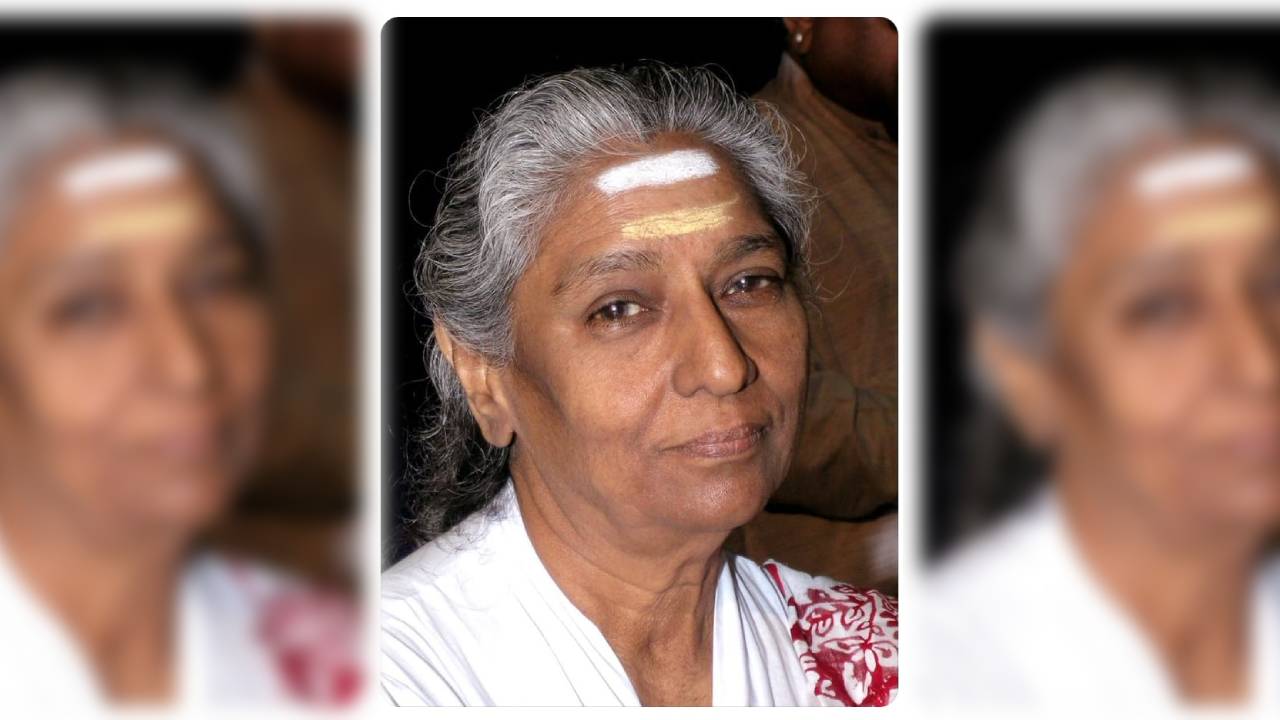
Legendary playback singer S Janaki passed away in Mysuru on 11 July 2026 at the age of 88.

Synopsis: With a voice that could effortlessly move from the innocence of a lullaby to the intensity of heartbreak, S Janaki sang nearly 48,000 songs across 17 languages, becoming one of the most prolific playback singers the country has ever produced.
For generations of music lovers, S Janaki’s voice was more than melody—it was memory.
On Saturday, 11 July, the Nightingale — as she is known — fell silent, even as her mellifluous voice kept reverberating in the inner ears of lakhs of music lovers across countries.
Her demise at the age of 88 at a private hospital in Mysuru marked the end of a remarkable journey that transformed Indian film music for nearly seven decades.
Fondly celebrated as the “Southern Nightingale,” Janaki leaves behind a legacy that few singers in Indian cinema can match.
With a voice that could effortlessly move from the innocence of a lullaby to the intensity of heartbreak, she sang nearly 48,000 songs across 17 languages, becoming one of the most prolific playback singers the country has ever produced.
Though born in Guntur, Andhra Pradesh, Kerala embraced Janaki as one of its own.
Few singers have shared such a deep and enduring bond with Malayalam cinema.
Also Read: Gana Kokila S Janaki passes away in Mysuru
Over the decades, she gave the industry some of its most treasured songs, melodies that continue to resonate across generations and remain inseparable from Kerala’s cultural memory.
Her extraordinary career began in 1957, and what followed was an unparalleled musical journey.
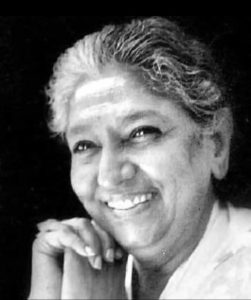
S Janaki (23 April 1938 – 11 July 2026)
Janaki’s crystal-clear voice, impeccable diction and astonishing vocal range allowed her to breathe life into compositions that demanded both technical brilliance and emotional depth.
Whether soaring through difficult classical passages or delivering the gentlest of romantic melodies, Janaki made every song uniquely her own.
Many of her unforgettable renditions have become timeless classics.
Songs like “Thaliritta Kinaakkal Than” from Moodupadam, “Singara Velane” from Konjum Salangai, and “Shiva Shiva Ennada Naaligeyeke” from Hemavathi remain shining examples of her extraordinary artistry.
The stark reality is that it is difficult to imagine these songs in any other voice.
Janaki’s versatility was equally legendary.
Across six decades, she collaborated with virtually every major composer in South Indian cinema—from S Rajeswara Rao, KV Mahadevan, MS Viswanathan and P Dakshinamurthy to Ilaiyaraaja and AR Rahman.
She also shared the microphone with some of Indian cinema’s greatest singers, including Ghantasala, TM Soundararajan, PB Srinivas, SP Balasubrahmanyam, P Susheela, LR Eswari, Vani Jairam and actor-singer Dr Rajkumar.
Her ability to convey every shade of human emotion set her apart.
Romance, devotion, joy, longing, sorrow or maternal affection—Janaki infused each song with remarkable sensitivity.
Her romantic duets, especially those with PB Srinivas and SP Balasubrahmanyam, and her long, celebrated association with composer Ilaiyaraaja remain defining chapters in South Indian film music.
Recognition naturally followed.
During her illustrious career, Janaki received four National Film Awards and an astonishing 32 State Film Awards across Malayalam, Tamil, Telugu and Odia cinema, among numerous other honours.
Yet, for millions of listeners, her greatest achievement lay in the emotional connection she forged through her music.
Her popularity in Kerala inspired extraordinary admiration.
Among her most devoted admirers is Abhilash Pudukad from Thrissur, whose monumental work, Alapanathile Thenum Vayambum, entered the world records as the largest book ever written on a singer.
Published in two volumes spanning around 900 pages, the work chronicles 2,140 Malayalam songs rendered by Janaki, reflecting the extraordinary affection Malayalis have always held for her.
In 2016, Janaki announced that she would no longer accept new recording assignments, feeling that it was time to step away after an extraordinary career.
She chose to honour only a few prior commitments before quietly bringing down the curtain on playback singing.
Her final song for Malayalam cinema, the touching lullaby “Ammapoovinum” from Pathu Kalpanakal, released in 2016, became a deeply symbolic farewell to an art form she had enriched for decades.
The song marked the end of a playback career that had inspired generations of musicians and comforted countless listeners.
Still, her mellifluous voice once again enthralled music aficionados when her 1983 song, “Kiliye Kiliye“, sung originally for the Malayalam movie Aa Raathri, was remixed for the 2025 hit movie, Lokah Chapter 1: Chandra.
Even after retirement, her music continued to find new audiences, proving that great voices never truly fade.
Janaki did not merely sing songs—she gave them soul.
Her voice transcended language, geography and generations, making listeners laugh, cry, dream and remember.
In 2013, she made headlines by turning down the Padma Bhushan, saying the honour had come far too late in her illustrious career spanning more than five decades.
Rejecting the award, she said the affection and appreciation she had received from audiences across different languages over the past 55 years meant far more to her than any official recognition.
“I am declining the Padma Award. I have been singing for the last 55 years, and the love and recognition I have received from my listeners in various languages is the greatest honour for me,” she had then told reporters.
In January 2026, her son, Murali Krishna, died after a prolonged illness.
Also Read: The Ten Commandments of Ilaiyaraaja and Mani Ratnam
The passing of legendary singer Janaki is a far greater loss for Tamil music lovers than for the audience of any other language.
Janaki’s songs are cherished not only by older generations but also by Gen Z music lovers.
She possessed a voice that was at once simple and utterly distinctive. Even when someone with an ordinary or rough voice attempts to sing her songs, drawing breath from deep within and releasing it through the throat with every ounce of effort, the song may or may not sound perfect—but the body instinctively shivers with emotion. That is because the song was first given life by Janaki and her uniquely expressive voice.
Every song she sang carried its own individuality because Janaki could effortlessly transform her voice into that of anyone—a brother, a sister, a mother, a father, a grandmother, a grandfather, or even a little child. She could embody every character through her singing.
There was a time when people believed that any film composed by Ilaiyaraaja would become a success. Yet many have often said that Ilaiyaraaja himself preferred Janaki to sing his compositions and chose her for numerous films because of the depth and emotion she brought to his music.
Although Janaki hailed from Andhra Pradesh, she first sang in Tamil. Her first recording was for the 1957 Tamil film Vidhiyudan Vilaiyattu. The song, composed by T Chalapathi Rao, was never released because the film itself was not released.
Later that same year, Janaki got an opportunity to sing in the Telugu film MLA, directed by Tilak. Under the music direction of Pendyala, she sang a duet with Ghantasala.
The song that established her as a household name was ‘Singara Velane Deva‘ from the film Konjum Salangai, composed by SM Subbaiah Naidu.
With her passing, Indian cinema has lost one of its most treasured artists, but she leaves behind timeless melodies she gifted the world.
The Southern Nightingale may have fallen silent, but her songs will continue to live on—wherever music is cherished and memories are kept alive.
She was honoured with the Kalaimamani Award by the Government of Tamil Nadu in 1986 for her contribution to music.
Vice-President CP Radhakrishnan said Janaki Amma’s extraordinary voice enriched Indian music and touched countless hearts across generations.
“Blessed with a uniquely expressive voice and exceptional versatility, S Janaki Amma enthralled audiences for over six decades with thousands of songs in Tamil, Telugu, Malayalam, Kannada, Hindi and several other languages. She displayed equal mastery over classical, devotional, and folk compositions, leaving an indelible mark on every genre she embraced,” he said on X.
Her songs transcended linguistic and regional boundaries, uniting millions through the universal language of music.
“S Janaki Amma’s passing is an irreparable loss to the world of music and to the nation’s artistic heritage. Through her immense contribution to Indian music, she left behind a legacy that will continue to inspire artists and music lovers alike,” he added.
Tamil Nadu Chief Minister C Joseph Vijay expressed deep grief over the demise of legendary playback singer S Janaki, describing her passing as an irreparable loss to Indian music.
In a social media post, the Chief Minister said he was deeply saddened by the death of the veteran singer, whose distinctive voice had won the hearts of generations of music lovers across India.
He noted that S Janaki had left an indelible mark on the world of music by rendering thousands of songs in Tamil, Telugu, Malayalam, Kannada, Hindi and several other languages.
A recipient of numerous prestigious honours, including multiple National Film Awards, she would always be remembered for her melodious voice, extraordinary ability to convey emotions through song, and unwavering dedication to music, he said.
Calling her death an irreplaceable loss to Indian music, the Chief Minister conveyed his heartfelt condolences to her bereaved family, members of the film fraternity, fellow musicians and millions of fans across the world.
“I pray for her soul to rest in peace,” he added.
Kerala Chief Minister VD Satheesan and Leader of the Opposition Pinarayi Vijayan paid rich tributes to Janaki, describing her death as an irreplaceable loss to Indian music and to generations of Malayalis who grew up with her songs.
In his condolence message, Satheesan hailed Janaki as one who effortlessly conveyed every human emotion—from devotion and love to joy, longing and sorrow — with her voice.
He noted that although Malayalam was not her mother tongue, the purity of her pronunciation and the emotional depth she brought to every song made her an inseparable part of Kerala’s cultural life.
Calling her his favourite singer, he recalled several of her timeless Malayalam classics and said hardly a day passes without a Malayali humming one of her songs.
Vijayan echoed those sentiments, saying Janaki, despite being born outside Kerala, had conquered the hearts of Malayalis so completely that no one ever considered her an outsider.
He said her passing marked the end of a remarkable musical era and remembered her as a singer whose unique style carried film songs directly into the hearts of listeners.
Referring to her evergreen melodies, Vijayan said her songs transcended cinema and remained alive in the collective memory of Malayalis long after the films themselves had faded.
Both leaders agreed that Janaki’s unparalleled contribution to Indian music would continue to inspire generations and that her voice would remain immortal in the hearts of millions.
Remembering the iconic singer, Kerala’s Home Minister Ramesh Chennithala said that alongside Lata Mangeshkar, S Janaki commanded one of the largest fan followings in Indian film music.
“The magical voice that enriched the world of music for decades will continue to resonate in the hearts of generations yet to come,” he said.
Kerala Minister for Cultural Affairs and Cinema PC Vishnunadh said that Janaki had dedicated her entire life to music and stood apart for her extraordinary vocal range, effortless singing style and rare ability to capture the soul of every language she sang in.
He described her as an artist who transcended linguistic and geographical boundaries, connecting music directly with people’s hearts.
The Minister noted that Malayalis embraced Janaki most dearly through her timeless collaborations with composer MS Baburaj.
He recalled evergreen classics such as Thaliritta Kinakkalthan, Anjana Kannezhuthi, Suryakanthi, saying these songs would forever remain etched in the collective memory of Kerala.
He also remembered several other iconic Malayalam songs rendered by the singer, including Aa Nimishathinte Nirvrithiyil, Ilam Manjin Kulirumayoru, Chirikkumbol Koode Chirikkan, Manjanikombil, Gopike Nin Viral, Thenum Vayambum, Mainakam and Natha Nee Varum Kaalocha, among many others.
“Janakiyamma gave voice to our emotions. Her voice carried happiness, love, longing and prayer, and it will continue to resonate across generations,” the Minister said.
(Edited by Majnu Babu).



