

Published Oct 29, 2026 | 11:39 AM ⚊ Updated Oct 29, 2026 | 11:39 AM

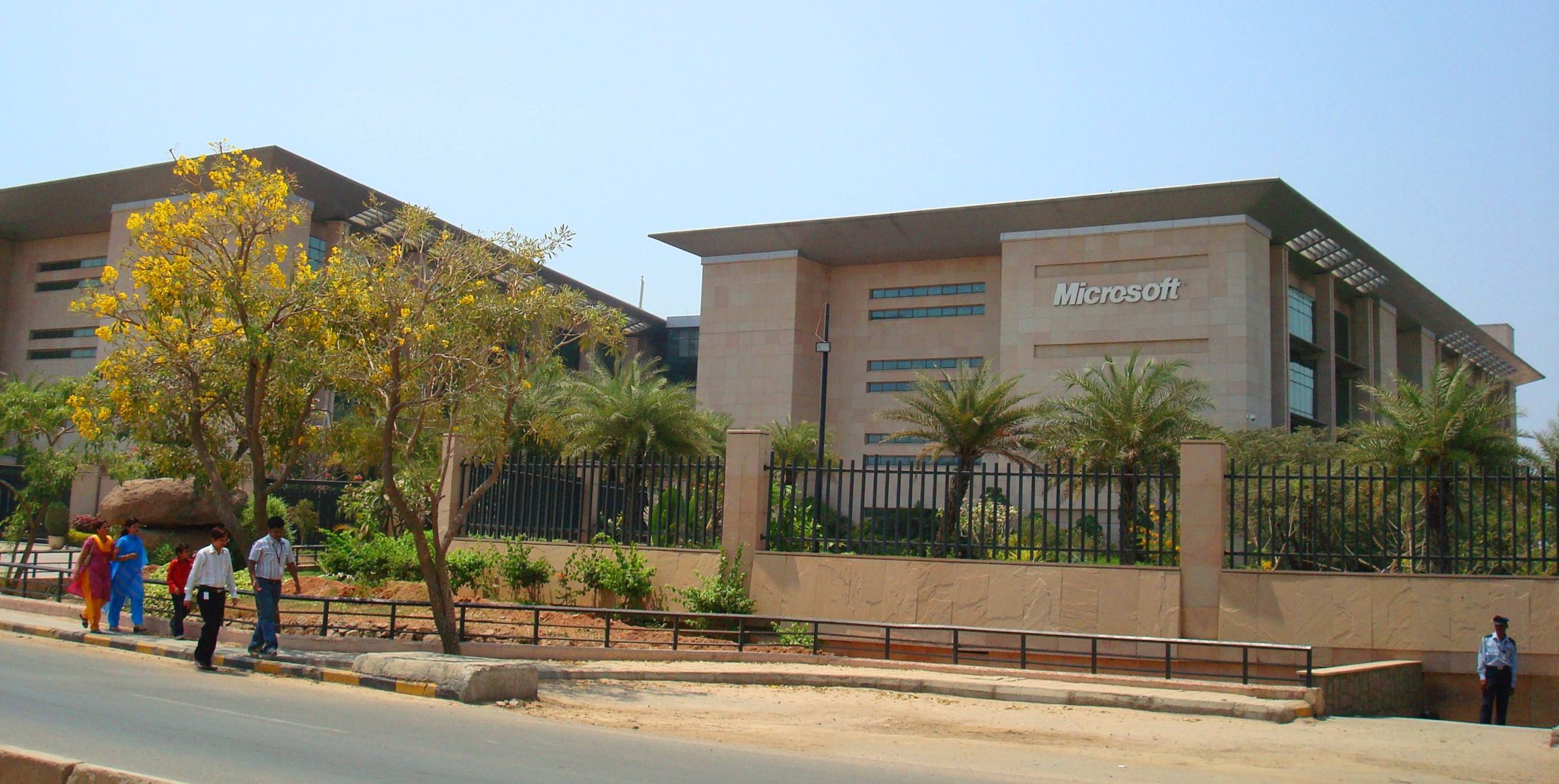
Microsoft's Hyderabad Office. (Courtesy: Wikimedia Commons)

When Microsoft’s unprecedented buyout offers landed in inboxes, the first reaction was panic followed by confusion about what to do next.
For thousands of Microsoft employees in India, the topic of discussion since then has been just one: the Voluntary Exit Offer (VEO) thrown at them by a company they believed was a safe bet among all IT majors.
Microsoft (MS) has campuses and development centres at 10 locations in India, the largest among them being in Hyderabad, followed by Bengaluru, Noida (Delhi), Mumbai, Chennai and elsewhere. The Hyderabad campus itself is home to nearly 10,000 employees. Microsoft has a global workforce of more than 200,000, most of whom are in the US and Canada.
The VEO differs from country to country but has been given to staffers in all departments, with just four orgs — Marketing, MS Commercial Business, MS Discovery & Quantum and MS Security — spared. One explanation is that these four divisions have already undergone layoffs in recent months.
“Will we be sacked early next year if we don’t take the offer?” This is a question everyone is asking, says Sireesha (name changed), who joined MS in Hyderabad less than a year ago.
“This is the first time that most of us in India are confronted with this challenge. Most of my colleagues are still processing the offer and unable to comprehend what it means,” she adds.
Unfortunately, even high-level managers are unable to provide clarity.
One view is that the offer is reasonable.
It includes three months of pay towards the notice period plus one month for every year of service. The other benefits include career counselling support and professional coaching for three months, and continuation of health insurance (ranging from Rs 5-10 lakh) for a year after exit.
This means that if someone has put in five years, for instance, he/she would receive five months’ pay plus three months’ notice pay, along with other benefits such as gratuity and leave encashment.
“I have a friend who is similarly placed and is seriously considering taking the VEO. He would have enough for a year to find another job. What if he is sacked, say, in the first quarter of 2027? He would not get these extra months of pay,” explains Shantanu, who left MS a year ago to pursue other interests. They would also have accumulated stocks vested over the years, which could be offloaded in case of need.
For those who joined recently, the choice is trickier.
Sireesha is a prime example. For her, stocks worth Rs 45 lakh (part of the salary package) would be allotted only in January 2027, after she completes one year of service. She will not get extra months of pay if she accepts the VEO now (only three months’ notice pay) because of her short tenure, and so she prefers to wait, fully prepared to be laid off next year.
The VEO has also thrown up another question that could impact the company itself.
Consider the Azure Compute org. Every one of Sireesha’s colleagues received the offer, irrespective of their performance reports.
“What if all of us accept the VEO? The entire org will collapse. In such an event, who will service the existing clients who have been assured of 24/7 support?” asks Sireesha. She posed the same question to her manager, but he has no answer either.
According to the VEO, employees intending to accept must give their acceptance in writing by December 1, and they shall be relieved at the end of December. They have one week to withdraw their decision in case they change their mind, but the company must mandatorily relieve all those who accept the offer.
According to insiders, the buyout offer came as a surprise even to those at the vice-president level. For most employees, the difficulty in arriving at a decision stems from the fact that their managers are as clueless as they are.
Though low-key layoffs have been happening over some months, an offer of this scale — an estimated 60,000 employees received it — was unexpected. Some believe that it was timed to coincide with the earnings call to project that the company is getting leaner without impacting revenue. But it’s not as simple as that.
There are orgs like Azure Data which bring in substantial revenue to the company, and extending operational support to clients could be hit (forget adding new features) if the VEO does not happen the way the company expects, though no one has an idea as to what the thinking behind this massive move was.
There is speculation that MS opted for VEO instead of pushing for layoffs to camouflage its real intentions. A straightforward reduction in headcount would have angered the Trump administration, since thousands of employees in the US also received the buyout offer.
According to one senior staffer, most are now unclear about their future, with hiring having slowed down substantially and the company ending work from home across orgs and locations with a “you can leave or come back to the office” message.
Also Read:
‘I feel desperate’: Microsoft’s buyout offer and the uncertainty India’s IT workers face
A Bhasmasura we built: Can Artificial Intelligence go after its makers?
(Edited by R Rajesh Kumar.)



