

Published Sep 29, 2026 | 6:45 AM ⚊ Updated Oct 14, 2026 | 8:38 AM


Synopsis: Social media influencers largely stayed neutral for fear of losing their audience. Political funding has changed that perception. Neutrality is now a business risk; alignment is a revenue stream. Because social media algorithms amplify content, what starts as a state-sponsored campaign can become a narrative loop, turning audiences into prey in a political feed.
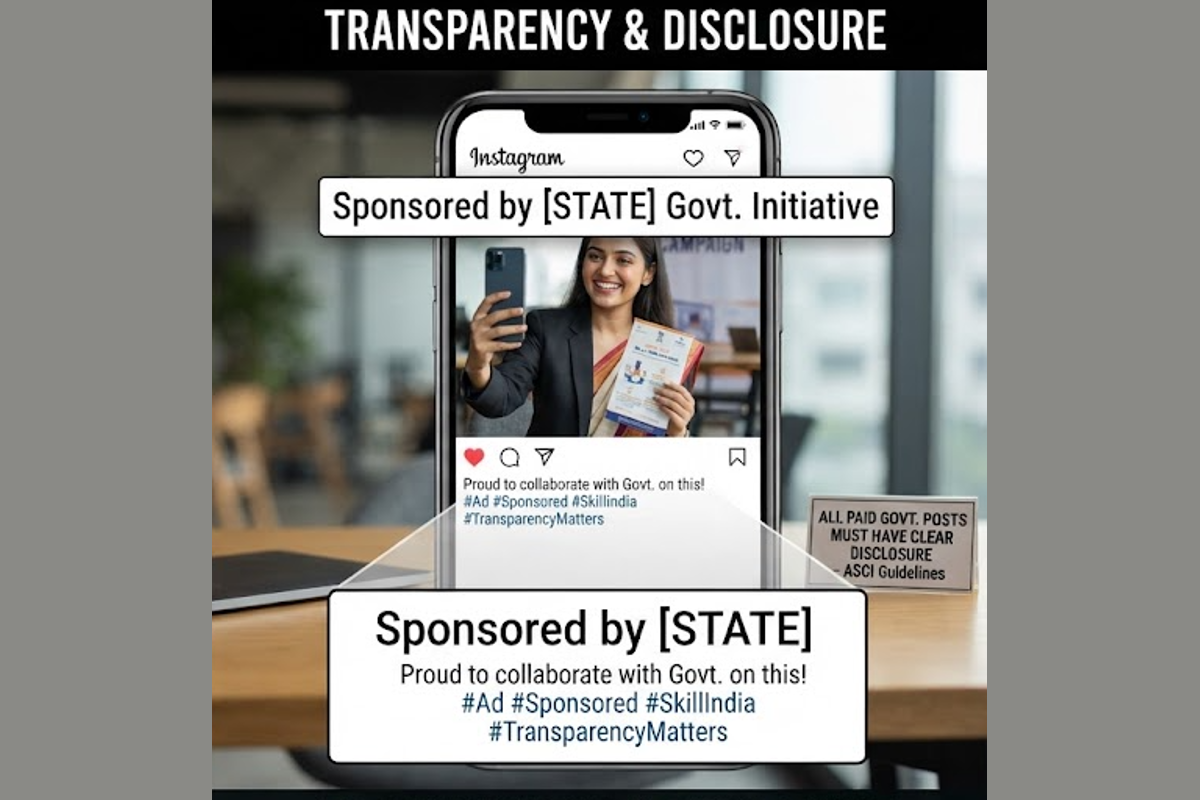
When governments pay social media influencers to promote their schemes or programmes, the paid relationship raises an important transparency question: should such posts be clearly identified as sponsored or paid government content, consistent with India’s influencer-advertising disclosure framework?
It also raises an accountability question: rewarding ideological alignment rather than objective public-interest communication.
Social media platforms have become powerful tools for exerting influence and shaping perception. Governments are adopting a two-fold strategy—rewarding those who praise and censoring those who criticise.
Earlier, social media influencers largely remained neutral due to fear of losing audience. Political funding has changed that perception. Neutrality is now a business risk; alignment is a revenue stream. Because of social media algorithm amplification, what starts as a state-sponsored campaign can become a narrative loop, turning the audience into prey in a political feed.
Also Read: Social media restrictions are a blunt response to complex, interconnected problems
In the last simultaneous Lok Sabha and Assembly elections. Andhra Pradesh recorded about ₹9.38 crore in Meta advertising between 8 February and 7 May 2024—the highest for any region in India over those 90 days, highlighting the scale of spend. Paid influencers with thousands of followers are everywhere on social media, quietly pushing political content, paid by political parties. But that was political money; this is taxpayers’ money.
According to the Social Media Influencers Policy (SMI) approved by the Andhra Pradesh government, AP Digital Corporation Ltd (APDCL) identifies and verifies empanelled social media influencers. Eligibility requires a minimum following of 10,000 users.
Many party-affiliated social media influencers may now become eligible, allowing public funds to flow to friendly creators who the political party once paid. The policy requires content to be “impartial, factual, and in the public interest.” Those words will mean nothing unless the policy defines what information is and what political branding means.
Also Read: Karnataka’s planned social media ban for under-16s raises more questions than answers
A government is entitled to engage social media influencers to promote government campaigns, like vaccination campaigns or tourism promotions; social media is just another avenue, like traditional print advertisements. Advertisements largely showcase government inaugurations or schemes as information. But sponsored posts on social media don’t stop there; they become flashpoints, turning feeds into political targeting. Print advertisements look like ads, but influencer content is often mistaken for opinion.
The United States recently introduced a bill mandating clear, prominent disclaimers on posts by online influencers paid for by political committees or candidates. Similarly, the Advertising Standards Council of India (ASCI) has updated its influencer advertising guidelines, strengthening disclosure requirements for paid content across social media platforms to display labels such as Advertisement, Ad, Sponsored, Collaboration, and Partnership. But ASCI’s guidelines are primarily a self-regulatory advertising framework, not a government law.
If an influencer independently praises a government programme, a viewer may reasonably perceive it as the influencer’s opinion. But if the government pays that influencer to publish the content, a material relationship may affect how the audience evaluates the endorsement. Therefore, to protect public trust and maintain democratic accountability, transparency must be a mandatory baseline, not a voluntary guideline.
(Edited by Majnu Babu).



