

Published Sep 24, 2026 | 2:54 PM ⚊ Updated Sep 24, 2026 | 3:41 PM

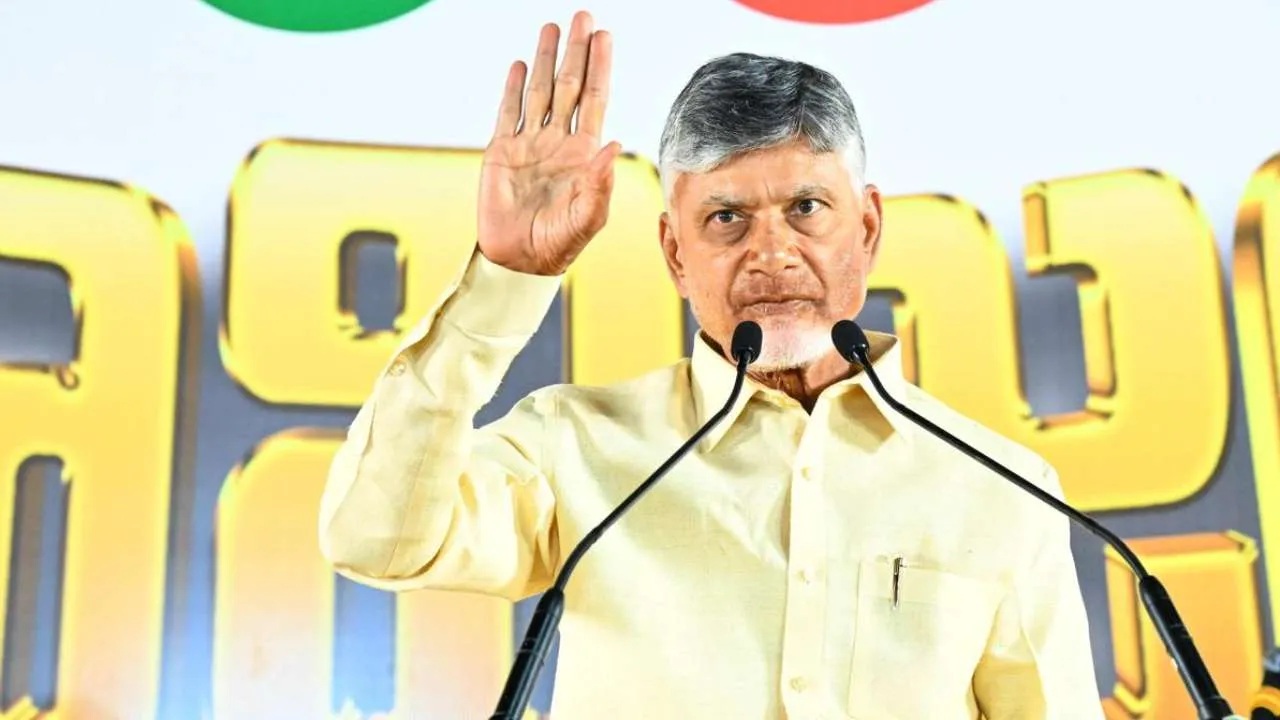
Andhra Pradesh Chief Minister N Chandrababu Naidu

Synopsis: Andhra Pradesh’s new policy will pay social media influencers to promote government schemes and initiatives, but its contours echo the previous YSRCP government’s controversial use of digital outreach. The policy raises questions about whether the TDP-led government is adopting a strategy it once criticised, even as an earlier vigilance inquiry is underway.
The Andhra Pradesh government has decided to engage social media influencers for official publicity campaigns. The state Cabinet has formally approved a policy framework to pay content creators up to ₹1.5 lakh a month, with payments determined by their social media reach.
Interestingly, the ruling Telugu Desam Party (TDP) had strongly criticised the previous YSR Congress Party (YSRCP) regime for a similar initiative that paid content creators to promote government programmes. After coming to power, the TDP-led NDA government also ordered a probe into alleged irregularities in the Digital Corporation set up during the YSRCP regime. However, even before the probe has concluded, the NDA government has introduced its own version of the policy, raising questions about the apparent similarity between the two initiatives.
Digital campaigns formally entered state governance in 2018 with the launch of the AP Content Corporation during the then TDP government. Ahead of the 2019 general elections, the government established the Content Corporation under the Department of Industries. Through this entity, the government implemented official publicity campaigns, audio-visual production, digital outreach initiatives and election-related social media campaigns.
After the YSRCP government came to power in 2019, the Content Corporation was brought under the Information and Public Relations (I&PR) Department with a budget allocation of ₹100 crore. Renamed the Andhra Pradesh Digital Corporation (APDC), it began operations in January 2021 with an initial team of 40 personnel tasked with content creation and social media promotion. Its workforce expanded rapidly thereafter.
In 2023, while in the opposition, the TDP alleged that ₹500 crore of public funds had been misappropriated within APDC. It also alleged massive irregularities in the functioning of the body, including that a substantial number of appointments were made on political recommendations and not through a proper hiring process.
After the Chief Minister N Chandrababu Naidu-led government took over in 2024, it ordered a vigilance probe into the recruitment practices, financial transactions, contracts, and vendor disbursements. Preliminary findings pointed to financial mismanagement, abuse of authority, appointments made without verifying qualifications, and irregular payouts to selected agencies.
The probe also found that salaries had allegedly been paid to individuals who did not actively perform any duties.
The investigation has been underway for nearly two years. Meanwhile, after assuming power, the current government removed previous employees from the Digital Corporation, brought in new personnel, and continued to drive extensive online campaigns through APDC.
On September 23, the Cabinet approved a policy to empanel content creators with a monthly payment capped at ₹1.5 lakh to promote government campaigns and initiatives.
According to the policy, applicants must maintain a minimum following of 10,000 users on social media platforms, including Facebook, YouTube, or X. Selected creators will receive empanelment cards following background verification. Applicants must also demonstrate reach exceeding their follower count on at least two posts or videos.
Creators’ previous posts will be audited, and applications will be rejected if the posts are found to contain profanity, hate speech or derogatory remarks.
For government-prepared graphic posts, creators in Categories A, B, C and D will receive ₹1,500, ₹1,000, ₹750 and ₹500, respectively. For audio/video clips, the rates are ₹2,000, ₹1,500, ₹1,000 and ₹750, respectively. For audio-visual content produced by the creators themselves, the corresponding payments are ₹15,000, ₹7,500, ₹5,000 and ₹2,500.
They will also be required to share government fact-check updates on their accounts free of charge. Any regulatory violation after empanelment will result in blacklisting.
The AP policy document cites similar influencer engagement models in other states. Himachal Pradesh offers influencers up to ₹2 lakh, Rajasthan provides an honorarium of ₹25,000, Punjab links payments directly to verified reach, while Uttar Pradesh structures payments based on specific social media platforms.
Also Read: Document verification for AgriGold depositors: Plot allotment soon
The primary allegation against the APDC was that public funds were channelled into campaigns on Google, social media and third-party digital networks to generate political advantage for the ruling party under the guise of promoting government schemes. TDP leaders claimed that state resources were used for commercial advertisements, payments to private entities, selected websites and salaries for partisan social media workers. The APDC disputed the ₹500 crore claim, while official fact-check releases at the time maintained that, since its inception, a total of ₹88.56 crore had been spent on salaries and programme promotions combined.
The controversy flared up again in 2024 when NDA came to power. TDP leaders alleged that, among the APDC’s 129 employees, several had previously been affiliated with the YSRCP’s social media wing. Claims also surfaced that some drew salaries without reporting to work, others were hired without clearly defined eligibility criteria, and individuals linked to political consultancy I-PAC and specific media organisations were given positions in the corporation. The vigilance inquiry into these matters remains pending.
The preliminary vigilance report held the APDC Vice Chairman, Managing Director, Commissioner of the Information and Public Relations (I&PR) Department and 18 others accountable, and recommended a deeper probe by the CID or the Anti-Corruption Bureau (ACB). The report highlighted an APDC payment of ₹2.1 crore towards the film Yatra 2, along with financial benefits extended to several private entities. It noted irregular transactions and questioned the service deliverables, recommending legal prosecution. Allegations regarding unpaid GST liabilities also surfaced.
The vigilance wing recommended recovering ₹37.2 crore spent over four years from responsible individuals and firms, taking action against approximately 60 proxy or unverified employees, scrutinising their educational credentials, and transferring the case to the CID or ACB. Concrete follow-up action on these recommendations, however, has not materialised.
Also Read: ‘Cancel Andhra Pradesh medical counselling,’ demand medico parents’ association
Over the past decade, Andhra Pradesh politics has relied heavily on social media campaigns, with political parties increasingly turning to strategy consultants. The TDP initially institutionalised digital services through the Content Corporation. Under the YSRCP, operations within the Digital Corporation were run in tandem with political consultancy teams that advised the ruling party. Substantial scepticism persists regarding content disseminated across digital platforms by political consultancies.
Currently, the firm that provided campaign consultancy services to the TDP during the elections is actively involved in government programmes. Officials remain tight-lipped about the latest decision to pay social media influencers.
An I&PR official, speaking on condition of anonymity, said the framework was devised to identify aligned or neutral voices online while rewarding individuals who had worked for political outfits. The official clarified that the Information and Public Relations Department has had no real operational role or administrative oversight of the APDC since its inception, noting that content creation, online campaigns and related payouts have functioned strictly as executive policy matters.
(Edited by Fayisa CA)



