

Published Sep 15, 2026 | 6:03 PM ⚊ Updated Sep 15, 2026 | 6:03 PM

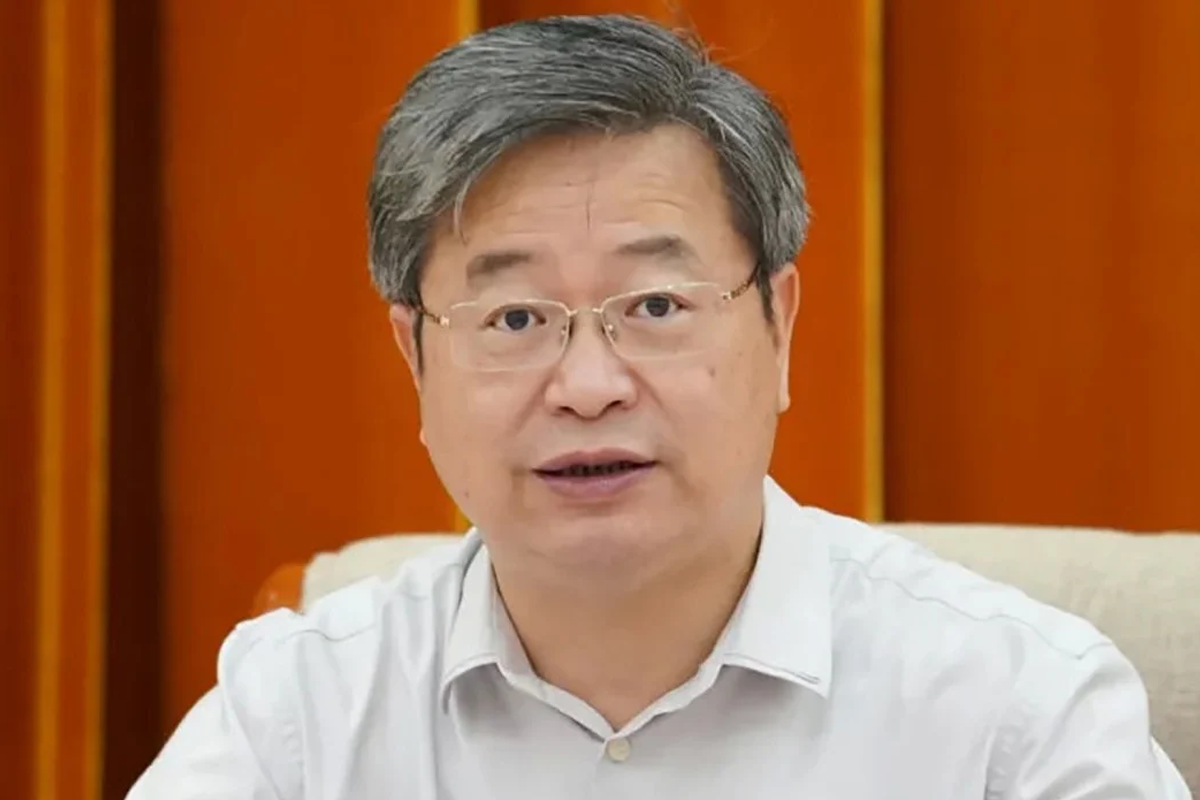
Chen Yixin, China's top spy chief.

Synopsis: China’s top spy chief, Chen Yixin, believes that Artificial Intelligence could threaten the Communist Party’s 77-year-long iron grip over the country. The warnings from Yixin come at a time when the Chinese Foreign Ministry has accused US AI giants of exaggerating the risks from the technology.
Threats posed by Artificial Intelligence have been dominating conversations around the world ever since 27-year-old Jacob Coxon warned the world that AI could kill us all by the end of the decade.
Coxon’s ex-boss, Anthropic’s Dario Amodei, was quick to say he agreed more than he disagreed with Coxon and called for a slowing down of AI development.
With Elon Musk and OpenAI’s Sam Altman also backing Amodei’s call, the world couldn’t but sit up and take notice of the threats of a possible AI apocalypse.
But were the fears real or engineered? Many people around the world have been wondering at a time when some of the giants of the AI world, like OpenAI and Anthropic, are weighing going public.
All had remained quiet, however, on the Chinese front, the other driver of the AI race. That is, until now.
China’s M, if you are to borrow James Bondian lingo, Minister of State Security Chen Yixin came out with his own stark warning on Sunday. While the country’s top spy chief doesn’t dwell on the death of humanity, he almost gets there as far as the Chinese leadership is concerned.
Yixin believes that Artificial Intelligence could threaten the Communist Party’s 77-year-long iron grip over the country. He referred to AI models like Anthropic’s Claude Mythos and OpenAI’s GPT-5.5-Cyber as “significantly enhancing the efficiency of network vulnerability discovery, malware development, and weaponisation”.
In his article in the state-run China Cyberspace magazine, Yixin wrote that AI had lowered the technical and financial barriers to launching cyberattacks on the country. He warned of the dangers posed by deepfake audio and video, AI-generated text and images, and automated bot armies, highlighting how they could fan rumours and incite unrest.
“They’re worried, among other things, of, say, a deepfake of a Chinese official saying something that wasn’t actually said, and that spreading rapidly and destabilising everything,” Kyle Chan, a fellow at the Brookings Institution who studies Chinese technology and industrial policy, told the New York Times. “Someone thinks that Xi Jinping made some announcement which he didn’t actually make. That could sow chaos.”
Yixin also flagged data leaks in China.
“Overseas intelligence agencies are deeply utilising smart web crawlers, data mining, and profiling technologies to collect sensitive national and commercial data, as well as citizens’ personal privacy. Furthermore, domestic users’ lack of security awareness—such as using foreign AI products to process sensitive information or export data—has caused massive domestic data leaks,” he wrote.
China’s Minister of State Security also warned of how Chinese users relying on foreign models could leave the door open for such data leaks. Interestingly, Chinese start-up Moonshot AI had secretly routed queries on its platforms to Anthropic’s Claude models and passed the answers off as its own.
The Chinese spy chief emphasised the need for the military to be AI-fortified.
“AI is pushing warfare into an intelligent era, where whoever achieves more precise perception, judgment, and strikes through algorithms gains the battlefield initiative. AI is shifting from an “auxiliary supporting role” to a “critical role” in combat,” he stressed.
He cited the US military’s use of AI in the war against Iran to point out how warfare has been “fundamentally transformed”.
Yixin emphasised the need to strengthen AI governance while upholding the Party’s absolute leadership over internet and data security, building Chinese self-reliance when it comes to core chips and AI software, establishing centralised AI security monitoring platforms and expanding legal and compliance frameworks. He suggested all this while calling for international cooperation to bridge the global digital divide.
The warnings from Yixin come at a time when the Chinese Foreign Ministry accused US AI giants of exaggerating the risks from the technology.
Narratives of threat, confrontation and malicious competition disrupt the process of global governance of AI and are not in the interests of either side, Chinese Foreign Ministry spokesman Guo Jiakun was quoted as saying in Beijing by the DPA news agency.
Xiang Ligang, identified as a veteran telecom and tech policy observer by Global Times, meanwhile, was quoted as calling out what he saw as Anthropic CEO Dario Amodei speaking with a forked tongue.
“On the one hand, Amodei acknowledges that global efforts to pace AI development would ultimately require cooperation with China; on the other hand, he advocates restrictions on chips, computing power, and models to slow China’s AI development, while explicitly seeking to widen the US technological lead over China,” said Ligang.
Also Read:
Casino Capitalism: Inside the financial architecture powering the AI boom
What AI can’t teach: The power of serendipity in learning
(Edited by R Rajesh Kumar.)



