

Published Jul 29, 2026 | 11:39 AM ⚊ Updated Jul 29, 2026 | 11:39 AM

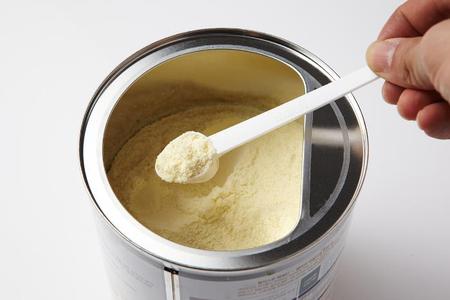
Chemical testing cannot distinguish sugar added during manufacturing from sugars naturally present.

Synopsis: A Parliamentary Standing Committee has flagged a major gap in India’s regulation of infant formula, saying regulators cannot scientifically verify whether manufacturers continue to comply with sugar limits after approval. The panel has sought periodic re-verification, traffic-light nutrition labels, stronger surveillance of infant foods, and better coordination between regulators.
India has limited sugar in infant formula. But once a product receives regulatory approval, there is no scientific way to verify whether that limit has been followed if companies later alter the formulation.
Instead, compliance depends largely on paperwork.
Chemical testing cannot distinguish sugar added during manufacturing from sugars naturally present in milk or other ingredients. Regulators, therefore, rely on formulation records, ingredient declarations, label scrutiny and company documentation rather than laboratory analysis to determine whether manufacturers comply with the prescribed limit.

The Parliamentary Standing Committee on Consumer Affairs, Food and Public Distribution has flagged this as a significant regulatory gap in its report, Regulation of Packaged Commodities with Specific Reference to Sugar Content in Baby Products and Other Food Products, presented in the Lok Sabha and laid in the Rajya Sabha on 23 July.
The committee, chaired by DMK MP Kanimozhi Karunanidhi, examined the issue through multiple sittings with officials from the Food Safety and Standards Authority of India (FSSAI), the Department of Consumer Affairs and the Ministry of Health and Family Welfare.
Also Read: FSSAI orders food businesses to discard rusted knives
Under the Food Safety and Standards (Foods for Infant Nutrition) Regulations, 2020, sucrose and fructose may be added to infant foods only when necessary as a carbohydrate source. They must not together exceed 20% of the total carbohydrate content.
FSSAI defended the limit before the committee, arguing that it should not be interpreted as 20% of an infant’s diet.
The regulator said the permitted amount translates to about 13.25 grams of sugar, or 53 kilocalories, which is equivalent to roughly 10% of an infant’s recommended daily energy intake under the ICMR-National Institute of Nutrition guidelines.
“The limits specified for sugars in infant food products… are on par with the global standards (Codex, EU) and have no safety concerns,” FSSAI told the committee.
The regulator further argued that the limit aligns with the World Health Organisation’s recommendation that free sugars contribute less than 10% of total daily energy intake, while noting WHO’s advice that reducing free sugar below 5% would offer additional health benefits.
The committee did not question FSSAI’s scientific calculations. Instead, it questioned whether parents understood the calculations while buying them.
“Such scientific equivalence is not evident to consumer/caregivers at the time of purchase and percentage of carbohydrate does not translate intuitively into the real sugar intake of infants,” the committee observed.
It further noted that numerical declarations and percentage contributions to Recommended Dietary Allowance “are often not easily understood by ordinary consumers,” limiting their usefulness in helping parents compare products.
Also Read: FSSAI orders immediate removal of misleading ‘ORS’-labelled drinks
The committee’s sharpest criticism was about verifying compliance with the sugar limit.
FSSAI acknowledged that current laboratory methods cannot identify added sugar separately from naturally occurring sugar.
“Added sugars and inherent sugars are both simple carbohydrates… added sugars cannot be differentiated from naturally occurring sugar in food by any chemical or analytical test methods,” the regulator informed the committee.
Instead, manufacturers are expected to maintain records of ingredients and formulations.
“Manufacturers are required to create and keep certain records necessary to verify the amount of sugars added in the food, that could be requested for review by the regulatory body during inspection,” FSSAI said.
The committee warned that such a system leaves regulators unable to confirm whether products continue to comply after approval independently.
“In the absence of a formalised post-approval re-verification mechanism, reformulation of products leading to incremental increases in sugar content or changes in ingredient composition may not be detected promptly.”
It added that this “assumes greater significance in products intended for infants and young children, where even marginal changes in sugar composition can have long-term implications for dietary habits, metabolic health and consumer trust.”
The report cited evidence presented by the Indian Council of Medical Research linking excessive sugar intake during infancy to dental caries, childhood obesity, impaired glucose tolerance, insulin resistance, altered gut microbiome composition and an increased risk of type 2 diabetes and hypertension later in life.
Also Read: Food safety violations in South India at 13.2 percent
Rather than recommending changes to the sugar limit itself, the committee focused on strengthening regulatory oversight after products enter the market.
It recommended that FSSAI establish a structured, risk-based mechanism for periodically re-verifying approved formulations.
“The Committee recommend that FSSAI evolve a structured, risk-based post-approval verification mechanism, particularly for infant and child nutrition products, involving periodic scrutiny of formulation records, ingredient sourcing documents and market sampling.”
It also recommended mandatory disclosure whenever manufacturers modify formulations.
“Any reformulation involving changes in sugar composition should require mandatory re-declaration and, wherever necessary, prior regulatory intimation.”
Recognising that nutritional science continues to evolve, the committee further recommended that “standards relating to sugar content be periodically reviewed in the light of emerging scientific evidence and international best practices.”
Also Read: Karnataka food safety check reveals carcinogen in pani puri
The committee also concluded that current nutrition labels fail to communicate sugar content in a way that ordinary consumers can quickly understand.
It urged FSSAI to finalise the long-pending Front-of-Pack Nutrition Labelling (FOPNL) regulations, first proposed in September 2022.
“The Committee strongly recommend that the Front-of-Pack Nutrition Labelling regulations be finalised and notified in a time-bound manner.”
It recommended a simple colour-coded classification of sugar levels.
“The Committee recommend that products be classified into high, medium and low sugar categories through a simple colour-coded system.”
The committee also said that labels on foods marketed to children should prominently display the amount of added sugar in grams per serving, making it easier for parents to compare products at a glance.
FSSAI informed the committee that it has received more than 14,000 stakeholder comments on the draft regulations, which are being examined.
Also Read: FSSAI cracks down on tealess herbal ‘tea’
The committee also questioned whether infant foods receive sufficient regulatory attention, despite being classified as high-risk products under FSSAI’s Risk-Based Inspection System.
Enforcement data submitted to Parliament showed that FSSAI and state food safety departments conducted more than four lakh inspections during 2024-25. Of these, only around 1,100 involved manufacturers of infant foods.
“The Committee are of the view that infant foods merit enhanced regulatory surveillance considering the vulnerability of the target population,” the report said.
It recommended reserving a minimum share of annual inspections and sampling specifically for infant foods and called for separate publication of compliance data for this category.
“Compliance relating to infant food products should be reported separately in the annual reports of FSSAI.”
Also Read: Is your daily bread hiding a diabetes time bomb?
The report also points to fragmented oversight. FSSAI regulates nutritional standards, sugar limits and health claims, while the Department of Consumer Affairs oversees declarations relating to price, quantity and country of origin under the Legal Metrology Act.
The committee noted that even the Department of Consumer Affairs acknowledged misleading nutrition labels on e-commerce platforms fall outside its regulatory jurisdiction.
It therefore called for better coordination among regulators. “The Committee recommend establishment of an institutional coordination mechanism between FSSAI and the Department of Consumer Affairs.”
Also Read: India’s diabetes problem is bigger than sugar
Standing Committee recommendations are not binding, and the government must submit an Action Taken Report indicating whether it accepts or rejects them.
For now, India’s sugar limit for infant foods remains unchanged.
What Parliament has questioned is not the science underpinning the limit, but the regulatory system built around it. Without periodic re-verification, clearer front-of-pack labels, stronger surveillance of infant foods, and closer coordination between regulators, the committee argued that compliance largely depends on manufacturer declarations rather than independent verification.
As the report concluded, “Consumers have a right to clear, accurate and meaningful information that enables informed food choices.”
(Edited by Majnu Babu).



