


Published Apr 01, 2026 | 7:00 AM ⚊ Updated Apr 01, 2026 | 8:47 AM

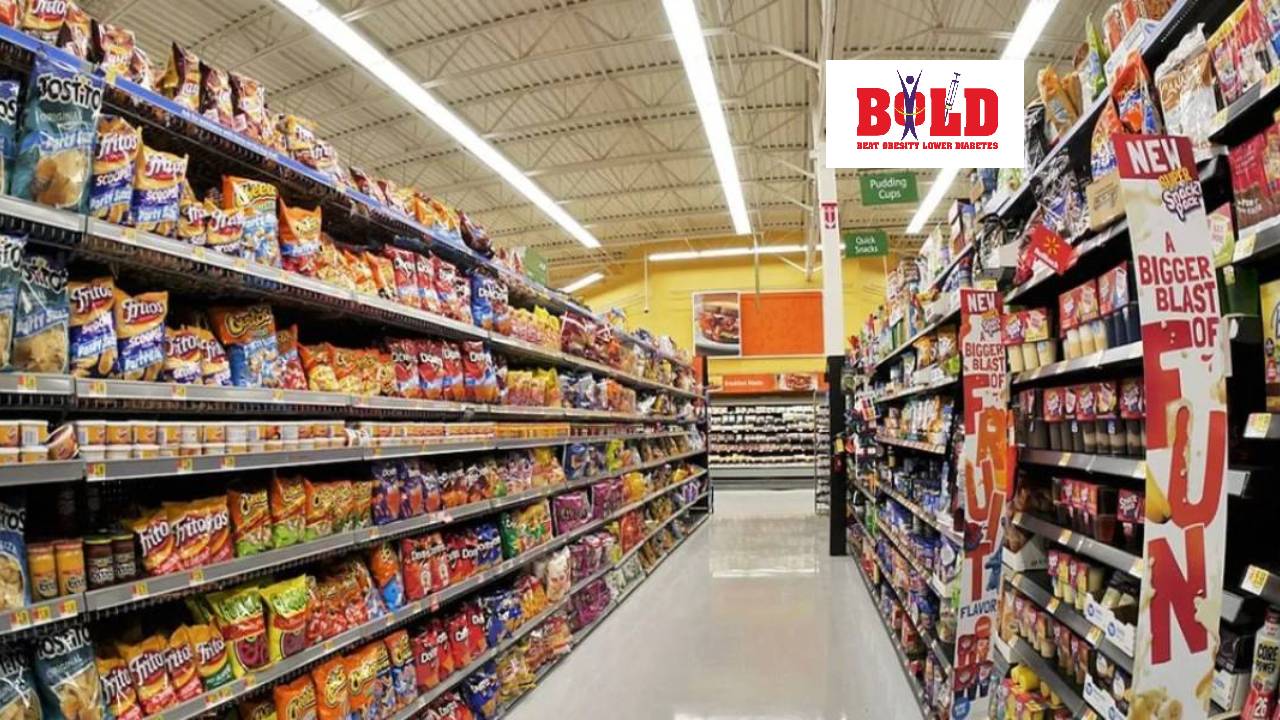
Foods high in fat, sugar and salt are positioned as aspirational, as the default choice for birthdays and celebrations.
Synopsis: The Lancet paper flagged a structural blind spot in how India thinks about child-targeted advertising. Most existing policies regulate only advertisements explicitly “directed at children.” They ignore the far larger volume of content that children have been encountering by existing in shared spaces, family television viewing, social media feeds, public hoardings, and school environments.
Ask a group of Indian teenagers why they reached for a packet of chips or a bottle of fizzy drink.
The answer is rarely simple: It is the friend who ordered it first. A celebrity holding it up on a billboard. The fact that it costs ₹20 and was sitting right there at the school gate. The birthday table that has always had it. The Instagram reel that made it look impossibly cool.
This is not a coincidence. It is by design.
A nationwide study, one of the biggest involving more than 1.4 lakh adolescents across every State and Union Territory, found that more than 67% of young people said food advertisements directly affected their food choices.
Nearly a third opined that healthy food was too expensive. While most could tell the difference between a healthy and an unhealthy food, the awareness did little in changing what they actually ate.
A separate study, conducted in schools in Delhi and Hyderabad with a sample size of 869 adolescents aged 11 to 16, drilled deeper. Taste was the strongest driver that led to food decisions, 51% of the respondents said.
Peer influence came second, at around 30%. The appeal of trendy foods, seen on social media, recommended by food bloggers, or simply labelled as new, came in at 27.2%.
In behavioural experiments, adolescents were more likely to pick foods labelled “multigrain” or “non-fried”, even when the overall nutritional quality was not significantly better. The label, the branding, the social signal, all of it shaped the choice before a single bite was taken.
The picture that emerged from the study’s data was not about teenagers making bad decisions. It was also one of the teenagers navigating an environment that has been engineered, at considerable expense, to push them towards specific products.
“Even though we think we have the freedom of choice, the food environment often limits us to options that are not really healthy,” said Dr Subba Rao M Gavaravarapu, Scientist at ICMR-National Institute of Nutrition (ICMR-NIN).
Dr Gavaravarapu is one of the central architects of the ‘Let’s Fix Our Food’ (LFOF) initiative, a multi-stakeholder consortium that has quietly become one of the most ambitious public health efforts targeting adolescent nutrition in India.
For years, the dominant approach to improving what young Indians eat has been focused on the individual: teach them about nutrition, improve their food literacy, nudge them towards better choices.
LFOF does not dismiss that work. But it begins from a different diagnosis.
“So far, most campaigns have focused on making adolescents change their eating habits or improving their nutrition literacy. That means we have largely been focusing on the individual,” Dr Gavaravarapu told South First. “While individual behaviour does play a role, it is not the only driver of the problem.”
“Let’s Fix Our Food looks at this differently. We recognise that the environment around adolescents, the food environment, is obesogenic. The availability, accessibility and affordability of unhealthy foods are generally better than those of healthier options. Unfortunately, healthier foods tend to be more expensive.”
The initiative is co-led by ICMR-NIN alongside UNICEF India and the Public Health Foundation of India (PHFI). Its partners include WHO India, the World Food Programme, the International Food Policy Research Institute, the Institute of Economic Growth, Deakin University, FSSAI, Lady Irwin College, and the Global Health Advocacy Incubator. FSSAI joined last year, a signal that the regulatory conversation is beginning to shift.
“The idea of Let’s Fix Our Food started in the context of the growing problem of overweight and obesity among adolescents,” Dr Gavaravarapu said. “It is an issue that needs to be addressed urgently.”
LFOF is not a campaign running on advocacy alone. Its foundation is a body of peer-reviewed, published evidence, four distinct strands of research that together build a detailed picture of what is happening to India’s young people, and why.
The first study attempted a SWOT analysis of India’s existing framework for regulating food advertising. The researchers identified 13 policies — nine mandatory, and four self-regulatory — governing food advertisements in India.
On paper, protections exist. In practice, they are scattered, contradictory, and largely unenforceable.
“There are multiple efforts, but they are fragmented and not working in unison,” Dr Gavaravarapu explained. Digital platforms fall under the Ministry of Electronics and Information Technology (MeitY). Television comes under the Ministry of Information and Broadcasting. Baby foods are regulated by the Ministry of Women and Child Development. Food regulation sits with FSSAI under the Health Ministry.
The Advertising Standards Council of India is a voluntary body. No single authority holds the full picture.
Only the 2022 Guidelines for Prevention of Misleading Advertisements explicitly restricts the advertising of high-fat, salt and sugar (HFSS) foods targeting children. But even this guideline has a fundamental flaw: it contains no legal definition of HFSS food.
The consequence is stark. A court order and an FSSAI regulation both restrict the sale of HFSS foods within 50 metres of schools. But without a clear regulatory definition of HFSS, neither can be meaningfully enforced.
“There is a court order that restricts the sale of HFSS foods within 50 metres of schools,” Dr Gavaravarapu said. “However, this is difficult to implement because there is no standard, regulatory definition of what constitutes HFSS foods.”
The Lancet paper also flagged a structural blind spot in how India thinks about child-targeted advertising. Most existing policies regulate only advertisements explicitly “directed at children.” They ignore the far larger volume of content that children have been encountering by existing in shared spaces, family television viewing, social media feeds, public hoardings, and school environments.
Children and adolescents are not just smaller adults when it comes to marketing. Research consistently showed that they lacked the cognitive development to reliably distinguish between entertainment and commercial intent.
When a favourite cricketer holds up a drink, or a cartoon character appears on a snack packet, the association is processed differently by a 12-year-old than by an adult. Foods high in fat, sugar and salt are positioned as aspirational, as fun, as the default choice for birthdays and celebrations and festival moments. Over time, these associations harden into preferences.
The Delhi-Hyderabad study captured this vividly. Adolescents reportedly follow food bloggers and YouTube channels, try foods seen on cooking competitions, and are drawn to viral or simply “new” food items. In qualitative interviews, they described how even unusual food names or unexpected combinations could spark curiosity and drive consumption.
Social eating amplified everything. A single friend deciding what to order, particularly something trending, could shift the entire group’s choice. Peer influence was not just social pressure; it was the architecture of the meal.
Realising that knowledge alone does not change behaviour, ICMR-NIN set out to create a tool that could measure something more meaningful: functional food literacy.
The result, published in Frontiers in Nutrition, is INFOLIT, the Indian Nutrition and Food Literacy Tool. It is the first validated, culturally contextualised instrument of its kind in India.
INFOLIT moves beyond what adolescents know in the abstract and asks what they can actually do. Can they read and interpret a food label? Can they identify a misleading health claim on packaging? Can they choose a healthier option from what is available locally, without spending significantly more?
The tool was developed over five rigorous phases, starting from 150 questions, refined through expert validation, cognitive interviews with adolescents, and statistical testing on 400 young people in Hyderabad, before arriving at a final instrument of 73 questions. It showed strong internal consistency (Cronbach’s alpha of 0.81) and high test-retest reliability (ICC of 0.895).
INFOLIT places adolescents on a three-tier scale: low (score of 40 or below), medium (41 to 55), and high (56 and above). The scale allows educators and policymakers to identify specific gaps and design targeted interventions, rather than defaulting to blanket awareness campaigns that the evidence suggests have limited impact.
“INFOLIT is a method to assess food literacy, which goes beyond basic knowledge,” Dr Gavaravarapu explained. “It looks at functional competency as well as practical competency. It assesses whether children can understand food labels, know where food comes from, and apply this knowledge in real-life situations.”
Alongside INFOLIT, ICMR-NIN has developed a model school nutrition curriculum covering primary, middle and high school levels, a comprehensive, ready-to-use framework that can be adopted by school systems or the Education Ministry directly.
“We are still trying to engage with the Education Ministry and advocate for the use of this material,” Dr Gavaravarapu said.
For younger students, the initiative has produced a comic booklet on “food detectives”, a skill-based, visually accessible tool that teaches children how to read food labels and spot misleading claims. Educational guides for teachers support nutrition literacy across classrooms.
The curriculum, the comic, the teacher guides — these are not simply awareness tools. They are designed to build the practical competencies that INFOLIT measures: the ability to walk into a shop, pick up a packet, read what is on it, and make a genuinely informed decision.
The research and tools feed directly into LFOF’s policy work. The consortium has produced evidence-based policy briefs covering four priority areas: front-of-pack nutrition labelling; restrictions on the advertising and marketing of unhealthy foods; fiscal measures targeting HFSS products; and improvements to school food environments.
These briefs were released last year by VK Paul of NITI Aayog and the Director General of ICMR, a sign that the work has reached the highest levels of India’s health policy architecture.
But one of the most distinctive aspects of LFOF is who it involves in those conversations.
The consortium has conducted eight or nine e-dialogues, bringing together global best practices, Indian policymakers, and the adolescents themselves. The sessions are available on YouTube, and their consolidated recommendations have been folded into the policy briefs now being taken to various ministries.
“Typically, adolescents are missing from policy discussions, but in these e-dialogues, we ensured their participation,” Dr Gavaravarapu said.
A network of around 150 adolescent nutrition ambassadors has been trained across the country. These young people engage with peers, helping them distinguish accurate nutritional information from misleading advertising claims, and in doing so, become active agents in changing the food environment rather than simply its subjects.
The United Kingdom restricts HFSS food advertising during what are called watershed hours, from 6 am to 11 pm. Chile has implemented comprehensive restrictions that go beyond child-targeted content to time-based bans, significantly reducing children’s overall exposure to unhealthy food advertising. South Korea has similar measures in place.
Some countries have gone further still. Rules in certain jurisdictions prohibit the use of children below the age of 12 as models in food advertising, for healthy or unhealthy foods alike.
“Several countries, including Chile, Australia and South Africa, have also taken measures,” Dr Gavaravarapu noted. “These are some of the regulatory approaches that have been implemented globally.”
The LFOF team is not asking India to copy any single model. It is asking for something more fundamental: a unified, evidence-based regulatory framework, anchored in a clear scientific definition of what constitutes an unhealthy food, and extending beyond child-targeted advertising to address the full range of commercial exposure that adolescents actually experience.
What LFOF has built, alongside the research papers, the policy briefs, the curricula and the adolescent ambassadors, is something harder to measure but arguably more important: a shared platform.
Multiple organisations that previously operated in separate lanes are now advocating for the same evidence-based measures, in coordination, with a common evidence base.
“As the consortium grows stronger, we hope to become a more influential voice,” Dr Gavaravarapu said. “We are not opposing or agitating against anything. Rather, policymakers need scientific, evidence-based inputs to make decisions. That is what we are trying to provide, evidence grounded in science, to guide what should be done in the interest of public health and adolescents.”
The studies are published. The tools are built. The briefs are with the ministries.
The teenager at the school gate, choosing between what is available and what is affordable and what everyone else is having, is still navigating the same engineered environment. But the people trying to redesign that environment around the student have never been better organised, or better armed with evidence.
(Edited by Majnu Babu).


