

Published Aug 26, 2026 | 9:55 PM ⚊ Updated Aug 26, 2026 | 9:55 PM

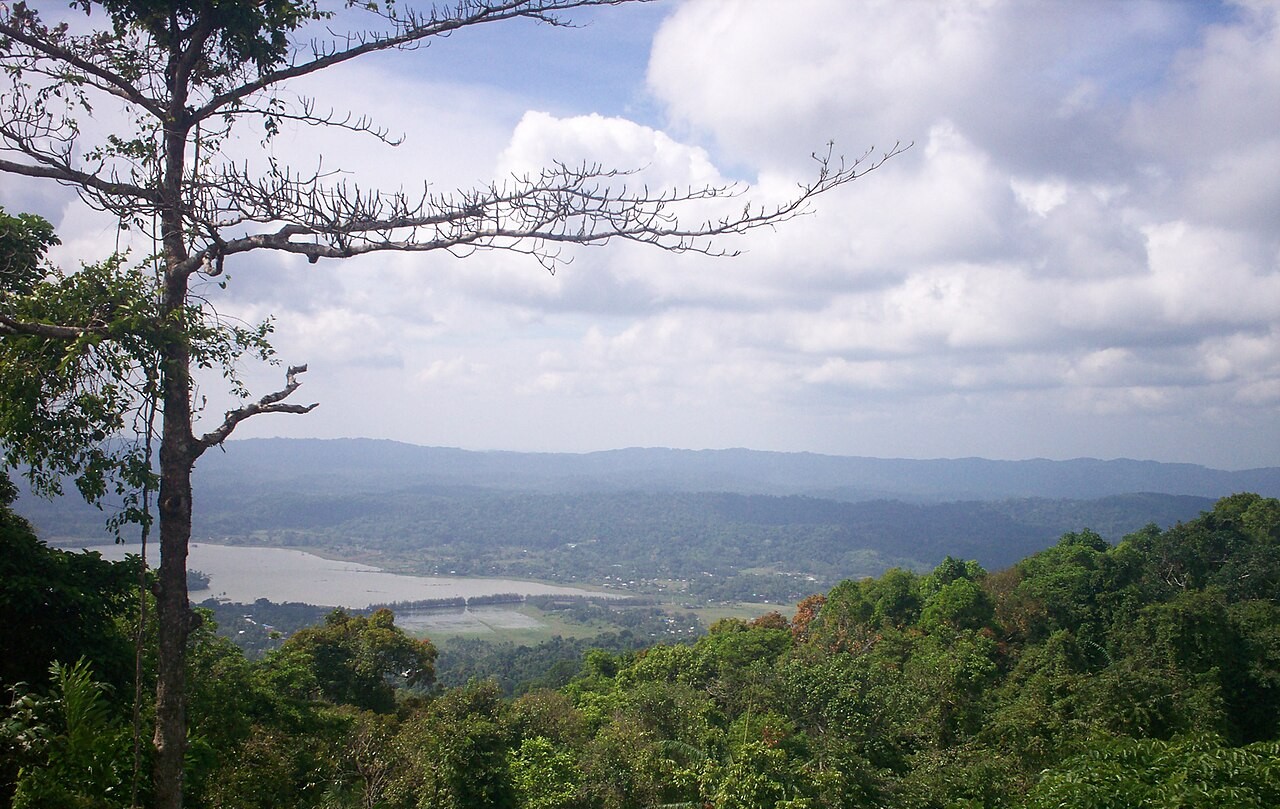
As much as 130 square km of rainforest will be lost to the projects. (T. Harshavardan/Creative Commons)

Synopsis: The Committee on the Elimination of Racial Discrimination has also recommended that India review its legislative framework, specifically the Forest Rights Act, because it does not recognise or protect the rights of indigenous communities. This report was first published in The Wire.
The United Nations Committee on the Elimination of Racial Discrimination, in its observations on August 25, has recommended that India suspend all infrastructure projects on Great Nicobar Island until detailed studies covering various aspects are completed, citing concerns about the adverse impacts of the projects on the indigenous communities on the island.
It also recommended that India review its legislative framework, such as the Forest Rights Act, since it does not effectively recognise or protect the rights of indigenous communities in the country, including the tribal communities on Great Nicobar Island.
The United Nations Committee on the Elimination of Racial Discrimination (CERD) is a panel of 18 independent rights experts that monitors compliance with the International Convention on the Elimination of All Forms of Racial Discrimination by the 182 countries that are party to it. India ratified the Convention in 1968.
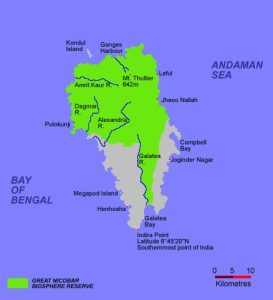
In response to India’s 20th and 21st periodic reports, the Committee issued observations after meetings held on August 11 and 12 and adopted them on August 19. In its communication to India dated August 25, it listed these observations, including several concerns about racial and ethnic discrimination in India.
Among its many recommendations under a section on indigenous and tribal peoples was that India suspend the infrastructure projects proposed on the Great Nicobar Island (in the Andaman and Nicobar group of islands) until detailed studies covering various aspects had been completed.
Though the Union government has said that it has undertaken an environmental impact assessment study for the Rs. 92,000 crore worth of infrastructure projects coming up on the island (including an international transshipment container terminal, a greenfield airport, a power plant, a township and tourism facilities), the projects have come under heavy criticism for the impacts it will have on the ecology and people of the island, and the ineffective mitigation methods proposed.
As much as 130 square kilometres of rainforest – which also includes areas used by the indigenous Shompen and Nicobarese communities – will be lost to the projects. Locals have also raised concerns that island authorities are not taking their concerns about the projects into account.
The UN Committee has now called for a series of detailed studies on the island:
“Suspend the implementation of the projects on the Great Nicobar and Andaman Islands until a full and independent environmental, economic, social, cultural and spiritual impact study has been completed,” the Committee recommended.
The Committee made this recommendation citing the lack of implementation of the Scheduled Tribes and Other Traditional Forest Dwellers (Recognition of Forest Rights) Act, 2006, or the Forest Rights Act.
Also Read: Rahul Gandhi accuses Centre of sacrificing island’s ecology for Adani
The Committee said it is concerned about the current legislative framework – such as the Forest Rights Act – not recognising or protecting the rights of indigenous people:
“The Committee remains concerned that the legislative framework does not recognise and protect the rights of Indigenous / Tribal Peoples to own, use, develop and control the lands, territories and resources traditionally owned, occupied or otherwise used or acquired by them in accordance with international standards,” it said.
The Committee highlighted several concerns. One is that there have been reports of violations in due process during the consideration of submitted claims to recognise individual and collective forest rights, and “reports of granting decision-making powers to executive bodies appointed by states instead of the village assemblies (Gram Sabhas) and the elected local committees at the state level”, it said.
Another is that India, in August 2024, enacted the Forest (Conservation) Amendment Act, which provides exemptions from the consultation requirement for defence installations, paramilitary camps, and public utility projects in districts designated as “left-wing extremism affected”, it said.
It also noted that there are reports of numerous inadequate consultations on development projects without obtaining the free, prior and informed consent of concerned Indigenous Peoples, “including through false and fabricated documents”. (For instance, The Wire has reported on how local communities in Rayagada and Kalahandi in Odisha have said that authorities fabricated their Gram Sabha consent.)
The Committee specifically cited that another concern was the “adverse impacts” on tribal communities of Great Nicobar island due to the proposed infrastructure projects there:
“Adverse impacts of the development projects on Great Nicobar and Andaman Islands, which threaten the survival of various vulnerable Indigenous / Tribal Peoples, particularly those living in voluntary isolation, and the lack of measures taken to address these concerns.”
Also Read: Why India needs to rethink the Union Territory model
Noting that the United Nations Declaration on the Rights of Indigenous Peoples lists the rights of indigenous communities to “free, prior and informed consent” regarding business activities specified by the United Nations Working Group, the Committee recommended that India review its legislative framework.
It particularly mentioned the Forest Rights Act and the Provision of the Panchayats (Extension to Scheduled Areas) Act at the Union and state levels, respectively, saying there was a need, “to align it with the Convention and ensure it recognises and protects the rights of Indigenous / Tribal Peoples to own, use, develop and control the lands, territories and resources traditionally owned, occupied or otherwise used or acquired by them, to guarantee meaningful consultation and to obtain their free, prior and informed consent”.
Tribal rights researcher Bijoy C.R. told The Wire that factually, the FRA recognised and vested forest rights through the enactment of the law in 2006. What has been recognised and vested by the law, however, has to be claimed. And this is done and verified through Forest Rights Committees constituted and approved by the Gram Sabha.
“The committees above the Gram Sabha are to examine the Gram Sabha-approved claims for completeness and errors. If deficient, these are to be reverted to the Gram Sabha for reconsideration,” he said. “The FRA also empowers the Gram Sabha to take cognisance of the violations by the officials and committees above by issuing a sixty-day notice to the State Level Monitoring Committee (SLMC) headed by the Chief Secretary to take action against the offending officials…Further violations of forest rights under FRA were included as an ‘atrocity’ under SC and ST (Prevention of Atrocities) Act, 1989 in Sec.3(1)(g) through an amendment in 2016.”
The “real issue”, according to Bijoy, is “the lawlessness and scant regard for law by the administration”. So it isn’t India’s legislative framework that is the problem, but “the systemic violation of the law”, he said.
“This extends to the judiciary, which too disregards the FRA, thus sanctifying state lawlessness when it comes to forest rights and FRA,” he told The Wire.
Among the many indigenous communities fighting to get FRA titles (both individual and community rights) are the Shompen and Nicobarese communities on Great Nicobar Island. They have raised concerns that their rights under the FRA have not been settled, even as proposed projects on the island have obtained clearances. A case on this issue is also being heard in the Kolkata High Court.
In May, the Andaman and Nicobar Administration told the Calcutta High Court that Gram Sabha meetings held to obtain consent for the proposed projects were conducted with “proper quorum”, despite attendance figures ranging only between 2% and 15% of the population in the concerned villages.
(This article was first published in The Wire).



