

Published Jul 25, 2026 | 12:04 PM ⚊ Updated Jul 25, 2026 | 12:06 PM

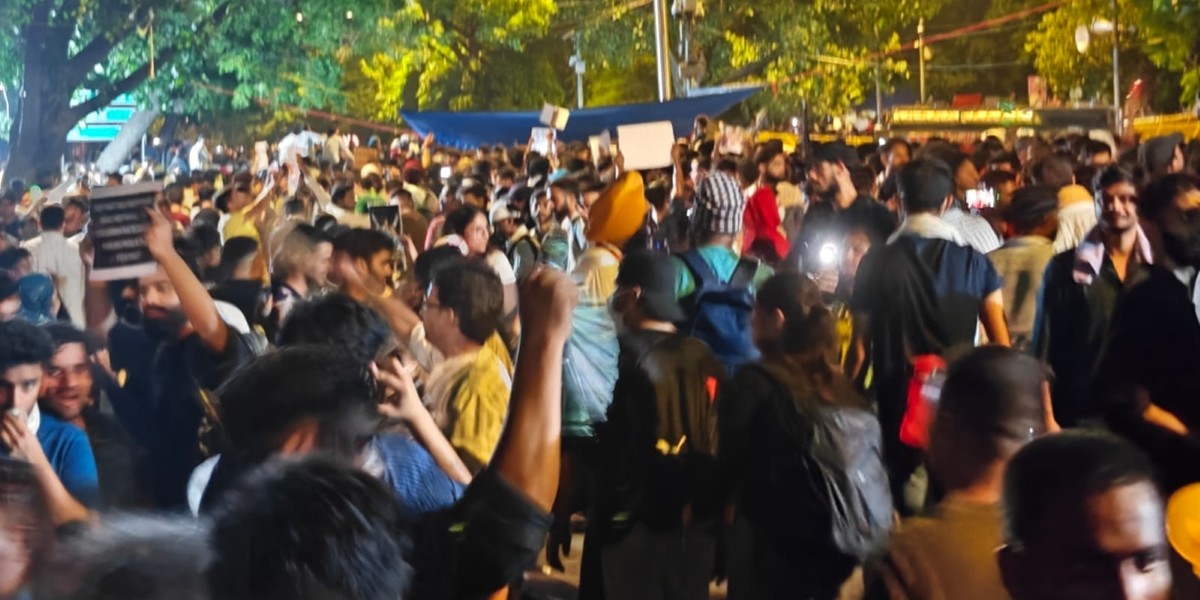
Jantar Mantar protest. (Supplied)

Synopsis: The screenshots claimed that the police have setup checkpoints around the protest site and are detaining the students, and also noting down the Aadhar numbers of all the young people visiting the site. CJP further claimed that the police are threatening restaurants for delivering food orders at Jantar Mantar site.
As the Cockroach Janta Party (CJP) leaders are expected to meet the government for another round of talks, on Saturday, 25 July, the protests have been continuing at the Delhi’s Jantar Mantar.
According to The Hindu report, a two-member delegation of the CJP are expected to meet the government. Spokesperson Ashutosh Ranka said the location of the meeting is not disclosed yet and reiterated their “non-negotiable” demand for the resignation of Education Minister Dharmendra Pradhan.
On the other hand, dismissing the allegations of foreign funding towards the CJP led protests, MEA spokesperson Randhir Jaiswal said during a press briefing in response to a question, “I have no information to share on this issue with you.”
WATCH || Replying to a question on foreign funding and involvement in the ongoing protests in Delhi, the MEA spokesperson Randhir Jaiswal says, “I have no information to share on this matter.”
WATCH Full Press Briefing here🟥 https://t.co/s62VKEXoFl@MEAIndia pic.twitter.com/ZZuyE11qv5
— DD India (@DDIndialive) July 24, 2026
Also Read: India’s students’ revolt has exposed BJP’s biggest political blind spot
Meanwhile, Ranka also accused the Delhi Police of blocking the food supplies from coming to Jantar Mantar, and detaining the students who are coming to the protest site.
Sharing WhatsApp screenshots, he wrote on X: “Do whatever you want to. You cannot stop people from coming to Jantar Mantar, you cannot stop people from having food. You cannot stop people from helping us. Most importantly, you cannot stop Pradhan’s resignation. He is going.”
The screenshots claimed that the police have setup checkpoints around the protest site and are detaining the students from there, and also noting down the aadhar numbers of all the students or young people visiting the site. It further claimed that the police are also threatening the restaurants for making orders for the Jantar Mantar site.
Dear @DelhiPolice,
Do whatever you want to. You cannot stop people from coming to Jantar Mantar. You cannot stop people from having food. You cannot stop people from helping us.
Most importantly, you cannot stop Pradhan’s resignation. He is going. pic.twitter.com/mxJuPOws0J
— Ashutosh Ranka (@AshutoshRanka) July 25, 2026
The Students’ Federation of India (SFI), CPI(M)’s student wing on the intervening night of Friday and Saturday, 24 and 25 July, midnight organized its nationwide Raat Jago Desh Jago (Stay Awake at Night, Awaken the Nation) campaign, transforming the ongoing student agitation at Jantar Mantar in New Delhi into a countrywide movement through overnight vigils, demonstrations and cultural programmes.
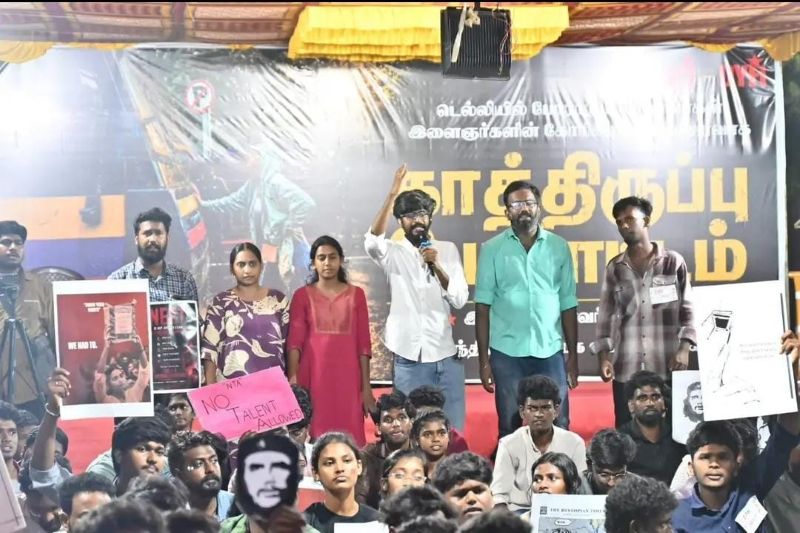
Raat Jago Desh Jago in Tamil Nadu
Conceived as a nationwide expression of solidarity with students protesting in the national capital, the campaign sought to “create Jantar Mantar all over India” by encouraging simultaneous night-long gatherings in campuses, public spaces and town centres.
Beginning at 10 p.m. and continuing through the night, the programme featured torchlight processions, sit-ins, street-corner meetings, cultural performances and public discussions.
The campaign was organized by the SFI with the support of several Left-affiliated mass organisations, including the Centre of Indian Trade Unions (CITU), All India Kisan Sabha (AIKS), All India Agricultural Workers Union (AIAWU), All India Democratic Women’s Association (AIDWA) and the Democratic Youth Federation of India (DYFI).
The night vigil preceded a series of protests led by the SFI, including campus demonstrations, Raj Bhavan marches and an all-India student strike, and was intended to sustain public pressure after reports of police action against protesters in New Delhi.
Also Read: Why traditional media is at the receiving end at the Jantar Mantar protests
The wider student movement, centred at Jantar Mantar, gathered momentum after allegations surrounding the 2026 NEET-UG paper leak, irregularities in CBSE’s on-screen marking process and growing dissatisfaction over repeated examination-related controversies.
The agitation intensified further following the detention and hospitalisation of activist Sonam Wangchuk and the subsequent police crackdown on demonstrators.
Among the major demands raised by the protesters are the resignation of Union Education Minister Dharmendra Pradhan, the dismantling and restructuring of the National Testing Agency (NTA), withdrawal of the National Education Policy (NEP) 2020, a judicial inquiry into the police action against peaceful demonstrators, the release of Sonam Wangchuk, and ₹1 crore compensation for the families of students who allegedly died by suicide in connection with examination-related issues.
The campaign also expressed solidarity with the continuing protests at Jantar Mantar, where thousands of students and youth have been staging demonstrations demanding reforms in the country’s education and examination system.
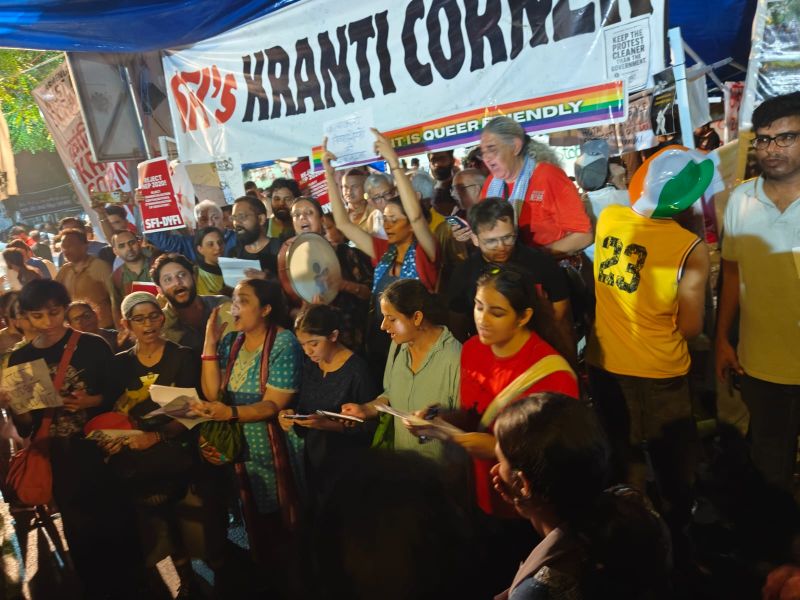
Jana Natya Manch performed at Jantar Mantar.
Adding a cultural dimension to the protest, the Delhi-based political street theatre collective Jana Natya Manch (JANAM) performed at Kranti Corner in Jantar Mantar in response to the SFI’s call.
The group staged a performance in support of the ongoing hunger strike and reiterated its backing for the students’ demands.
Through songs of resistance and street theatre, JANAM highlighted concerns over paper leaks, corruption and what it described as the steady erosion of the public education system, while stressing the importance of collective solidarity during a prolonged democratic struggle.
Protest venues also displayed photographs and documentation of the police action against demonstrators in Delhi while volunteers collected signatures backing the movement’s demands.
(Edited by Sumavarsha, with inputs from Dileep V Kumar, and Sreelakshmi Soman)



