

Published Jun 12, 2026 | 5:43 PM ⚊ Updated Jun 12, 2026 | 5:43 PM

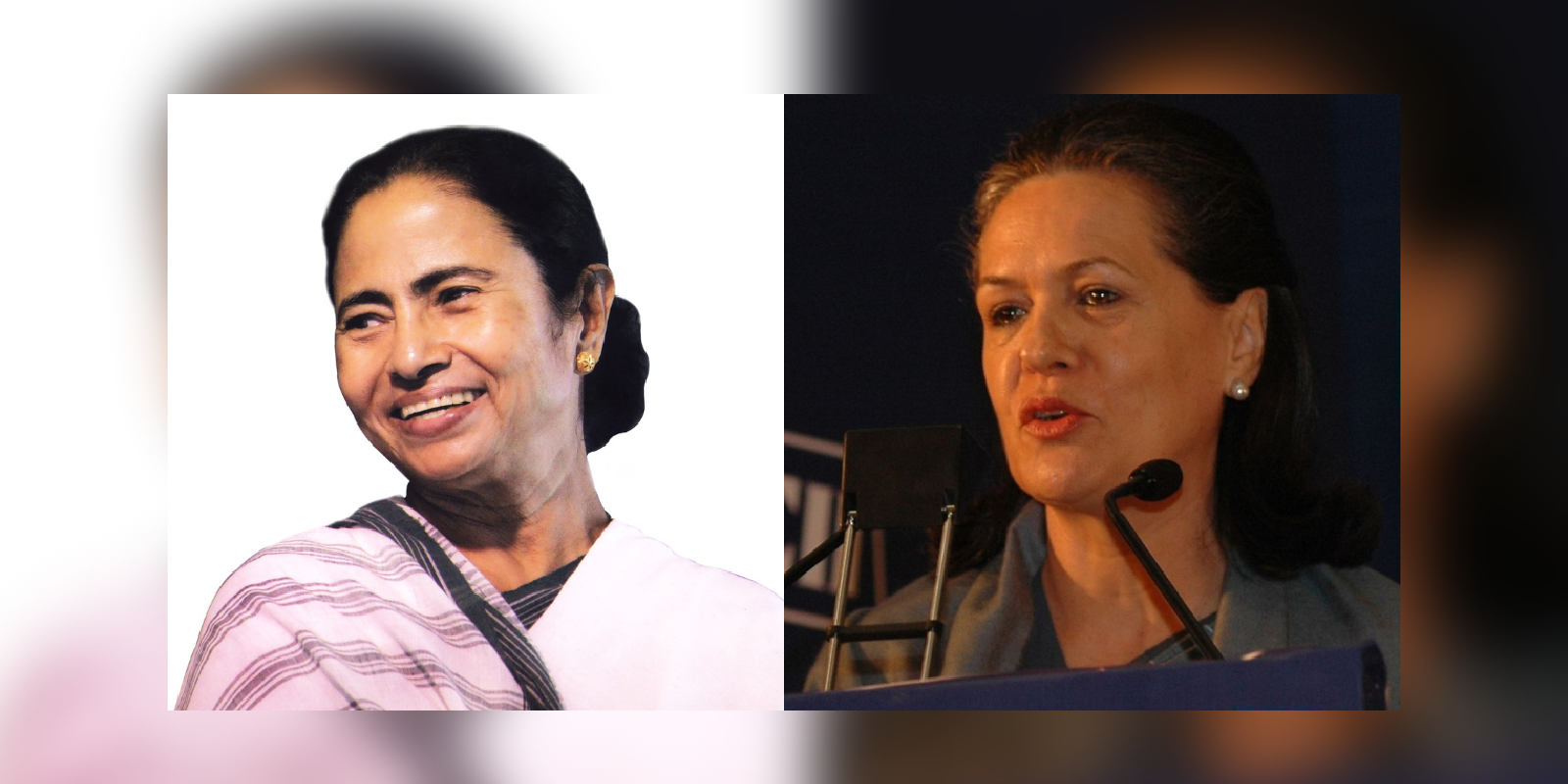
Sonia Gandhi and Mamata Banerjee during the Opposition Meet during happier times for Didi. (File Photo: Wikimedia)

Synopsis: TMC’s dependence on a personality-driven model of politics was its strength in good times. Now, failure is exposing the rot that lay hidden within.
The crisis engulfing the Trinamool Congress today is not an ordinary episode of dissent—it is a defining moment that could reshape the party’s future. What began as murmurs of discontent has rapidly escalated into a full-blown rebellion involving both Members of the Legislative Assembly (MLAs) and Members of Parliament (MPs), raising serious questions about the durability of Mamata Banerjee’s political edifice.
Parallels are inevitably being drawn to Indira Gandhi’s political journey, particularly her 1977 defeat following the Emergency. Yet, such comparisons, while tempting, risk oversimplifying vastly different contexts. If Indira’s setbacks were followed by calculated consolidation, the current crisis within the TMC is a structural unravelling.
The speed at which the party is crumbling is striking.
Within weeks of the 2026 Assembly Elections defeat, the party has found itself battling internal rebellion at multiple levels. Reports that there are 19-20 dissident MPs—out of the TMC’s strength of 28 in the Lok Sabha—signal a rupture that goes beyond factional politics. This comes after 58 of the 80 MLAs deserted Mamata in the West Bengal Assembly. These are body blows.
This dual-front challenge exposes a deeper flaw: the TMC’s dependence on a personality-driven model of politics. Built around Mamata Banerjee’s charisma and her anti-Left positioning, the party never fully developed a strong ideological or institutional framework. In times of political dominance, this model delivered results. But in adversity, it has revealed its fragility.
Without a unifying ideological anchor, loyalty within the party has often been transactional. As electoral fortunes decline and administrative pressures mount, leaders and workers alike are recalibrating their positions—some distancing themselves from the leadership, others openly rebelling.
The rebellion led by figures such as MP Kakoli Ghosh Dastidar reflects not just dissatisfaction but a calculated political shift. Reports suggesting that dissident MPs may align with the National Democratic Alliance (NDA) indicate a search for political security beyond the TMC. West Bengal CM Suvendu Adhikari’s scheduled meeting with the rebel MPs in New Delhi on Sunday adds to the drama.
At the same time, the anti-defection law looms large over these developments. Any significant split must meet the two-thirds threshold to avoid disqualification, making numbers crucial. This legal constraint has turned the rebellion into a high-stakes game of arithmetic, where every MP and MLA counts.
The situation is further complicated by the erosion of the party’s strength in the Rajya Sabha, following the resignation of several members. This not only weakens the TMC’s legislative influence but also limits its bargaining power at the national level.
Amid this turmoil, speculation about a potential merger with the Indian National Congress has added a dramatic twist. Unlike earlier rumours of individual defections, the current discourse points to a possible organisational merger—a move that could fundamentally alter the political landscape.
From a strategic perspective, such a merger could serve as a containment mechanism. By dissolving the TMC into a larger entity, the leadership could prevent rebels from claiming the party’s identity, symbol, and resources. It could also provide a national platform and institutional support that the TMC currently lacks.
However, the risks are profound. A merger would effectively signal the end of the TMC as an independent force—a remarkable turn for a party that once dominated West Bengal politics. It could also alienate core supporters and create internal tensions within the Congress.
Beyond internal dynamics, public perception plays a critical role in shaping the party’s future. Allegations of corruption, administrative inefficiencies, and a perceived disconnect between leadership and grassroots workers have contributed to growing public dissatisfaction.
Unlike previous political transitions in the state, where parties such as the Congress or the Left Front retained organisational cohesion despite electoral defeat, the TMC now faces intense public scrutiny and backlash. This has accelerated the pace of internal fragmentation, as leaders seek to distance themselves from both political and legal risks.
With the next Lok Sabha elections scheduled for 2029, the central question is whether the TMC will survive as a coherent political entity until then. The answer depends on how the current crisis is managed.
If the rebellion continues to gain momentum, the party could fragment into multiple factions, each aligning with different national or regional forces. Alternatively, a decisive organisational restructuring—whether through internal reform or external merger—could stabilise the situation.
For Mamata Banerjee, the challenge is both immediate and existential. Retaining the loyalty of MPs who remain, aiming to win back the dissenting MLAs, and rebuilding public trust will require more than tactical manoeuvres—it will demand a fundamental rethinking of the party’s structure and strategy.
The TMC stands at a critical juncture where every decision carries long-term consequences. Whether the current turmoil leads to reinvention, realignment, or disintegration remains uncertain.
What is clear, however, is that the party can no longer rely solely on its past strengths. In a rapidly evolving political landscape, survival will depend on its ability to adapt, institutionalise, and reconnect with the electorate. Failure to do so may not just weaken the party—it could redefine the balance of power in West Bengal and beyond.
Also Read: Andhra MP behind TMC implosion in Parliament? Reality or self-promotion?



