

Published Jul 16, 2026 | 8:00 AM ⚊ Updated Jul 16, 2026 | 8:00 AM

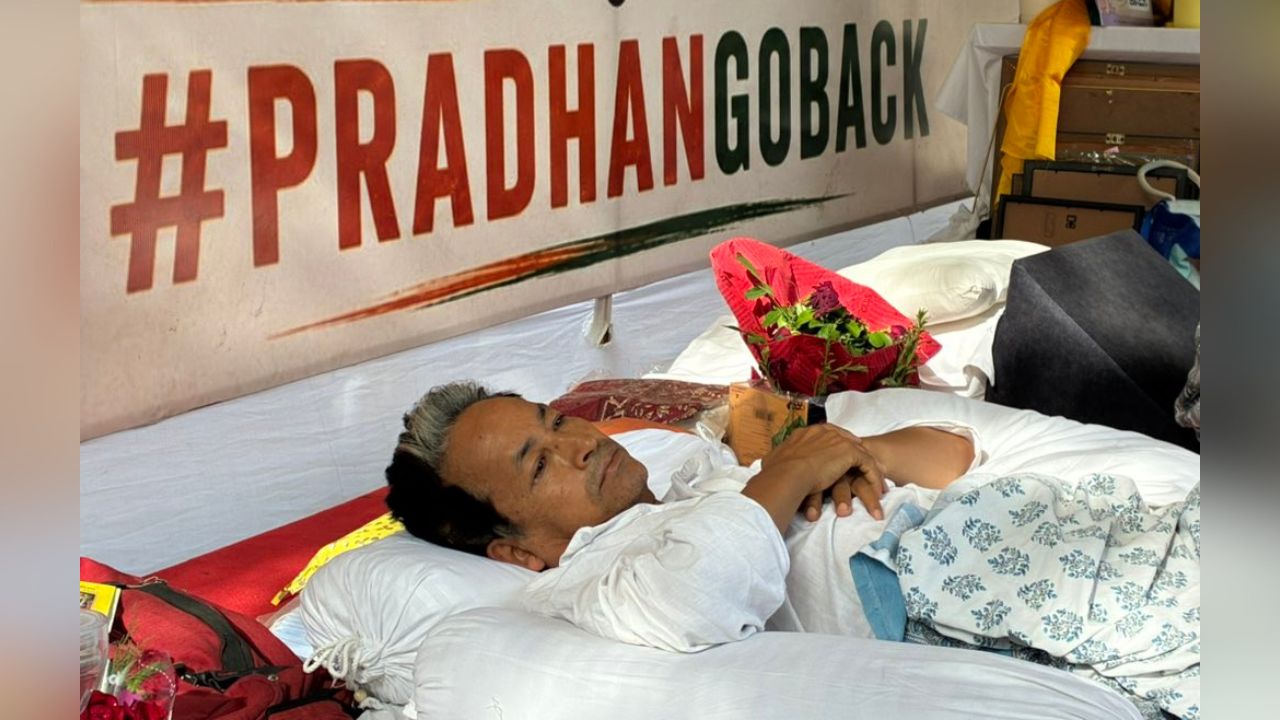
Sonam Wangchuk during his fast at Jantar Mantar.

Synopsis: Climate activist Sonam Wangchuk entered the 18th day of his indefinite hunger strike on Wednesday at Delhi’s Jantar Mantar demanding Union Education Minister Dharmendra Pradhan’s resignation. An activist-lawyer has approached the Delhi High Court seeking urgent medical intervention, arguing that the government has a constitutional responsibility to protect Wangchuk’s life as his health deteriorates. Meanwhile, around 50 students are set to begin an indefinite solidarity fast.
Some sing until their voices crack. Some dance with fierce defiance. Others raise slogans, hold placards or simply stand in silence. Every song, every step, every cry carries the weight of anger, grief and hope.
At Delhi’s Jantar Mantar, the air is thick with resistance.
Beneath the open sky of India’s national capital, the seat of governance of the world’s largest democracy, an extraordinary spectacle is unfolding, not of celebration, but of unwavering resolve against what protesters call a betrayal of the country’s youth.
At the heart of it sits climate activist Sonam Wangchuk, now on the 19th day of his indefinite hunger strike, demanding the resignation of Union Education Minister Dharmendra Pradhan. His fast is in solidarity with the Cockroach Janta Party (CJP), which has been protesting over the alleged leaks and irregularities in the NEET-UG medical entrance examination, seeking accountability and action from the government.
But this is not Wangchuk’s struggle alone.
Around him stands a community that has refused to leave his side.
Among them is a dedicated medical team that is doing far more than monitoring his health. They are protesters too. One of them is Dr Nitin Dighe, who has remained alongside Wangchuk and CJP founder Abhijeet Dipke throughout the protest, keeping a close watch on Wangchuk’s condition while also joining demonstrations and raising slogans.
Speaking to South First amid the chants and the constant hum of protest, Dr Dighe described the physical and emotional toll of the fast. Students gathered at the site also shared why they believe this movement has grown far beyond an entrance examination. It is, they say, a fight for accountability, justice and the future of millions.
When South First spoke to Dr Nitin Dighe, he had just completed Sonam Wangchuk’s daily medical assessment and was preparing to join the evening protest.
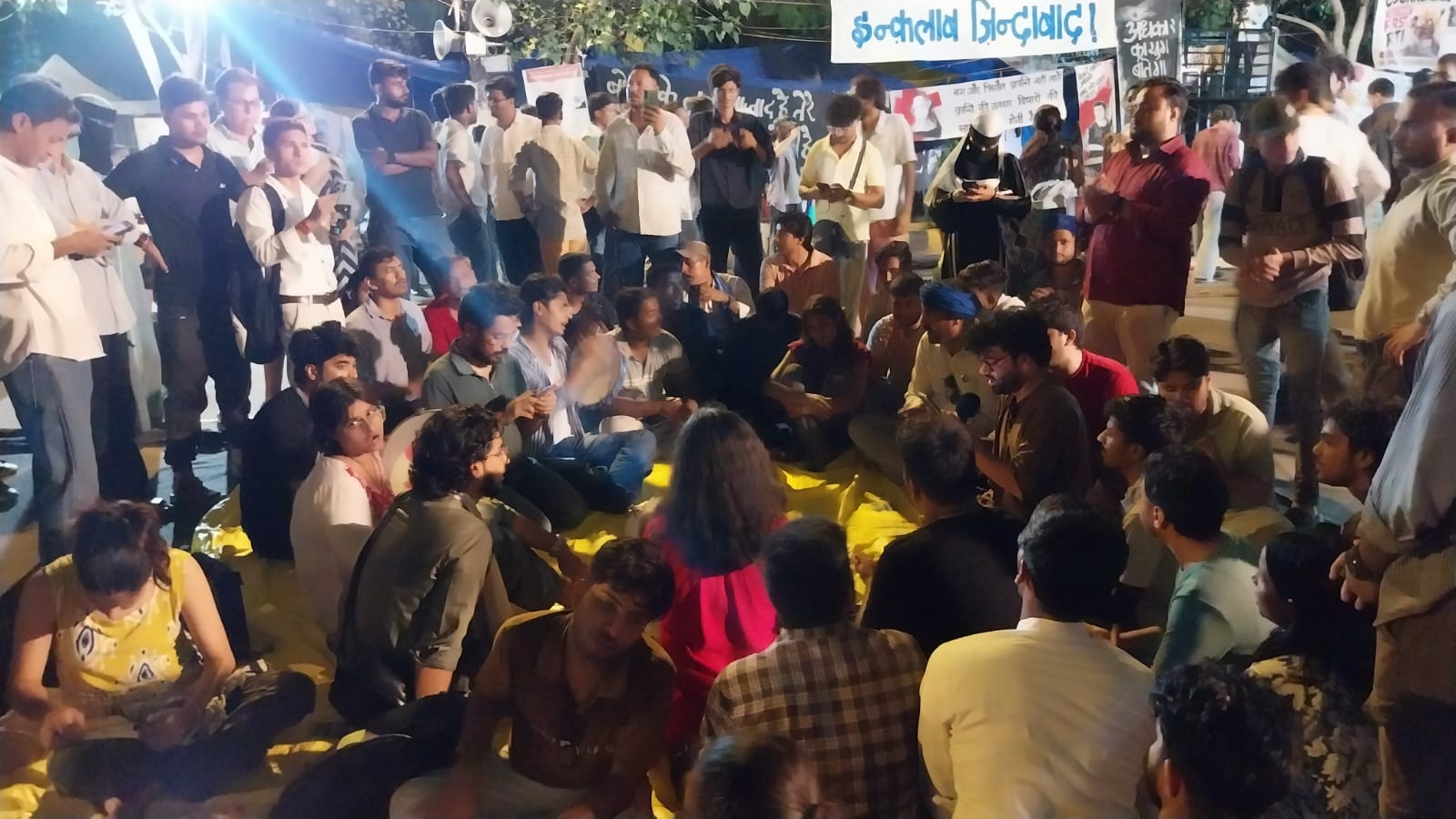
Protesters
“We are with Sonam sir round the clock. A dedicated medical team is monitoring him continuously because this is the 18th day of his fast,” Dr Dighe said.
According to the day’s medical bulletin, Wangchuk’s weight has fallen to 57.15 kg, a drop of 400 grams from 57.55 kg recorded the previous day. His blood sugar level was 80 mg/dL, hydration was reported to be fair, he remained mentally alert, and his blood pressure was 105/76 mmHg.
Dr Dighe said the medical team is constantly checking Wangchuk’s health while also taking part in the ongoing protest.
Although Sonam Wangchuk has largely endured the physical strain of his indefinite fast without complaint, he has struggled with the constant noise at Delhi’s Jantar Mantar. He appealed for his noise-cancelling headphones to be brought from Bengaluru. According to CJP sources, he has since received them.
Rakesh Kumar Saini, the activist-lawyer who moved the Delhi High Court through a public interest litigation (PIL) seeking urgent medical intervention for Sonam Wangchuk, told South First that the court heard the matter on Wednesday morning but deferred it to Thursday as no counsel appeared for the authorities.
“The Delhi High Court took up the petition this morning but deferred the hearing till tomorrow because no counsel representing the authorities appeared. Their absence was due to the lawyers’ boycott/work abstention called by the Delhi High Court Bar Association,” Saini said.
“The immediate step should be to take him to a government hospital and administer the nutrients, vitamins and minerals his body needs through a liquid diet. This is essential to keep him alive,” he said.
Expressing concern over Wangchuk’s deteriorating health, Saini said the government has a constitutional and humanitarian responsibility to intervene.
“Sonam is not a terrorist, anti-national or anti-social person. He is protesting in a legitimate and democratic manner. It is the moral duty of the government to protect the health and life of every citizen,” he said. “If his condition continues to deteriorate, I don’t think he will survive much longer. No human body can endure this indefinitely. The government should take him into protective custody, admit him to a government hospital and provide the medical care he requires, including force-feeding if necessary. Once he recovers, he can be allowed to continue his protest,” Saini added.
“If the government does not do this, the court has the power to issue appropriate directions. I hope it exercises that authority. A similar course of action was taken during Anna Hazare’s fast,” he said.
Also Read: The Supreme Court’s onerous gift to the Bar: Autonomy with accountability
As Sonam Wangchuk’s health deteriorated on the 18th day of his indefinite fast, student groups have decided to escalate their solidarity campaign. Mehina Fathima, SFI Delhi University chief, told South First that around 50 students from Left organisations will begin an indefinite solidarity fast on Thursday.
Earlier, during a meeting organised by the Campaign for Justice and Peace (CJP), student groups had decided against fasting, fearing health complications for young protesters unfamiliar with prolonged hunger strikes. However, Wangchuk’s declining health prompted them to reverse the decision.
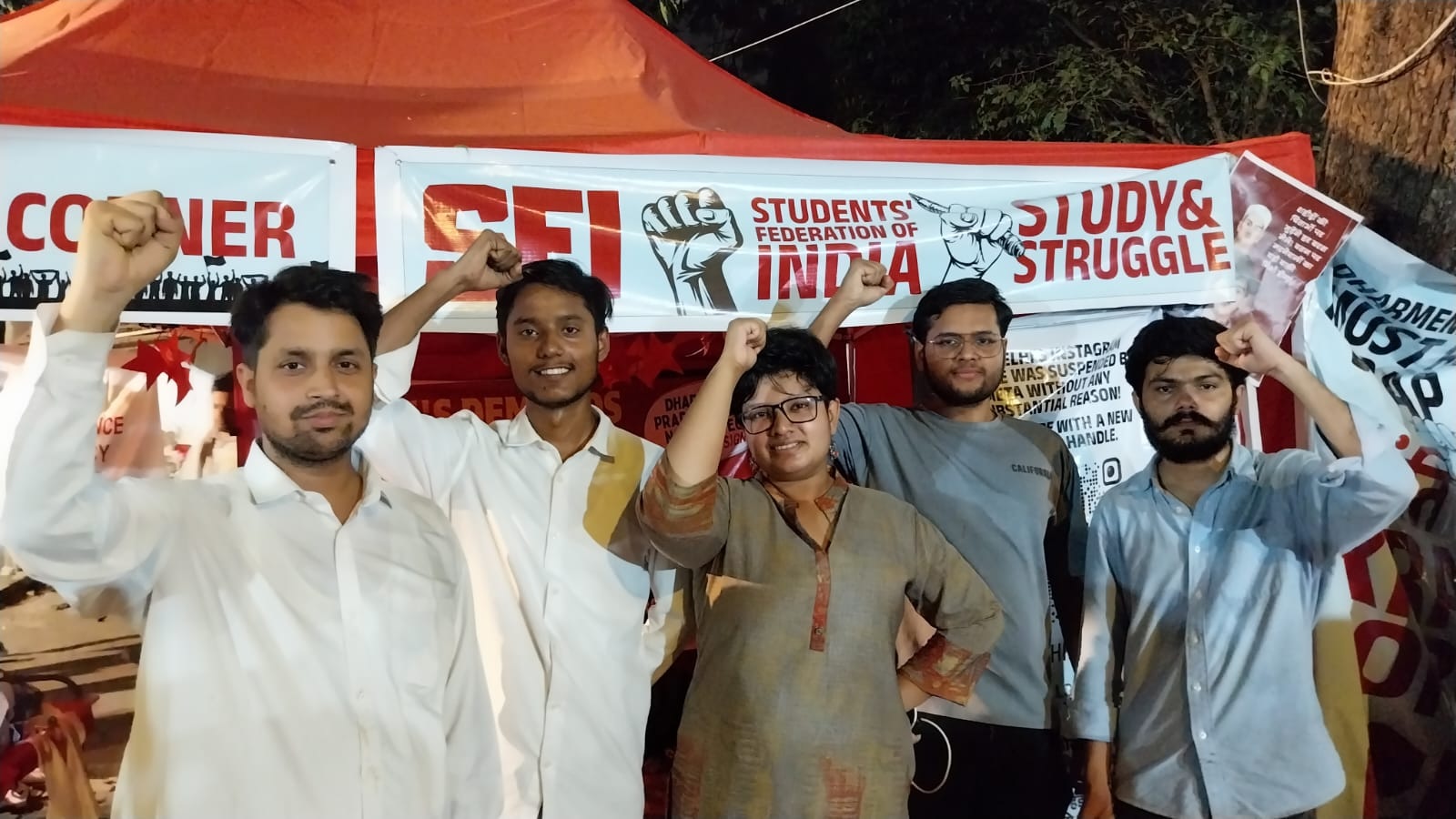
Mehina with fellow comrades at the Jantar Mantar protest site.
“We had initially decided that students should not go on a hunger strike because we didn’t want a pattern where students, without medical supervision or experience, put their health at risk. But after Sonam sir’s condition worsened, we decided to begin our own indefinite fast. Students from Punjab and Maharashtra have also been fasting in solidarity on a rotational basis,” Mehina said.
Mehina, who has been staying at Delhi’s Jantar Mantar protest site day and night for the past several days, also expressed concern over the low participation of women in the round-the-clock protest. Apart from women activists from Left organisations, she said the number of women staying continuously at the protest site remains below 100.
She also raised concerns over what she described as the growing disturbance caused by independent YouTubers at the protest venue. “Along with the Delhi Police’s drones and 24×7 photography, independent YouTubers are becoming a serious disturbance. Many come here only to vlog and gain views. Instead of documenting the protest and the issues we are raising, some keep filming the people sitting behind them. It makes many of us, especially women, uncomfortable,” she said.
As Mehina put it, “The Centre may choose to ignore one Sonam Wangchuk. But can it ignore the hundreds who are ready to walk the same path?”



