

Published Aug 10, 2026 | 5:46 PM ⚊ Updated Aug 10, 2026 | 5:46 PM

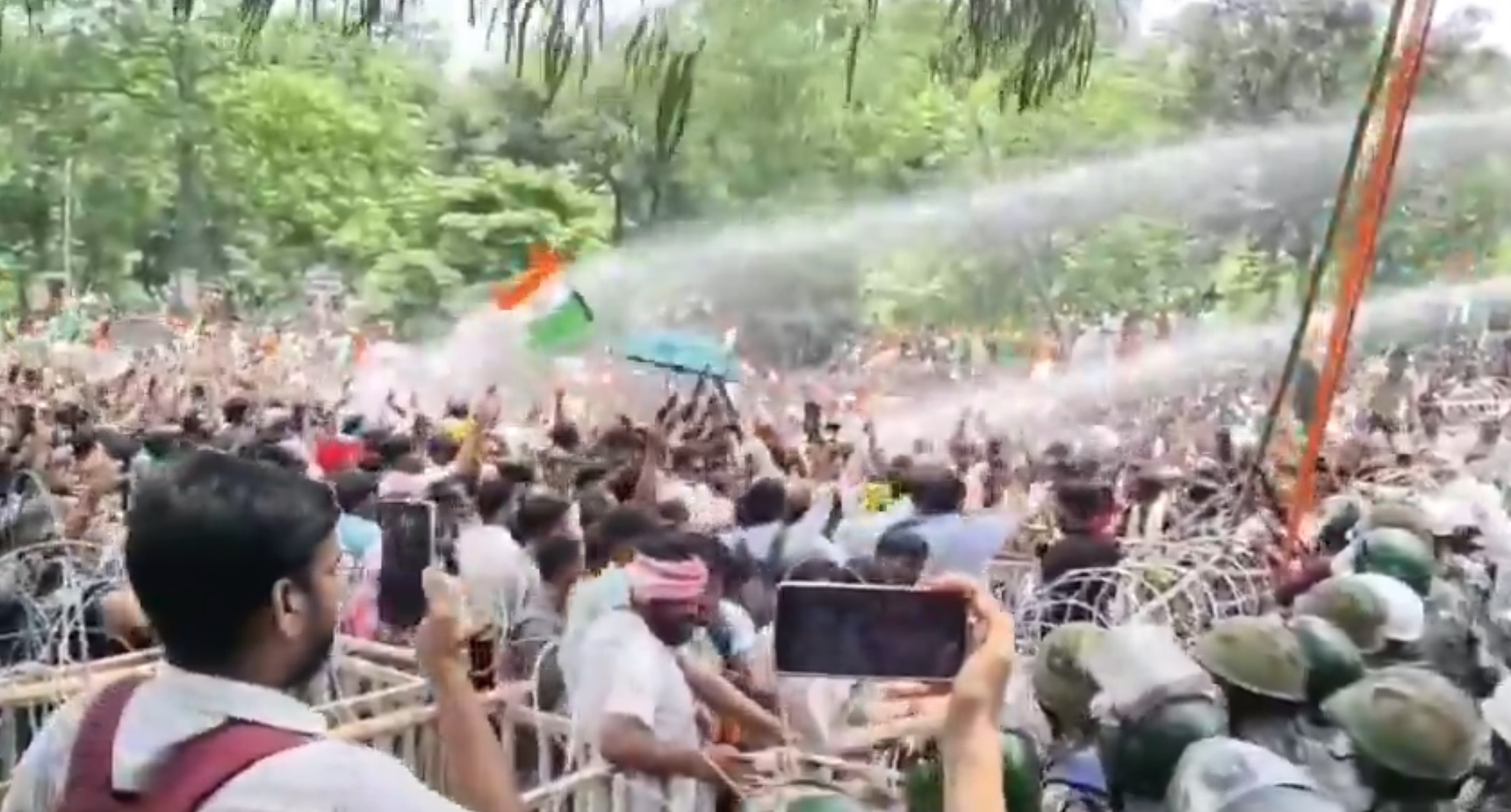
Police used water cannons and tear gas to disperse protestors.

Synopsis: Jharkhand police lathi-charged thousands of JPSC-JSSC aspirants and used water cannons and tear gas after they breached barricades during a march to the State Assembly in Ranchi on 10 August. The students are demanding a CBI probe into alleged irregularities in the JPSC 14th Civil Services Preliminary Examination and the JSSC-CGL examination.
Jharkhand police on Monday, 10 August, lathi-charged thousands of JPSC-JSSC aspirants and used water cannons and tear gas to disperse them after they breached barricades during a ‘Vidhan Sabha gherao’ march towards the State Assembly in Ranchi, demanding reforms and a Central Bureau of Investigation (CBI) probe into alleged irregularities in the conduct of the JPSC 14th Civil Services Preliminary Examination in July, the Hindu reported.
Despite heavy restrictions imposed by the Jharkhand police, including checks on buses and private vehicles at district borders, major roads and highways in an attempt to limit the number of protesters reaching the State capital, students arrived in Ranchi from several districts in large numbers in the morning, travelling by trains, buses and other vehicles.
They breached the barricades and moved towards the Assembly. Student leader Devendra Nath Mahto, who has been on a hunger strike for nine days, also joined the march. He has lost 10.5 kg during the protest and was seen carrying a portrait of former Jharkhand Chief Minister Shibu Soren.
Also Read: The politics of forgiveness: Prime Minister Modi and the burden of example
The march followed three days of discussions between the Jharkhand government and representatives of protesting JPSC-JSSC aspirants.
After six hours of discussions with protesting student groups on Sunday, 9 August, the government agreed to cancel the 14th JPSC preliminary examination and the JPSC backlog examinations held in 2023 and 2025. It also announced a multi-pronged action plan, including probes by the State Criminal Investigation Department (CID) and the Enforcement Directorate (ED), into alleged recruitment irregularities.
The students continued to demand a CBI inquiry into alleged irregularities in the JSSC-CGL examination and vowed to continue the Assembly march peacefully.
On Sunday, three JPSC members — Ajita Bhattacharya, Anima Hansda and Jamal Ahmed — resigned. Jharkhand Governor Santosh Kumar Gangwar accepted their resignations following recommendations from the State government.
The State CID also arrested former JPSC chairperson L Khiangte on Monday in connection with alleged irregularities in the recruitment tests, NDTV reported. Khiangte had resigned from the post on 22 July. His arrest came as thousands of students reached the State Assembly to press for changes in the recruitment process.
Chief Minister Hemant Soren told the protesters that “justice will be delivered with full transparency”.



