

Published Aug 02, 2026 | 7:17 PM ⚊ Updated Aug 02, 2026 | 7:17 PM

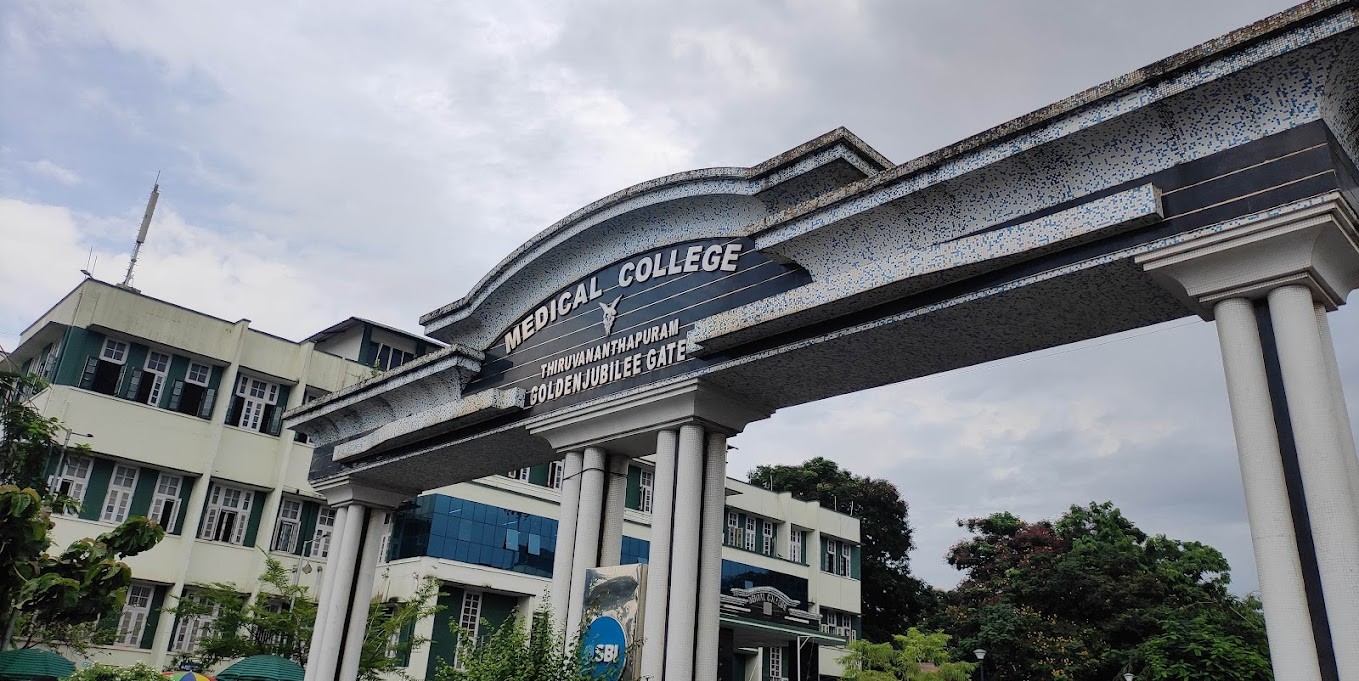
Government Medical College, Thiruvananthapuram. (Creative Commons)

There is a familiar moment in almost every visit to a government hospital in Kerala. It begins not with the doctor, but with a question.
“Where should I go?” or “Where could I find such-and-such service?”
The answer, more often than not, arrives as a finger pointing vaguely down a corridor, a curt response, or, on a bad day, a look that suggests the patient or bystander has interrupted something far more important.
The most difficult part of visiting a government hospital was not necessarily finding the right doctor. It was figuring out whom to ask without being glared at, waved away or being directed to by someone who seemed permanently offended by your very existence.
Now, the state government appears to have accepted what patients have known all along: treatment does not begin with a prescription. It begins with the first conversation.
Its latest order mandates a statewide training programme for nearly every category of hospital staff—except medical officers—covering communication skills, patient care, professional ethics, behavioural management, grievance redressal and public relations.
It is, in many ways, an acknowledgement that medicine is only one part of healing. The other is how people are treated while seeking it.
Also Read: South India dominates India’s dengue burden
Every regular visitor to a government hospital has a story.
The older man who wandered between buildings searching for the laboratory.
The anxious mother who was told only to “go outside for some tests” without anyone explaining where “outside” actually was.
The relative carrying a patient file from one counter to another because every employee pointed to someone else.
None of these incidents finds a place in medical records. Yet they shape public perception of the health system as much as successful surgeries and life-saving treatment.
The government order acknowledges that complaints have been mounting over inadequate assistance, ineffective communication, discourteous behaviour and poor interaction with patients and attendants. Beyond inconvenience, it says, such experiences damage patient care itself and erode confidence in public healthcare.
In other words, good medicine can still leave behind bad memories if it arrives wrapped in indifference.
This time, the prescription is refreshingly different.
The training architecture is elaborate. Four officials from every district and every government medical college will first become master trainers. The Apex Trauma and Emergency Learning Centre (ATELC) will prepare modules and train personnel from medical colleges. At the same time, the State Institute of Health and Family Welfare (SIHFW) will handle district and taluk hospitals. Staff will be trained in batches small enough to keep hospitals functioning without disruption.
There is an acknowledgement here that hospitals do not function through medicine alone.
They function through conversations, directions, explanations, reassurance and, occasionally, the ability to answer the same question for the umpteenth time without sounding personally offended.
Also Read: What is ICMR-NIN’s ‘dual-axis’ food classification
Perhaps the most striking feature of the order is that it extends beyond nurses, clerical staff and technicians.
Every security guard—whether permanent, temporary, contractual or outsourced—must undergo the prescribed training.
No security personnel will be allowed to work without completing it.
Anyone who has tried entering a crowded outpatient block understands why.
For many visitors, the first representative of the health department is not a doctor or nurse but the person standing at the hospital gate.
A courteous explanation often prevents an argument.
A rude instruction usually creates one.
The government has, at least on paper, decided that the security desk deserves as much attention as the reception counter.
Kerala’s public hospitals have changed dramatically over the past decade. New blocks have appeared, emergency departments have expanded, diagnostic facilities have improved, and patient numbers have steadily risen.
The busier hospitals become, the shorter conversations tend to get.
Stress, overcrowding, staff shortages and exhausting work schedules remain everyday realities inside public hospitals.
No workshop can eliminate those pressures. Yet training can establish expectations.
Training alone cannot erase staff shortages, overcrowding or the fatigue that comes from handling hundreds of patients every day. No workshop has yet discovered a cure for a 12-hour shift or an overflowing waiting hall.
Yet the order carries an interesting message.
For decades, governments measured healthcare largely through infrastructure—more beds, more equipment, more buildings and more specialists. Kerala’s latest initiative suggests that the quality of interaction has become an indicator worth investing in as well.
Good healthcare is not only about curing illness.
Sometimes, it begins with someone looking up, making eye contact and saying, “How can I help you?”



