

Published Oct 19, 2026 | 12:05 PM ⚊ Updated Oct 19, 2026 | 12:05 PM

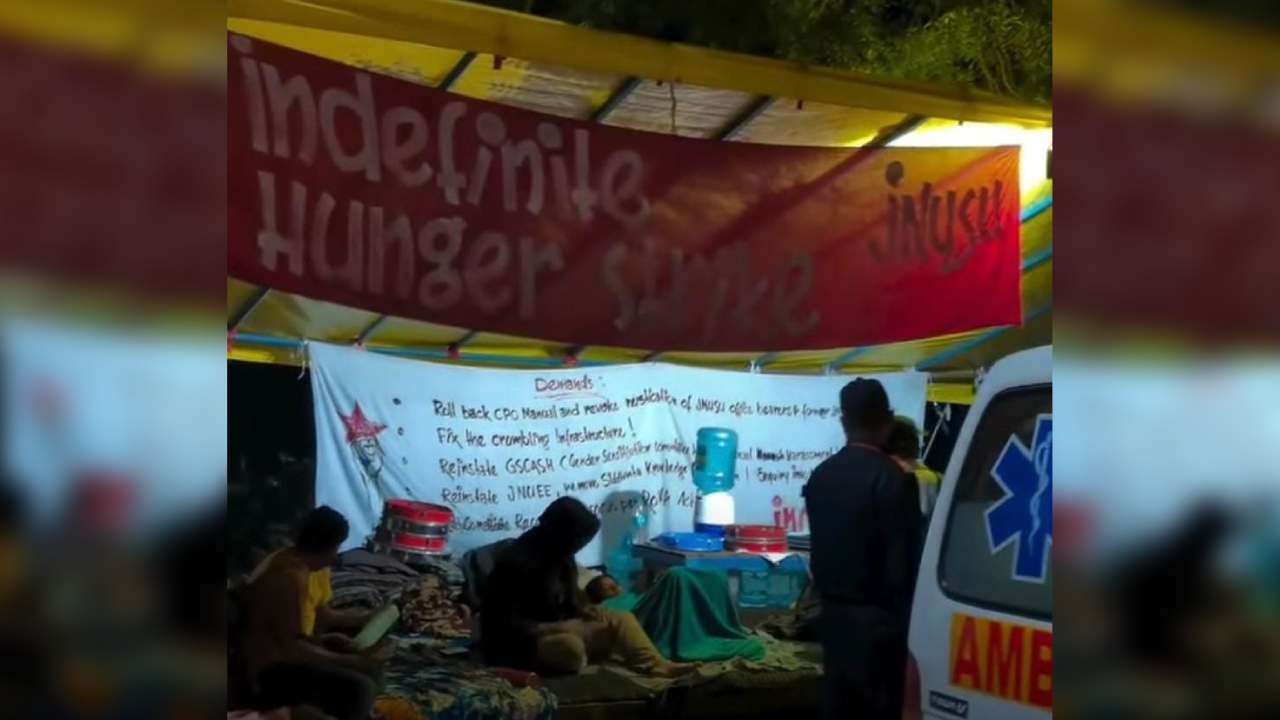
The students have been sitting on an indefinite hunger strike since 3 October.

Synopsis: The striking students have raised a charter of 13 demands, including rolling back the Chief Proctor Office (CPO) Manual, revoking the rustication of JNUSU office bearers, reinstating the Gender Sensitisation Committee Against Sexual Harassment (GSCASH) and the JNU entrance exam JNUEE, among others.
CPI(M) Rajya Sabha member John Brittas has sought President Droupadi Murmu’s urgent intervention over the indefinite hunger strike by JNU Students’ Union (JNUSU) representatives and other students.
Brittas wrote to President Murmu on the 16th day of the strike, Sunday, 18 October, saying the participants’ deteriorating health demanded urgent intervention. The MP asked the President to intervene in her capacity as Visitor of JNU. Brittas also wrote to the Education Minister, “urging immediate action to revoke the unjust rustication of elected JNUSU representatives, withdraw the objectionable provisions of the CPO Manual, and resolve the students’ outstanding grievances”.
JNUSU president Aditi Mishra, vice-president K Gopika Babu and general secretary Sunil Yadav, along with several other students, have been sitting on an indefinite hunger strike since 3 October. They have raised a charter of 13 demands, including rolling back the Chief Proctor Office (CPO) Manual, revoking the rustication of JNUSU office bearers, reinstating the Gender Sensitisation Committee Against Sexual Harassment (GSCASH) and the JNU entrance exam JNUEE, among others.
Also Read: ‘Can you stop the waves of the sea?’
“As a former student of JNU, I am deeply concerned by the present situation. A university that nurtured debate and dissent must not punish them. Its democratic traditions must be preserved, and its students’ voices deserve to be heard, not silenced,” Brittas said in the letter.
Brittas raised concerns about the nearly eight-month rustication of elected Students’ Union representatives, including the former JNUSU president. He said their exclusion affected the Students’ Union’s functioning and weakened students’ ability to collectively raise their grievances.
Recalling his student years at JNU, the MP highlighted the importance of preserving an environment where students could express their views, question decisions and collectively raise concerns.
“I am therefore particularly conscious of the importance of preserving an environment where students can freely express their views, question arbitrary decisions and collectively raise their concerns. It is, therefore, deeply concerning that such disproportionate disciplinary measures could diminish this space, discouraging students from raising legitimate grievances for fear of punitive action. Such an atmosphere has implications extending well beyond those directly affected, particularly when concerns relating to gender justice, equal opportunity, admissions and basic campus facilities remain unresolved. The prolonged impasse has now assumed serious proportions, particularly in view of the risks posed to the health and well-being of the hunger strike participating students,” he wrote.
(Edited by Majnu Babu).



