

Published Sep 23, 2026 | 3:10 PM ⚊ Updated Sep 23, 2026 | 3:14 PM

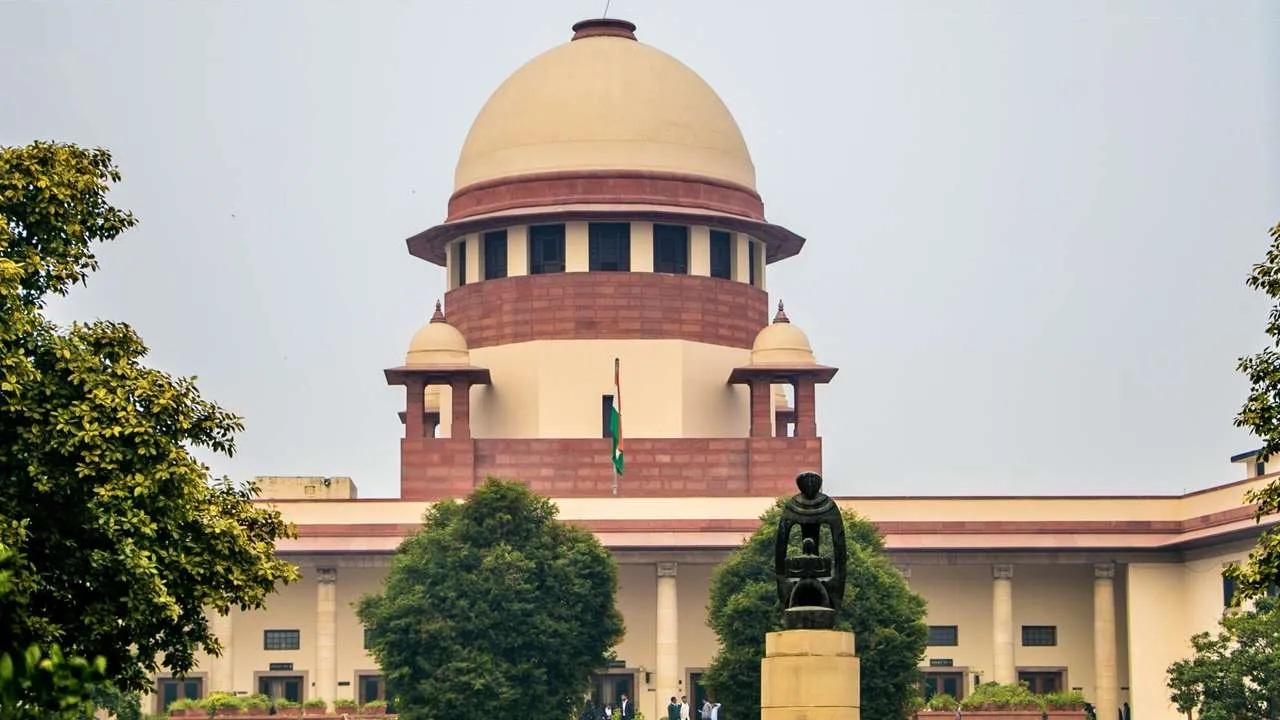
Supreme Court

Synopsis: The Supreme Court expressed grave concern over developments in the Sai Krishna custodial death case, questioning why he was not produced before a magistrate, why an FIR was delayed and why police station CCTV footage was deleted. The bench stayed Andhra Pradesh High Court proceedings, ordered records to be submitted in a sealed cover and decided to monitor the case directly.
In a major development in the sensational Gade Sai Krishna custodial death case, the Supreme Court on Wednesday, September 23, expressed concerns regarding the alleged negligence on the part of the police and said it will directly monitor the investigation.
A three-judge bench of the apex court headed by Justice Vikram Nath and comprising Justice Augustine George Masih and Justice Sandeep Mehta also stayed all ongoing proceedings related to the case in the Andhra Pradesh High Court until it concludes the hearing of the petitions.
The SC issued the key directions on a plea by YSRCP MP Gurumoorthy seeking investigation into the role of senior police officials in the illegal detention and alleged custodial killing of Sai Krishna and the destruction of evidence in the case. In his petition, Gurumoorthy challenged the HC order staying a magistrate court’s directions to initiate an inquiry against senior police officials, including Andhra Pradesh Director General of Police (DGP) Harish Kumar Gupta, Vijayawada Police Commissioner (CP) S. V. Rajashekhara Babu, and Assistant Commissioner of Police (ACP) K. Manasa.
During the hearing, counsel for the petitioner detailed the circumstances surrounding Sai Krishna’s disappearance, prompting the bench to express grave concern over the developments. At one point, the bench voiced sharp displeasure with senior advocates Mukul Rohatgi and Siddharth Luthra, who appeared for the Andhra Pradesh government.
The bench noted the petitioner’s submission that the detained youth had never been produced before a magistrate. It expressed grave concern over the fact that the victim’s body remains untraced and that CCTV footage from the police station was deleted.
The court questioned counsel for the Andhra Pradesh government on why an FIR was not registered immediately, despite a formal complaint regarding Sai Krishna’s disappearance being submitted to the DGP on May 28. It observed that an inquiry into the conduct of senior officials may be warranted.
The bench rejected the state’s contention that a chargesheet had already been filed and that the accused had been arrested. The court also questioned the practice of executing non-bailable warrants (NBWs) through the Task Force.
While the state government submitted that seven accused persons had already been arrested and remanded to custody, the petitioner’s counsel pointed out that punitive action had been limited to subordinate police personnel.
The apex court also expressed dissatisfaction over the delay in hearing the habeas corpus petition filed before the HC by Sai Krishna’s mother, Gade Vijayalakshmi, on June 4. The HC initially directed the authorities to trace Sai Krishna within two weeks but later extended the deadline by another two weeks, prompting concerns over the circumstances surrounding his disappearance.
Remarking that a person’s disappearance while in police custody is unlawful, the top court on Wednesday said it would directly supervise the investigation. Justice Vikram Nath directed the Andhra Pradesh government to submit all records and case details in a sealed cover.
The court issued notices to the respondents and directed the petitioner to serve copies of the petition on all respondents by September 30. The next hearing has been scheduled for October 12. In light of the SC directions, three related petitions currently pending before the HC will be transferred to the apex court, bringing the total number of petitions to be heard together on October 12 to four.
25-year-old Sai Krishna, against whom a Non-Bailable Warrant (NBW) was pending, was arrested by the Commissioners Task Force (CTF) and Krishna Lanka police on May 6. He was reportedly brought to the police station at 7 am on May 6 but was never produced before a magistrate. According to his mother, she saw policemen torturing Sai Krishna when she went to the police station to inquire about his detention. Later, Sai Krishna went missing and is believed to have succumbed to the injuries caused by the custodial torture.
A Special Investigation Team (SIT) was constituted to probe the case. According to the SIT investigation, Krishna died solely from the beatings inflicted by the Krishnalanka police, including Circle Inspector (CI) Nagaraju, while in custody.
The SIT has stated in its remand report that Sai Krishna did not die at Krishnalanka Police Station, but succumbed to injuries after he was shifted to an abandoned building at Ranigari Thota on the orders of Nagaraju. After Sai Krishna’s death, Nagaraju, with the help of police constables, transported his body to the Swargapuri crematorium in Vijayawada, where it was cremated.
The opposition parties have raised doubts regarding the SIT investigation and demanded a CBI probe into the case.
Expressing serious concerns over the handling of Sai Krishna’s disappearance, the habeas corpus petition and the SIT inquiry, YSRCP MP Gurumoorthy initially approached a Vijayawada court. He filed a private complaint before the Vijayawada 2nd Additional Judicial First Class Magistrate Court seeking action against the state DGP, Vijayawada Police Commissioner (CP) and Assistant Commissioner of Police (ACP).
Acting on Gurumoorthy’s complaint, the magistrate court directed that sworn statements from the MP and other witnesses be recorded. Vijayawada South ACP Manasa challenged the lower court’s order before the Andhra Pradesh High Court. Allowing the police plea, the High Court granted an interim stay on August 13 on the magistrate court’s directives. Gurumoorthy subsequently challenged the stay before the Supreme Court.
(Edited by Fayisa CA)



