

Published Nov 09, 2026 | 11:20 AM ⚊ Updated Nov 09, 2026 | 11:20 AM

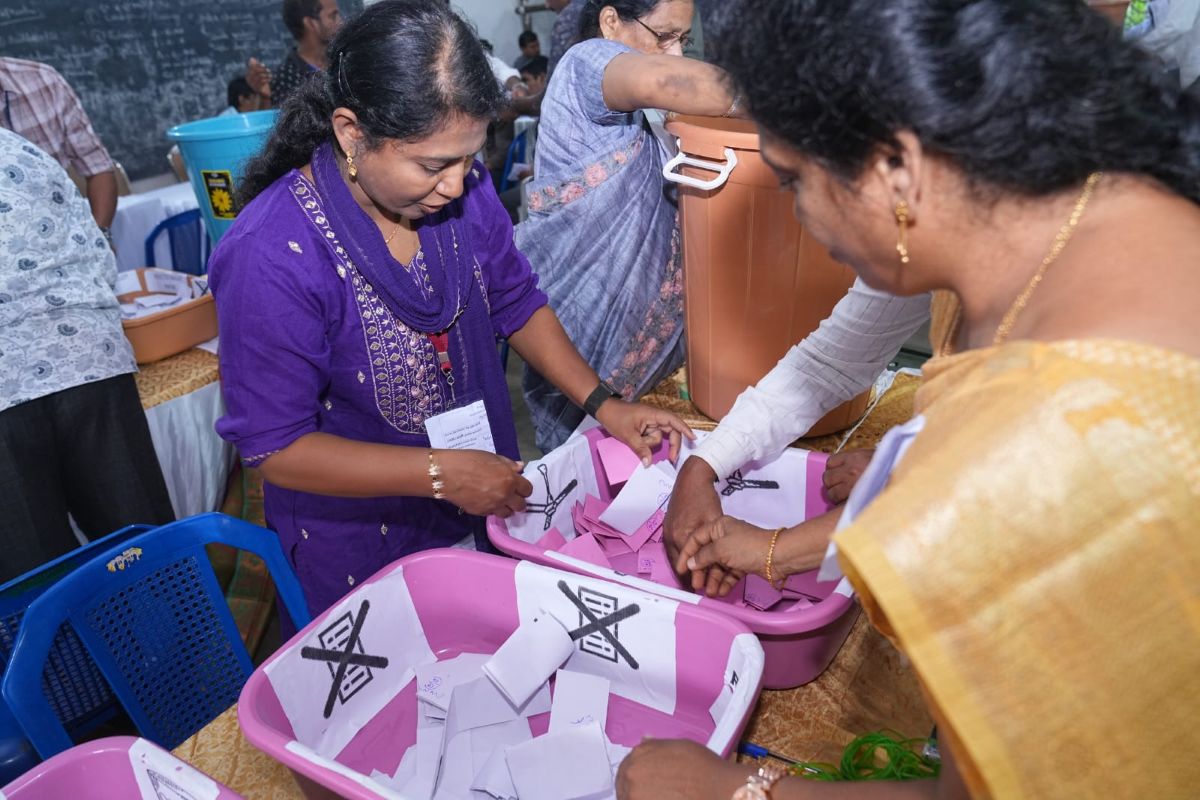
Vote counting commenced on November 7 and stretched over a marathon 48 hours. (Supplied)

Synopsis: Overall, the TDP-led alliance has registered an emphatic victory across all 28 districts in the Parishad polls. While the TDP emerged as the single largest party in both the MPTC and ZPTC segments and the Jana Sena proved its regional mettle, the YSRCP—despite putting up stiff resistance in a few pockets—could not halt the coalition juggernaut.
The Telugu Desam Party (TDP)-led ruling alliance has registered a landslide victory in the rural local body elections in Andhra Pradesh.
While the TDP bagged the lion’s share of seats in both the Mandal Parishad Territorial Constituency (MPTC) and Zilla Parishad Territorial Constituency (ZPTC) polls, its coalition partners—the Jana Sena Party (JSP) and the Bharatiya Janata Party (BJP)—also posted significant gains.
Although the opposition YSR Congress Party (YSRCP) finished second state wide, it failed to mount a formidable challenge to the ruling coalition, managing to retain its hold in only a few districts.
Also Read: TDP leads ZPTC, MPTC elections in Andhra Pradesh
Across the state’s 28 districts, the election process was initiated for 659 ZPTC and 9,821 MPTC seats. Of these, 77 ZPTC and 2,051 MPTC seats were declared elected unanimously, leaving 582 ZPTC and 7,767 MPTC seats scheduled for polling.
Elections were not held in three MPTC segments where either no nominations were filed or all filed nominations were rejected.
Excluding the uncontested segments, polling was conducted for the remaining ZPTC and MPTC seats on November 5, following the declaration of unanimous results on October 27. Vote counting commenced on November 7 and stretched over a marathon 48 hours before the final results were declared.
A total of 18,843 candidates contested the MPTC seats, while 2,169 candidates were in the fray for the ZPTC segments. Over 2.61 crore voters were eligible to exercise their franchise across 31,460 polling stations set up state wide.
The Telugu Desam Party demonstrated clear supremacy in the ZPTC results, winning 406 of the 582 contested seats—an impressive strike rate of nearly 69.8 percent.
The YSRCP finished a distant second with 76 seats. The Jana Sena Party secured 73 seats, while the BJP won 20. Independent candidates emerged victorious in six segments, and the CPI(M) bagged one seat.
A defining feature of the verdict is the combined dominance of the alliance partners. Together, the TDP, Jana Sena, and BJP swept 499 ZPTC seats, accounting for 85.7 percent of the contested segments. The coalition secured 423 seats more than the YSRCP’s tally of 76, underscoring the sheer scale of the alliance’s sweep in the ZPTC tier.
In the district-wise breakdown, the TDP recorded its highest tally in SPSR Nellore district, winning 26 out of 30 ZPTC seats to establish near-total dominance. The party also bagged 22 seats each in Anantapur and Srikakulam districts, and 21 seats each in Prakasam, Sri Sathya Sai, and Vizianagaram districts.
Furthermore, the TDP won 19 seats each in Chittoor and Krishna districts, 18 in Kurnool, 17 each in Anakapalli and Eluru, and 16 in Nandyal. It secured 14 seats in Bapatla, 13 each in East Godavari and West Godavari, and 12 seats each in Dr. B.R. Ambedkar Konaseema, Markapuram, and NTR districts.
Conversely, the YSRCP managed notable numbers in only a few pockets, winning nine ZPTC seats in Sri Sathya Sai district, seven in Alluri Sitharama Raju (ASR) district, six each in Tirupati and Annamayya districts, and five seats each in Vizianagaram, Polavaram, and Parvathipuram Manyam districts.
Winning 73 ZPTC seats, the Jana Sena Party emerged as the second-largest constituent within the ruling alliance. The party won seven seats each in Kakinada and Konaseema districts, and six seats each in East Godavari and West Godavari districts.
It also bagged five seats each in Anakapalli and Srikakulam, four in Krishna, and two seats each in Bapatla, Palnadu, Markapuram, and Parvathipuram Manyam districts.
The BJP won 20 ZPTC seats across the state, securing two seats each in Anakapalli, Kakinada, Srikakulam, and Tirupati districts, alongside single seats across several other districts.
Despite finishing second statewide, the YSRCP secured a clear majority in Alluri Sitharama Raju district, winning seven of the 11 ZPTC seats.
The TDP won three seats and the CPI(M) took one, while the Jana Sena and BJP failed to open their accounts in the district.
The YSRCP also emerged as the single largest party in Polavaram district, bagging five of the 12 ZPTC seats, followed by the TDP with four, Jana Sena with two, and the BJP with one.
The outcomes in these two districts stood in contrast to the broader statewide wave in favour of the coalition.
Mirroring its ZPTC performance, the TDP asserted its dominance in the MPTC elections. According to the district-level Proforma VII(a) party-wise results table covering 7,768 seats, the TDP won 4,806 MPTC seats, translating to a 61.9 percent seat share.
The YSRCP secured second place with 1,711 seats, while the Jana Sena won 938 seats and the BJP bagged 117. Independent candidates won 162 seats, the CPI(M) secured 15, the Congress won nine, the BSP took three, and other parties accounted for seven seats.
Combined, the TDP, Jana Sena, and BJP captured 5,861 of the 7,768 tabulated MPTC seats—representing 75.5 percent, or more than three out of every four contested seats.
In the MPTC segment, the TDP registered its highest district tally in Srikakulam with 392 seats, followed by Vizianagaram (290), Anantapur (278), SPSR Nellore (260), Sri Sathya Sai (258), Eluru (252), Anakapalli (246), and Kurnool (244).
The party also won 216 MPTCs in East Godavari, 209 in Kakinada, 202 each in Chittoor and Krishna, 200 in NTR district, 193 in Bapatla, and 185 in Tirupati. Additionally, it secured 183 seats in Konaseema, 174 in Prakasam, 128 in Nandyal, 123 in Parvathipuram Manyam, and 122 in Guntur.
The TDP’s contested tally was relatively modest in Markapuram (41), Visakhapatnam (29), YSR Kadapa (26), and Palnadu (22), though it posted substantial numbers across all other regions.
Of the 1,711 MPTC seats won by the YSRCP, its highest tally came from Eluru district with 107 seats. It was followed by Vizianagaram (101), Sri Sathya Sai (100), Kurnool (97), and Alluri Sitharama Raju and Nandyal districts with 89 seats each.
The party also bagged 85 seats each in Chittoor and Tirupati, 83 in SPSR Nellore, 81 in Srikakulam, 75 in Anakapalli, 69 in Annamayya, 68 each in Anantapur and East Godavari, 63 in Krishna, and 62 in Parvathipuram Manyam.
Furthermore, the YSRCP won 41 MPTC seats in Polavaram, 35 in Prakasam, and 31 in Guntur, while being restricted to just eight contested seats in YSR Kadapa district.
The Godavari region provided massive momentum to the Jana Sena Party in the MPTC polls. The party secured its highest tally in Kakinada district with 123 seats, followed by Dr. B.R. Ambedkar Konaseema (117), West Godavari (113), and East Godavari (101).
These four districts alone contributed 454 MPTC seats—nearly half of the party’s statewide total of 938 seats.
Elsewhere, the Jana Sena won 86 seats in Anakapalli, 70 in Eluru, 64 in Krishna, 37 in Parvathipuram Manyam, 34 in Guntur, 25 in Vizianagaram, and 22 each in Srikakulam and NTR districts. It also secured 12 seats each in Tirupati and Alluri Sitharama Raju districts, and five each in Kurnool and Nandyal.
The BJP won 117 MPTC seats statewide, led by East Godavari (15), Srikakulam (13), and West Godavari (11). It won eight seats each in Anakapalli and Tirupati, seven in Sri Sathya Sai, and six each in YSR Kadapa and Alluri Sitharama Raju districts.
Independent candidates made their presence felt by winning 162 MPTC seats despite the dominance of major political parties. Their highest tallies were recorded in Vizianagaram (20), Alluri Sitharama Raju (16), Srikakulam (15), and Tirupati (12), alongside 11 each in Konaseema and Kakinada, and 10 each in YSR Kadapa and Anakapalli districts.
Meanwhile, the CPI(M) won 15 seats, the Congress secured nine, the BSP bagged three, and other parties won seven seats.
Also Read: Jana Sena expands urban footprint as NDA dominates Andhra Pradesh local body polls
Several districts bucked the broader statewide trend in the MPTC results, witnessing cliffhanger contests.
In Annamayya district, the YSRCP edged past with 69 MPTC seats against the TDP’s 68—a razor-thin margin of just one seat. In the ZPTC segment of the same district, however, the TDP held a clear upper hand with 15 seats compared to the YSRCP’s six.
Similarly, in Polavaram district, the YSRCP won 41 MPTC seats while the TDP finished right behind with 40. In the ZPTC tally there, the YSRCP edged out the TDP five to four.
In Alluri Sitharama Raju district, the YSRCP maintained a decisive lead by winning 89 MPTC seats against the TDP’s 46, complementing its seven-seat ZPTC majority.
Meanwhile, the substantial seat tallies posted by the Jana Sena alongside the TDP’s lead in Konaseema, Kakinada, and West Godavari underscored the party’s formidable regional clout within the coalition.
Unanimous elections played a pivotal political role in these polls, with 77 ZPTC and 2,051 MPTC seats decided without a contest.
Among the unanimous ZPTC seats, YSR Kadapa accounted for 23, Palnadu for 18, Nandyal for eight, and Markapuram for six. In the MPTC segment, high numbers of unanimous elections were recorded in Palnadu (382), YSR Kadapa (350), Markapuram (217), Annamayya (174), and Nandyal (152).
Factoring in these uncontested seats will further increase the overall representation of parties across local bodies. However, a complete assessment requires examining the party affiliations of the unanimously elected candidates separately from the results in the contested segments.
The verdict clearly reflects the TDP’s grassroots supremacy in rural Andhra Pradesh. By clinching 406 ZPTCs and 4,806 MPTCs, the party has firmly re-established its rural footprint with massive majorities across multiple districts.
For the Jana Sena, the Godavari districts have emerged as a solid regional bastion, yielding substantial representation in both tiers and cementing its status as the alliance’s second-largest partner.
Although the YSRCP was relegated to second place state wide, its performance in districts such as Alluri Sitharama Raju, Polavaram, and Annamayya indicates that it retains the capacity to mount a stiff fight in select regional pockets. Nevertheless, it failed to stem the overarching coalition wave across the state.
While the BJP secured limited representation across both tiers, the victories of independent candidates highlight the continuing influence of individual leadership and local dynamics in rural polls.
With the MPTC and ZPTC results out, attention now shifts to the formation of local governing councils. The newly elected MPTC members will elect the Mandal Parishad Presidents (MPPs), while the ZPTC members will elect the Zilla Parishad Chairpersons.
Given its sweeping majority, the ruling coalition is poised to capture the vast majority of Mandal Parishads and Zilla Parishads across the state. However, the political affiliations of unanimously elected members, local equations, and internal party consensus on candidates will play a decisive role in the upcoming indirect elections.
Overall, the TDP-led alliance has registered an emphatic victory across all 28 districts in the Parishad polls. While the TDP emerged as the single largest party in both the MPTC and ZPTC segments and the Jana Sena proved its regional mettle, the YSRCP—despite putting up stiff resistance in a few pockets—could not halt the coalition juggernaut.
Also Read: Andhra civic polls: Jagan cries foul as TDP-led NDA bulldozes YSRCP in YS pocket boroughs
(Edited by Sumavarsha)



