

Published Nov 12, 2026 | 7:28 PM ⚊ Updated Nov 12, 2026 | 7:28 PM

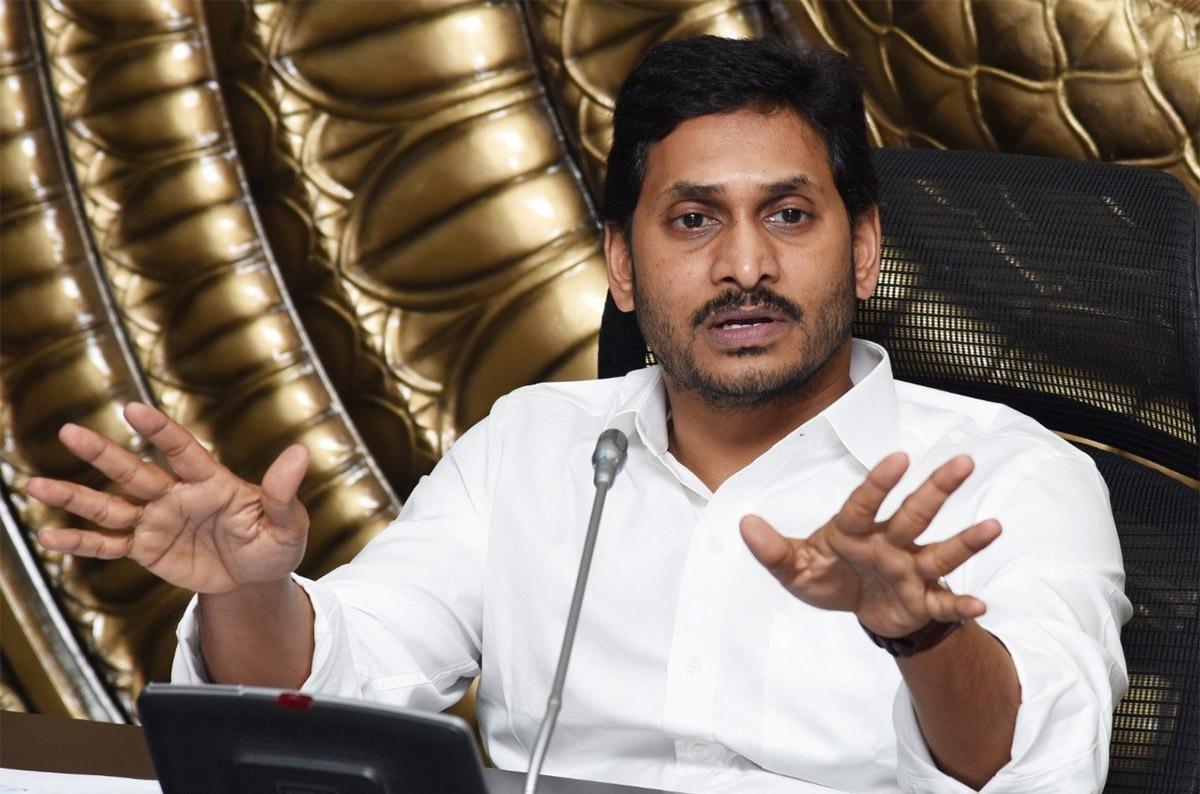
Jagan accused the Naidu government of weakening public healthcare services.

Synopsis: YSRCP president YS Jagan Mohan Reddy has accused the N Chandrababu Naidu government of attempting to privatise public medical colleges through the PPP model. Health Minister Satya Kumar Yadav defended the decision, citing low expenditure by the previous government on the 17 colleges, changes in NMC regulations and the cost of completing them within the required timeframe. Jagan also alleged that the government had weakened public healthcare services and left ₹3,000 crore unpaid to network hospitals under Aarogyasri.
YSR Congress Party (YSRCP) president and former Andhra Pradesh Chief Minister YS Jagan Mohan Reddy has accused the N Chandrababu Naidu government of attempting to privatise public medical colleges through the public-private partnership (PPP) model, alleging that the arrangement would transfer public assets and government funds to private players.
In a statement addressed to Chief Minister N Chandrababu Naidu on Thursday, 12 November, Jagan alleged that the government was handing over colleges built with public money to private institutions, despite having the option of completing them through annual government investments.
“Our government established 17 new medical colleges. We opened five and prepared another three to begin classes. The remaining nine could also be completed by investing ₹1,000 crore a year. Why are you not doing that?” he said.
Jagan alleged that the PPP arrangement would allow private players to benefit from government-owned land, buildings and financial assistance. He claimed that land worth hundreds of crores of rupees was being leased at ₹100 per acre and that more than half of the medical seats could be offered at private-college fee levels.
He also questioned the proposed allocation of ₹1,630 crore in viability gap funding (VGF) and the government’s decision to bear staff salaries for two years.
“The land belongs to the government. The buildings are being constructed with government funds. The VGF will also come from public money. The government will even pay the staff salaries. If this is not a scam carried out in the name of private institutions, then what is it?” he said.
Jagan maintained that the colleges could operate as teaching hospitals, offering free multispeciality treatment to poor patients while generating revenue through medical education and healthcare services. He said half the seats would be filled through the convenor quota, while the remaining seats could also be offered at fees lower than those charged by private medical colleges.
He also said that the colleges could be linked to area hospitals, community health centres, primary health centres and village clinics to create a network of public healthcare facilities across districts.
.@ncbn garu, you are handing over government medical colleges, which provide free treatment to the poor, to private players in the name of the PPP model. These colleges are public assets, and your plan amounts to a massive scam.
Our government established 17 new medical colleges. We opened five and prepared another three to begin classes. The remaining nine could also be completed by investing Rs. 1,000 crore a year. Why are you not doing that?
Doesn’t your PPP plan make it clear that this is a well-planned scam?
▪️You are selling off colleges that are already complete and those at various stages of construction.
▪️Land worth hundreds of crores is being leased for just Rs. 100 an acre.
▪️More than half of the medical seats could be sold at private rates.
▪️Rs. 1,630 crore in public money is being given to these colleges in the name of Viability Gap Funding (VGF).
▪️The government will also pay the salaries of doctors, professors and staff for two years. What is this, if not exploitation? The cost would be Rs. 5 crore a month, or Rs. 120 crore over two years for each college.The land belongs to the government. The buildings are being constructed with government funds. The VGF will also come from public money. The government will even pay the staff salaries. If this is not a scam carried out in the name of private institutions, then what is it?
All the colleges we established are teaching hospitals. They would provide quality, free multispecialty treatment to the poor. Half the seats would be filled through the convenor quota. The remaining seats would also be available at fees far lower than those charged by private colleges. We had developed a strong model to ensure that the revenue generated would help run these colleges without financial difficulty. We had also worked with banks to arrange the required funding.
These are teaching hospitals. The professors working there and the medical and nursing students studying there would also take part in providing healthcare services. This would make the colleges viable to operate. With such arrangements already in place, why is there any need to sell them under the cover of a PPP model?
These medical colleges would also be connected to area hospitals, Community Health Centres (CHCs), Primary Health Centres (PHCs) and village clinics in their respective districts. Together, they could form a network that provides quality multispecialty care down to the village level. As the quality of government healthcare improves, private hospitals would also have to provide treatment at affordable prices. Isn’t it unjust to sell off colleges that can deliver all these benefits?
Chandrababu garu, your government has already weakened the public healthcare system.
▪️You have undermined Aarogyasri, which provides free treatment worth up to Rs. 25 lakh. Payments due to network hospitals have been delayed, and bonds have been issued in place of payments. Even after that, Rs. 3,000 crore remains unpaid. As a result, network hospitals are staying away from Aarogyasri services.
▪️Our government supplied medicines that met GMP and WHO standards. Now, government hospitals lack even basic medicines and cotton.
▪️Government hospitals across the country face a 61% shortage of specialist doctors. Our zero-vacancy policy reduced vacancies in the State’s government hospitals to 4%. You have abandoned that policy, taken government hospitals back to their old condition and allowed vacancies to rise again.
▪️You have completely stopped the Nadu-Nedu works in government hospitals.
▪️You have weakened village clinics.
▪️You have left the 108 and 104 ambulance services in a dire condition.Chandrababu garu, people strongly oppose your decision. One crore people signed a petition organised by our party to protest against it, yet you are pressing ahead. This is unjust.
We completely oppose the privatisation of government medical colleges. When our government returns to power, we will take legal action against everyone involved in this matter and will not hesitate to make arrests. If you try to loot public assets through scams, people will not remain silent. They will teach you a fitting lesson.
#SaveMedicalCollegesInAP
— YS Jagan Mohan Reddy (@ysjagan) November 11, 2026
Also Read: Privatisation via PPP: Crores for Yoga Day, but Andhra government has no funds for medical colleges
Health Minister Satya Kumar Yadav defended the government’s decision to develop nine government medical colleges under the PPP model. He said the previous YSRCP government had failed to make adequate progress on the 17 medical colleges it had announced and that the state could not complete the projects within the required timeframe using its own funds.
The minister said the Centre had agreed in principle to provide ₹1,091.11 crore, or 30 percent of the total estimated construction cost of ₹3,706.60 crore, for five medical colleges at Narsipatnam, Amalapuram, Palakollu, Bapatla and Penugonda.
He asked how securing central assistance to expand medical education could be considered anti-public. The minister also challenged Jagan’s claim that the remaining colleges could have been completed by spending ₹1,000 crore annually.
The previous government had announced the construction of 17 medical colleges in 2020-21 at an approved cost of ₹8,480 crore but spent only ₹1,406.60 crore over the following four years, accounting for 16.56 percent of the approved amount, the minister said.
He said another ₹7,093.40 crore would be required to complete all 17 colleges. At an annual expenditure of ₹1,000 crore, the projects would take at least seven more years to finish, extending construction until 2031.
The minister further said that eight of the 17 colleges had received less than 10 percent of their approved expenditure during the previous government’s tenure, while expenditure on six others ranged between 11 percent and 25 percent. He said Pulivendula was the only college where expenditure had reached 79.23 percent of the approved ₹500 crore.
Satya Kumar also attributed the delays to changes in National Medical Commission (NMC) regulations.
He said that under the norms in force until 2022, the NMC permitted medical colleges to begin admissions if the infrastructure required for first-year students was in place. This enabled five colleges to receive approval for 150 MBBS seats each in 2023-24, even though only 19.38 percent of their construction costs had been incurred.
However, after the NMC changed its regulations in 2023, the Paderu medical college received approval for only 50 seats in 2024-25, although nearly 27 percent of its construction cost had been incurred, the minister said.
He added that the coalition government would have had to spend ₹5,807 crore within a year to secure approval for 150 seats each at the remaining 12 colleges under the revised norms and proposed admission timelines.
The minister said the government decided to continue with the PPP model for nine medical colleges after considering the state’s financial resources, construction requirements and annual operating expenses.
He also pointed to the previous government’s decision to introduce a self-financing model for medical colleges, under which annual fees of ₹10 lakh and ₹20 lakh were proposed for half the seats, and asked why Jagan was opposed to the PPP arrangement.
Jagan accused the Naidu government of weakening public healthcare services, including the Dr NTR Vaidya Seva scheme, the supply of medicines to government hospitals, recruitment and ambulance services.
He alleged that ₹3,000 crore remained unpaid to network hospitals under the Aarogyasri scheme and that delays in payments had resulted in hospitals staying away from providing services.
He also alleged that the government had discontinued Nadu-Nedu works in government hospitals, weakened village clinics and allowed vacancies among doctors to rise.
The minister, however, cited government expenditure under the Dr NTR Vaidya Seva scheme, saying private hospitals received nearly ₹2,500 crore in government payments during 2024-25. He claimed that the number of beneficiaries, expenditure on free treatment and annual fund releases under the scheme had increased by 60 percent to 70 percent under the coalition government.
Jagan said the YSRCP opposed the privatisation of government medical colleges and warned that his party would initiate legal action against those involved if it returned to power. Satya Kumar, meanwhile, said he was ready to debate any issue relating to the state’s healthcare sector with Jagan or his representatives.
(Edited by Dese Gowda with inputs from Sumit Jha)



