

Published Sep 14, 2026 | 4:03 PM ⚊ Updated Sep 14, 2026 | 4:03 PM

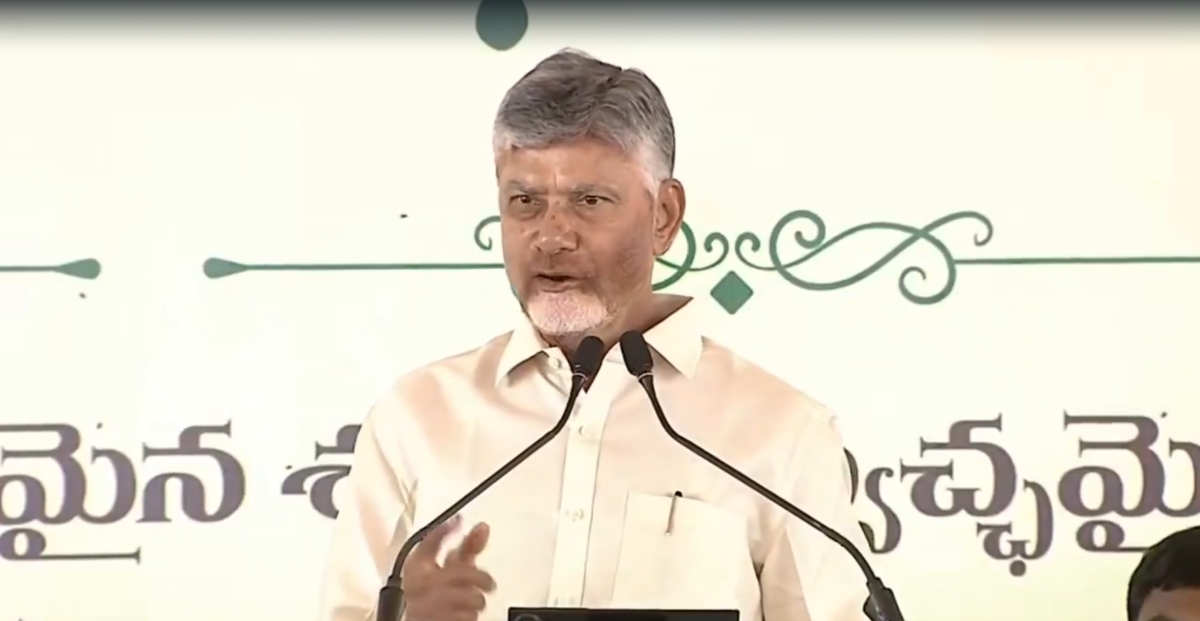
Andhra Pradesh Cheif Minister N Chandrababu Naidu. (Screengrab)

Synopsis: The Andhra Pradesh government’s plan to develop 10 medical colleges under the PPP model has stalled amid weak private-sector interest. Despite offering Viability Gap Funding (VGF), including Rs 1,468.3 crore approved in principle by the Centre, fresh bids are yet to materialise, raising questions over the future of the initiative.
Chief Minister N Chandrababu Naidu-led NDA government’s proposal to build new medical colleges in Andhra Pradesh under the Public-Private Partnership (PPP) model has been stalled for a long time now.
Even though tenders were invited a year ago, bidders did not come forward to take up the projects, prompting the government to announce the Viability Gap Funding (VGF). Despite this, there has been no visible change in the situation.
Recently, in the wake of the local body elections, there has been widespread speculation that the PPP proposals have been put in cold storage. Health department officials are showing no interest in speaking about the matter.
The project, involving 17 new government medical colleges, was initiated by the previous YS Jagan Mohan Reddy-led regime. During his tenure, Reddy completed the construction of five medical colleges, which started functioning by 2024.
After assuming power in June 2024, the NDA government decided to complete the construction of the remaining medical colleges under the PPP model.
Besides opposition from the YSRCP, the lack of expected response from private investors has also caused the stalling of the project.
Among the challenges facing the project are former Chief Minister Jagan Mohan Reddy’s warnings to entities participating in the tender process and three proposed colleges receiving zero bids in the initial phase of the tender process.
Also Read: AP liquor policy 2026–27: Permit rooms made mandatory, existing shops get renewal option
The project was initiated by the YSRCP government, with construction beginning in mid-2021. The primary objective of the plan was to make medical education accessible across every region and increase MBBS seats in the public sector. The total estimated project cost was set at around Rs 8,480 crore. Efforts were made to mobilise funds through central government grants, NABARD and other channels.
The first five colleges — located in Vizianagaram, Rajamahendravaram, Eluru, Machilipatnam, and Nandyal — have been constructed and were officially inaugurated by then Chief Minister Jagan Mohan Reddy in September 2023.
By 2024, classes had commenced in the colleges, while construction work on the remaining ones was at various stages.
After assuming power in June 2024, the NDA government initiated a review of the construction progress, expenditures incurred so far, pending work and the funds required for future maintenance.
According to figures released by the government, out of the roughly Rs 8,480 crore outlay proposed for the project, only around Rs 1,550 crore was spent over nearly four years up to June 2024. The government stated that completing the remaining construction entirely with state funds would impose a massive financial burden.
YSRCP rejected the government’s stance. The party contended that it had initiated land acquisition, construction and fund mobilisation during its tenure, formulating a clear plan to complete these institutions entirely within the public sector. It alleged that the incoming government halted work only to hand over these colleges to private entities under the guise of PPP.
Citing excessive financial burden on the state, the NDA government in September 2025 decided to develop 10 government medical colleges under the PPP model. Tenders were floated on terms providing an initial 33-year concession period, extendable by another 33 years, after which the facilities must be handed back to the government.
The proposed institutions would come up at Adoni, Markapuram, Madanapalle, Pulivendula, Amalapuram, Bapatla, Narsipatnam, Palakollu, Penukonda and Parvathipuram. It was decided to take up Adoni, Markapuram, Madanapalle and Pulivendula in the first phase, with the remaining six scheduled for the second phase.
According to government estimates, handing over these colleges to private entities under PPP would save around Rs 3,700 crore in capital development costs and roughly Rs 500 crore annually in recurring operational expenses. The administration stated that even with private investment, government oversight would remain intact, with the framework mandating free outpatient (OPD) services, diagnostic tests and the reservation of 70 per cent of inpatient beds under government healthcare schemes.
The Andhra Pradesh Medical Services and Infrastructure Development Corporation (APMSIDC) on September 16, 2025, invited tenders for the first set of colleges, adopting the Design-Build-Finance-Operate-Transfer (DBFOT) model. Under this arrangement, the concessionaire is responsible not only for construction but also for financing, operating and maintaining the facility throughout the concession period before transferring it back to the government.
The tender stipulations mandated that each college accommodate 150 MBBS seats, 24 PG seats and an affiliated 625-bed teaching hospital. The selected concessionaire would receive operational and management rights for up to 66 years.
Meanwhile, a major political development occurred on September 10, 2025, when Jagan Mohan Reddy issued an open warning to private entities considering bids for the PPP tenders. He stated that while firms were free to bid, any future YSRCP government would cancel these concessions and reacquire the medical colleges under state control, cautioning prospective contractors to bear this risk in mind.
Following this, YSRCP organised signature campaigns and demonstrations opposing the PPP initiative, announcing that over one crore signatures had been gathered and submitted to the Governor. In December, Jagan escalated his rhetoric, remarking that private firms and proprietors participating in the PPP model could face legal and administrative repercussions in the future.
The YSRCP alleged that handing over public land, infrastructure funded by public money, government medical colleges and associated hospitals to private players on long-term leases amounts to indirect privatisation. The party raised questions regarding medical education fees, healthcare access for the poor, the implementation of state welfare health schemes and the regulatory control exercised over the private partner.
There were also allegations that the first-phase colleges were intended to benefit TDP leaders involved in the education sector.
The NDA government, however, maintained that this should not be viewed as privatisation. It stressed that land ownership remains with the state, regulatory supervision continues, tuition fees will be regulated, and underprivileged citizens will receive care under government health schemes.
Also Read: AP local body polls: Government plans urban elections first, rural ones later
Petitions were filed in the Andhra Pradesh High Court seeking an immediate stay on the tender process. The court declined to issue an interim stay, observing that the state’s recourse to PPP may represent a policy decision taken under financial constraints. Subsequently, the YSRCP formally filed a petition challenging the validity of the PPP framework.
Following the initial tender notifications for the colleges planned at Adoni, Markapuram, Madanapalle and Pulivendula, pre-bid conferences were held. Prospective bidders raised questions regarding total capital requirements, technical specifications, operational liabilities and broader commercial viability. In response, the government revised certain tender conditions and extended the submission deadlines.
Despite the revisions, only a single bid was submitted for Adoni by the revised closing date of December 22, while the remaining three colleges received no bids at all. This outcome presented the first major operational hurdle to the government’s PPP blueprint.
The negligible response renewed public discussion around Jagan’s earlier warnings. Ruling coalition representatives alleged that open declarations by the opposition leader threatening post-election contract cancellations had created severe regulatory and policy uncertainty among institutional investors.
Faced with weak private-sector participation, the government introduced Viability Gap Funding (VGF) to improve the projects’ financial viability. VGF was offered to attract commercial developers to otherwise financially unviable public infrastructure projects by covering part of the initial capital shortfall, with the funding shared between the central and state governments.
In the initial stage, VGF support was formulated for the projects planned at Markapuram, Adoni and Madanapalle. For Markapuram, out of an estimated project cost of Rs 592.70 crore, VGF was pegged at Rs 100.76 crore; for Adoni, Rs 158.63 crore against an estimated Rs 634.50 crore; and for Madanapalle, Rs 174.50 crore against an estimated Rs 646.22 crore.
The stated objective was to bridge the revenue-cost deficit with public support if private operators could not secure viable returns on full capital outlays, thereby making the assets commercially investable.
Also Read: Are Indian political parties mistaking social media likes for winnability?
The government did not limit VGF to the first three institutions and subsequently expanded the support framework to the second phase.
Under the expanded proposal, support allocations stood at approximately Rs 164 crore for Amalapuram, Rs 274.54 crore for Bapatla, Rs 191.80 crore for Narsipatnam, Rs 216.74 crore for Palakollu and Rs 187.83 crore for Penukonda.
Through these steps, VGF evolved from a selective intervention for a few initial assets into an overarching framework aimed at providing commercial viability to the proposed colleges.
In June 2026, the central government accorded in-principle approval for a cumulative VGF package of Rs 1,468.3 crore covering nine proposed medical colleges, representing a key central fiscal commitment for the programme.
With in-principle approval granted by the Centre, the capital structuring of these PPP assets shifted significantly. Data from the central government’s PPP portal indicates that eight of the 10 projects have reached the “Ready to Bid” stage: Adoni, Madanapalle, Markapuram, Amalapuram, Bapatla, Penukonda, Narsipatnam and Palakollu.
The Pulivendula tender, however, was classified as failed. Health department sources noted that the initial bidding process did not succeed and fresh tenders will need to be floated. Parvathipuram remains at the Detailed Project Report (DPR) stage.
However, the sanctioning of VGF by the Centre and the state does not mark the conclusion of the PPP process. Bids must materialise, commercially viable financial proposals need to be finalised, concession agreements signed, construction finished, regulatory approvals obtained for medical colleges and clinical operations delivered to the public.
Recent developments reflect a notable shift in the government’s approach to the PPP model. The initial policy was designed to bring in private capital to reduce the strain on state coffers. Following the tepid response to first-stage tenders, the state found itself required to commit direct public funds via VGF to attract private developers.
Now, even after accounting for VGF contributions, concessions and continuing state liabilities, the core question remains how much net financial savings the state will actually achieve through the PPP framework. When South First sought clarification from health department officials regarding the status of the fresh tender process, relevant authorities declined to comment.
Sources indicate that with the expected outcomes failing to materialise, clarity remains elusive regarding the government’s forward path on the PPP model.
(Edited by Fayisa CA)



