

Published Jun 01, 2026 | 7:26 PM ⚊ Updated Jun 01, 2026 | 7:26 PM

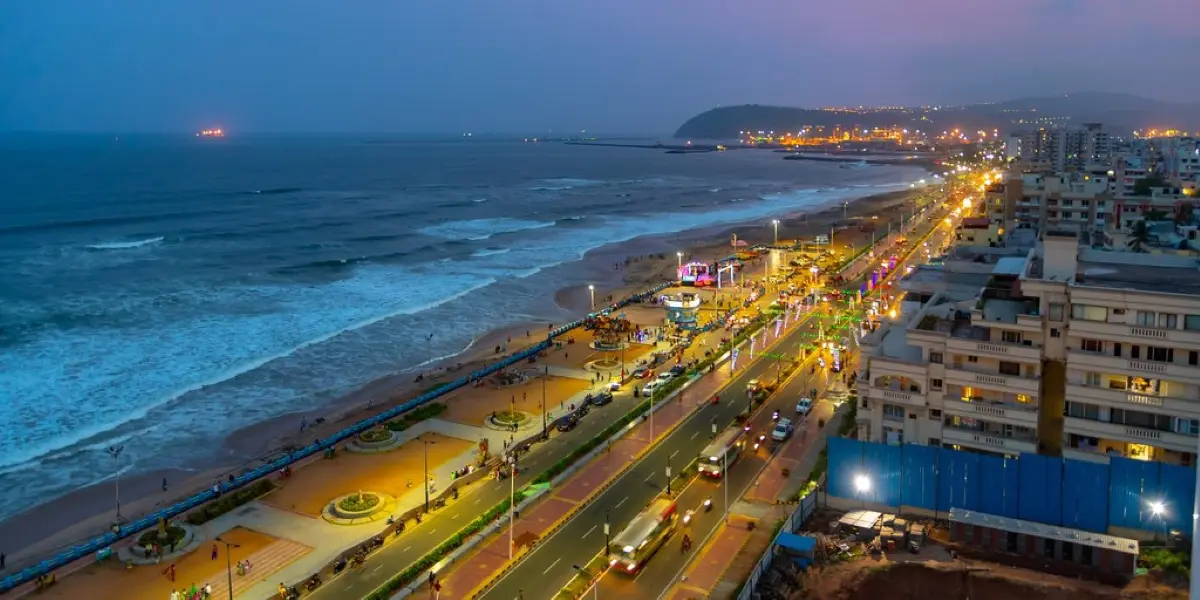
An aerial view of Visakhapatnam. (Creative Commons)

Synopsis: HRF also clarified that their posts did not have any unlawful content. “HRF rejects any suggestion that its petition or related posts contain unlawful content. The issues raised by us, we wish to emphasise, concern forests, hills, water sources, wildlife habitats, public resources and the broader trajectory of development in and around Visakhapatnam. Seeking transparency and accountability on such matters is a legitimate democratic activity and cannot reasonably be characterised as unlawful conduct.”
On Sunday, 31 May, the social media platform Instagram restricted two posts by Human Rights Forum (HRF) which were critical of the proposed Google-Adani-led hyperscale data center projects in and around Visakhapatnam.
Condemning the attempts to suppress the social media criticism, the HRF released a statement.
In the statement, the forum noted that, among the two posts restricted, one was an HRF post publicising an online petition seeking transparency and accountability regarding the proposed data center projects. The second was an information post documenting, among other things, ongoing work at the proposed Vizag Hyperscale Data Center site at Adavivaram, located in close proximity to the Mudasarlova reservoir. The post raised questions about the legality of activities being undertaken at the site in the absence of the requisite permissions.
Reportedly, Instagram indicated that the restrictions were imposed under Section 79(3)(b) of the Information Technology Act, 2000.
Also Read: The world failed to reverse falling birth rates with cash. Andhra Pradesh still wants to try
The online petition raised serious concerns of public importance relating to environmental impacts, land use, water consumption, energy requirements, public consultation, forest loss and the long-term consequences of these projects for local communities and natural resources.
“These are matters of direct public concern arising from important policy decisions. Such concerns are legitimate matters for public discussion in any democracy. Citizens and civil society organisations have every right to seek information, question official claims, express dissenting views and demand accountability in relation to projects that may significantly affect their lives and environment,” the statement noted.
The HRF also noted that the restrictions imposed on HRF content by Instagram were not isolated incidents.
The international consortium of investigative journalists, Environmental Reporting Collective (ERC), has publicly disclosed that Instagram blocked access in India to a video connected to its investigation into the environmental and social impacts of data center expansion in Vizag.
Referring to the ERC’s post which was also blocked, the HRF statement read, “The two-minute video examined the proposed Google data center project at Tarluvada in Anandapuram mandal near Visakhapatnam and its reported impacts on Dalit lands and local communities.”
According to the ERC, Meta informed it that the restriction was imposed pursuant to a notice from the Government of India under Section 79(3)(b) of the Information Technology Act, 2000, but did not provide any detailed explanation regarding the legal basis, policy rationale or specific complaint. ERC has also called for the restoration of the content and greater transparency regarding the decision.
HRF further claimed that it is also aware of at least 20 short videos, from 11 different accounts, critical of the proposed Adavivaram-Mudasarlova data center project that have been blocked by Instagram over the past week. “Taken together, these actions raise serious concerns about a pattern of restricting public-interest content relating to the environmental and social implications of large-scale data center projects in and around Visakhapatnam.”
HRF further claimed that, they had also received a communication from X informing them that it had received a request from the Guntur Urban Police District, Andhra Pradesh, concerning the petition-related post referred to above on 30 May. “The request appears to stem from a complaint that is less an attempt to address the substantive issues raised by us than an effort to discourage legitimate public scrutiny and debate.”
“However, X has not restricted the content yet. Consistent with its ‘transparency policy’, it informed HRF of the request. HRF has also learnt that at least one other user who shared the petition received a similar communication from X. In another instance known to us, Facebook restricted access to the same content without any prior notice to the user concerned,” the statement further read.
“These actions by major technology platforms represent a deeply concerning infringement on the public’s right to receive information, engage in debate and participate in collective deliberations that may profoundly affect the region’s future.”
HRF also clarified that their posts did not have any unlawful content. “HRF rejects any suggestion that its petition or related posts contain unlawful content. The issues raised by us, we wish to emphasise, concern forests, hills, water sources, wildlife habitats, public resources and the broader trajectory of development in and around Visakhapatnam. Seeking transparency and accountability on such matters is a legitimate democratic activity and cannot reasonably be characterised as unlawful conduct.”
“If the authorities believe that any information put out in the public domain is inaccurate, the appropriate response would have been to place the relevant facts and documents before the public and engage with the concerns raised. Resorting to content restrictions against criticism and public-interest advocacy undermines democratic debate, creates a chilling effect on freedom of expression and obstructs public scrutiny at a time when transparency is most needed,” the statement added.
HRF further demanded, “The substantive questions raised by citizens regarding the proposed data center projects remain unanswered. Attempts to suppress discussion will not make those questions disappear. The Government must respond to legitimate concerns regarding the proposed projects at Tarluvada, Rambilli and Adavivaram-Mudasarlova. It must refrain from actions that curtail lawful public debate. Instead, it should ensure transparency, environmental accountability, meaningful public consultation and full public disclosure relating to all the proposed data center projects in and around Visakhapatnam.”
Also Read: Heatwave tightens grip on Andhra Pradesh as temperatures climb beyond 48°C
The forum added that, despite the enormous environmental, social and financial implications of these projects, crucial information remains inaccessible to the public. “Key details concerning project approvals, water requirements, power consumption, environmental impacts and contractual arrangements, among other things, have not been placed in the public domain till date. The result is a decision-making process shrouded in secrecy and opacity rather than openness and democratic accountability.”
HRF claimed, it remains “committed to democratic advocacy and to defending the constitutional rights of citizens to speak, question, organise and participate in decisions that affect their lives, livelihoods and the environment.”
They further called upon Instagram and Facebook to immediately restore the removed content and publish a clear, itemised explanation for each restriction, including the specific legal basis invoked and the policy provisions relied upon.
“We also urge all authorities concerned to respect the constitutional guarantee of freedom of expression and the public’s right to participate in informed debate on matters of vital public importance.”



