

Published Aug 07, 2026 | 1:12 PM ⚊ Updated Aug 07, 2026 | 1:12 PM

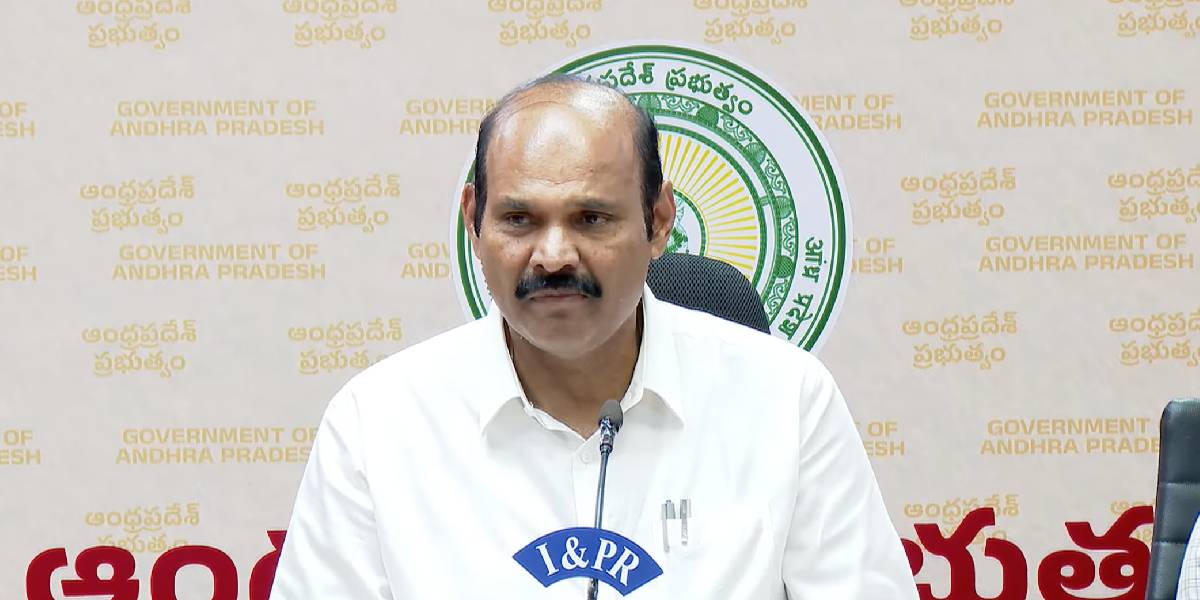
Minister for Information and Public Relations Kolusu Parthasarathy at the press briefing after the Cabinet Meeting

Synopsis: The Cabinet approved the construction of the 47-storey Quantum Valley Twin Towers, estimated at ₹1,002.49 crore in Amaravati. Larsen & Toubro (L&T) has been entrusted with raising the loan for the project. The twin towers are meant to anchor Amaravati’s Quantum Valley Tech Park, a broader corporate complex intended to house offices, R&D labs, and startups working in quantum computing, AI, cybersecurity and related fields.
The Andhra Pradesh Cabinet, chaired by Chief Minister N. Chandrababu Naidu, cleared a wide-ranging set of decisions spanning capital city construction, business reforms, urban development, and more, at a meeting held on Thursday, 7 August.
In a media briefing after the meet, Kolusu Parthasarathy, Minister for Information and Public Relations, said the Cabinet had cleared over 30 agenda items in all.
Among the approvals are major business reforms, and infrastructure projects in the capital city Amaravati, including proposals to construct a 47-storey twin tower project and acquire land for a high-speed rail corridor.
The Cabinet cleared two major business reforms. The Omnibus Ease of Doing Business Act, 2026, described as a law meant to strip away investment hurdles, was approved. The main aim of this act is to create an industrial ecosystem that prioritises investments by easing regulations and facilitating a simpler approval process.
The draft Andhra Pradesh Public-Private Partnership (PPP) Policy, 2026 was also cleared. It is designed to draw private capital into transport, ports, airports, healthcare, education and renewable energy, and is backed by a ₹1,500 crore Viability Gap Funding corpus.
The Cabinet cleared a ₹680.2 crore loan from the Housing and Urban Development Corporation (HUDCO) for the Andhra Pradesh Bulk Drug Infrastructure Corporation Limited, which is building pharmaceutical manufacturing infrastructure in the state.
As part of the state’s broader industry attraction push, industrial parks developed by the Andhra Pradesh Industrial Infrastructure Corporation (APIIC) will get subsidised facilities.
Also Read: Fact check: Is PM Modi right? Did India name all its airports after one family before 2014?
The Cabinet approved the construction of the 47-storey Quantum Valley Twin Towers, estimated at ₹1,002.49 crore in Amaravati. Larsen & Toubro (L&T) has been entrusted with raising the loan for the project.
The twin towers are meant to anchor Amaravati’s Quantum Valley Tech Park, a broader corporate complex intended to house offices, R&D labs, and startups working in quantum computing, AI, cybersecurity and related fields.
The Cabinet also cleared the revised calls for tender for the Amaravati Eye, the capital’s planned tourist observation structure on the banks of the Krishna.
₹206 crore was approved for expansion of the Assembly and High Court buildings and related infrastructure in the capital city.
A proposal to acquire land for a high-speed rail corridor in Amaravati has been approved. The cabinet also cleared the land pooling of 2,344 acres for the inner ring road and a railway line. These decisions are a part of the long-running plan to increase connectivity in the state capital region.
Two major policy reforms framed under the previous YSRCP government have been withdrawn. The cabinet rolled back the Andhra Pradesh Criminal Law (Amendment) Act, 2019, also known as the Disha Act, and the Land Grabbing (Prohibition) Act, 2024.
Minister Parthasarathy said the new Bharatiya Nyaya Sanhita (BNS) and Bharatiya Nagarik Suraksha Sanhita (BNSS) had covered most of the Disha Bill’s intended protections for crimes against women and children. The Centre had ultimately recommended withdrawal over further amendment. The state cabinet passed a proposal to roll back the act.
The Land Grabbing Bill was also withdrawn following suggestions from the Centre. The state government is planning to draft an updated version of the bill on the Centre’s recommendation.
The Cabinet approved the restructuring of Urban Development Authorities (UDAs) in line with the newly reorganised districts. 15 UDAs are currently overstretched as they are tasked with handling at least two districts each. New UDAs will be constituted, with existing ones set to be reorganised, said Minister Parthasarathy.
Operational guidelines for the Andhra Pradesh Pedestrian Safety and Universal Accessibility Policy, 2026, have been approved. The policy is intended to bring global road-safety standards to the state with pedestrian-centric road and infrastructure design as the priority.
The Cabinet approved ₹28.44 crore for multi-storey housing to rehabilitate residents at a settlement in Velampeta of Visakhapatnam. The project will be executed under a public-private partnership model and promises a 400 sft home to each rehabilitated family.
Also Read: Andhra Cabinet clears guidelines for pedestrian safety policy, prioritises accessible footpaths
The Cabinet approved drawing water from the Kandaleru reservoir in Nellore district to supply an industrial cluster. Kandaleru is a long-standing component of the Telugu Ganga project, originally built to store Pennar river floodwaters for irrigation across Nellore and Tirupati, while also supplying drinking water to Chennai.
Farmers in the state’s aquaculture sector are set to get a bigger power subsidy. The subsidy is regardless of whether the ponds fall inside or outside notified aquazones.
Two land parcels in YSR Kadapa district have been approved for solar power projects under the PM-KUSUM scheme. The 30-year lease has been granted to New & Renewable Energy Development Corporation of Andhra Pradesh Ltd (NREDCAP).
On the education front, the Cabinet approved the creation of 15 new District Educational Officer (DEO) posts to match the state’s expanded district map.
It cleared the establishment of two private universities under the “brownfield” category. Brownfield universities are existing colleges upgraded into university status rather than entirely new institutions.
2-acre land allotments in 3 districts – Puttaparthi, Annamayya, and BR Ambedkar Konaseema – have been leased to the Telugu Desam Party for construction of party offices, similar to earlier cabinet decisions that already approved similar allotments in other districts.
Multiple land acquisitions have been cleared for infrastructure projects, including transfers to CUDA and APIIC in Rayalaseema districts.
In Vijayawada, the Cabinet decided to regularise Urban Development Scheme (UDS) rights for residents of the Autonagar colony, a long-pending demand for many families living there.
Meanwhile, Deputy Chief Minister Pawan Kalyan did not attend the cabinet meeting on Thursday, leading to speculations about internal relations in the ruling alliance. This has been a regular occurrence, but Janasena Party leaders brushed aside concerns, citing Kalyan’s health issues as reasons for his absence at those times.
The Deputy Chief Minister is currently in Mangalagiri on official duties and was present at the inauguration ceremony of the Bhogapuram International Airport last week, but was a no-show at the cabinet meet.
(Edited by Sumavarsha)



