

Published Oct 10, 2026 | 5:43 PM ⚊ Updated Oct 10, 2026 | 5:43 PM

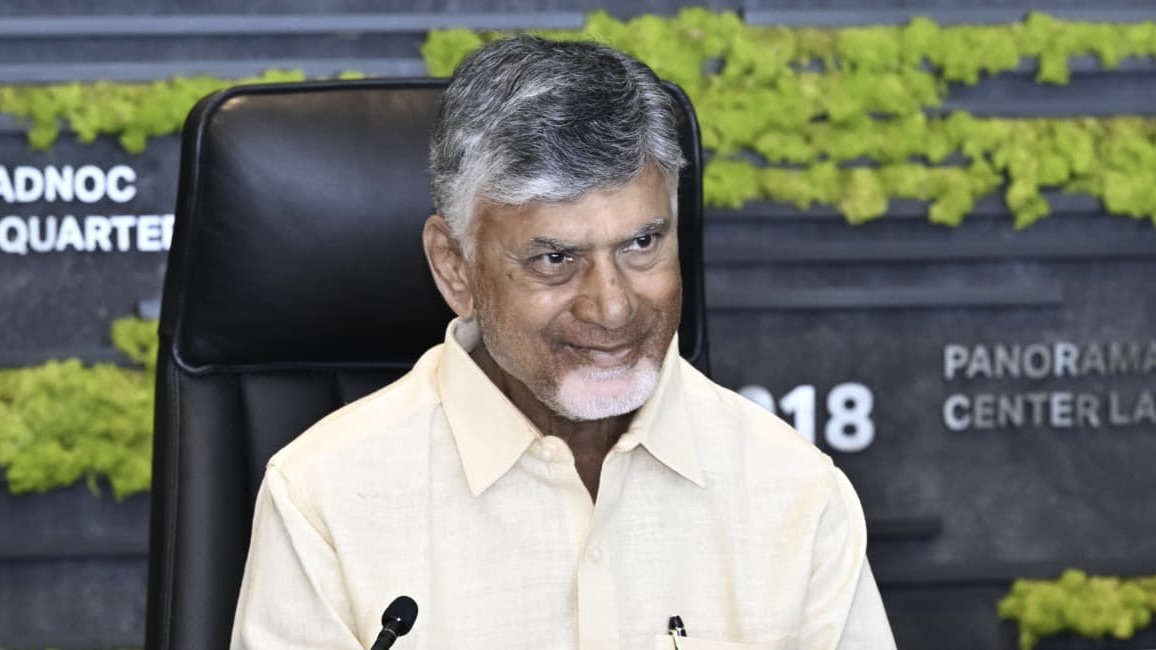
Andhra Pradesh Chief Minister N Chandrababu Naidu.

Synopsis: The government will set up a dedicated mechanism to gather the data needed to provide BC reservations and move the process forward. The state government made this decision based on proposals from the Backwards Classes Welfare Department.
The Andhra Pradesh Cabinet has approved the Rajiv Ranjan Mishra Commission report, which recommended reservations for Backward Classes (BCs) in rural and urban local bodies.
The Cabinet passed a resolution to this effect at its meeting on Saturday, 10 October. The government will set up a dedicated mechanism to gather the necessary data for providing BC reservations and to take the process forward. The state government took this decision based on proposals framed by the Backward Classes Welfare Department.
After the Andhra Pradesh High Court struck down the government order providing 34 per cent reservation to BCs, and the Supreme Court subsequently upheld the High Court’s ruling, the government took this key decision on BC reservations on Saturday. With the Cabinet approving the commission’s report, the Panchayati Raj and Municipal Administration departments will issue fresh Government Orders (GOs) finalising the quota accordingly. Local body elections will be conducted based on these orders.
The government decided to carry out the reservation process in local bodies in accordance with Articles 243T and 243D of the Constitution of India. It will consider constitutional provisions on seat reservations for Scheduled Castes (SCs) and Scheduled Tribes (STs) in municipalities and rural local bodies. Population definitions under Articles 243F and 243P(g) will also be taken into consideration during this process.
To gather demographic statistics and other essential information for BC reservations, the government decided to proceed based on the Unified Family Survey and socio-economic data (SGSW). The government will analyse the collected information to move the reservation process forward in line with statutory provisions.
Also Read: Andhra CM Naidu announces 34 per cent BC reservation from TDP
State Agriculture Minister Kinjarapu Atchannaidu clarified that the NDA coalition government’s primary objective is to ensure appropriate political representation and social justice for Backward Classes in local body polls. He stated that the government is committed to providing constitutional reservations to BCs and creating further political opportunities for them within legal limits.
Addressing the media after the Cabinet meeting at the State Secretariat, Atchannaidu explained the Cabinet’s decisions alongside fellow ministers Dola Bala Veeranjaneya Swamy, Satya Kumar Yadav, Kolusu Parthasarathy, S Savitha, Gummidi Sandhya Rani, Vangalapudi Anitha, and others.
Also Read: Supreme Court rejects Andhra Pradesh’s plea on 34% BC quota
Minister Atchannaidu said the government constituted a special commission on BC reservations in line with Supreme Court guidelines. He noted that the commission, headed by senior IAS officer Rajiv Ranjan Mishra, was appointed via G.O. Ms No. 3 issued on February 19, 2026.
He said the commission collected data from different regions, districts, and social groups across the state and submitted a report to determine reservations based on the BC population in each local body. After reviewing the commission’s recommendations, the Cabinet approved them and forwarded them to the Election Commission for further action.
According to the commission’s recommendations, reservations were fixed using distinct administrative units based on the nature of the local bodies. The Gram Panchayat was taken as the unit for Gram Panchayat ward members; Gram Panchayats within a mandal for Sarpanch posts; the relevant territorial unit for MPTC posts; and specified district or state-level units for ZPTC and Zilla Parishad Chairperson posts. In urban local bodies, the commission also finalised reservations for ward members, municipal chairpersons, and mayors based on their respective units.
Atchannaidu detailed the reservations proposed for BCs as per the special commission’s report:
* Gram Panchayat Ward Members: 26.73%
* Gram Panchayat Sarpanches: 27.95%
* MPTCs: 25.55%
* MPPs: 24.60%
* ZPTCs: 24.60%
* Zilla Parishad Chairpersons: 23.08%
* Urban Local Body Ward Members: 32.78%
* Municipal Chairpersons: 33.02%
* Mayors: 35.29%
According to these figures, BCs will receive an average reservation of 28.18 per cent across all local bodies combined. He explained that although the percentage appears lower in certain units, reservations were determined based on local demographic data, the commission’s recommendations, and legal limits.
To ensure that BC political representation is not compromised, he asserted that coalition partner parties are committed to providing over 34 per cent opportunities at the party level in places where formal reservations fall below 34 per cent.
The minister said the government fully respected the constitutional rights guaranteed to SCs and STs while finalising reservations, with seat allocations based on the 2011 census. After accounting for SC and ST quotas, BC reservations were fixed in accordance with applicable legal ceilings and judicial guidelines. He added that the government is prepared to hold local body elections on time, and the coalition partner parties are ready to participate in the electoral process as soon as the Election Commission issues the notification.
(Edited by Majnu Babu).



