

Published Aug 19, 2026 | 3:52 PM ⚊ Updated Aug 19, 2026 | 3:52 PM

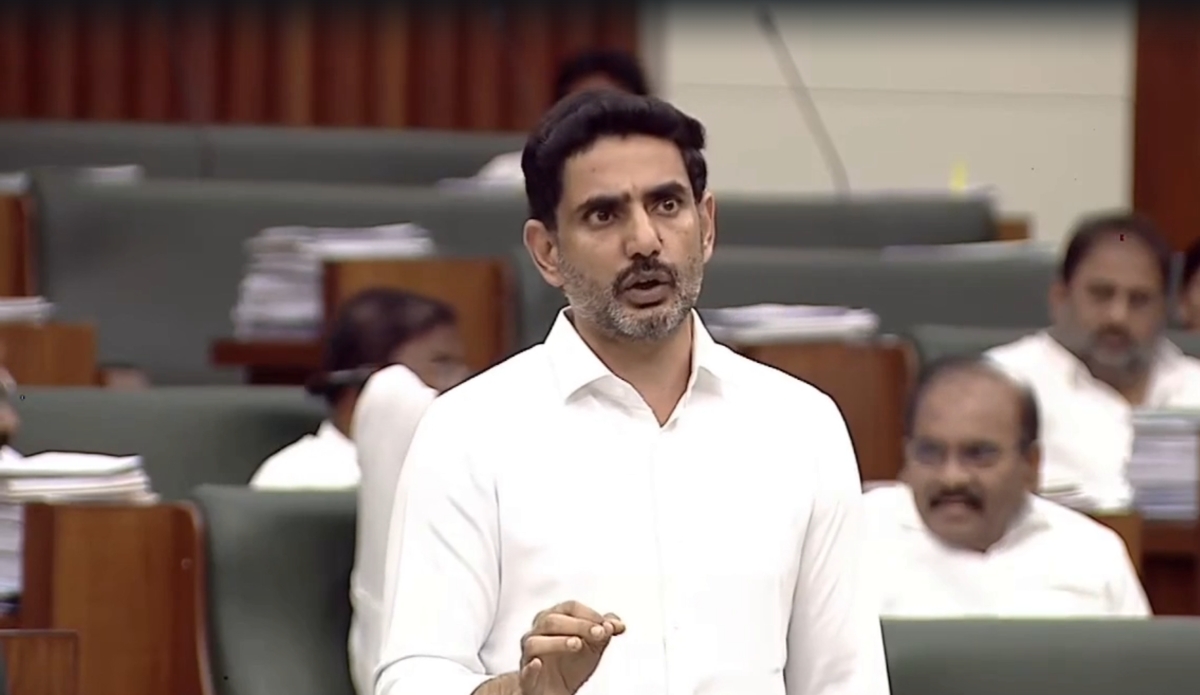
Andhra Minister Nara Lokesh. (Screengrab)

Synopsis: Lokesh said the government’s objective was not merely to establish data centres but to build a complete AI ecosystem around them, including advanced chips, power electronics, fibre, cable connectivity, cooling systems and other supporting industries. Addressing concerns over water availability, “Water for data centres will not be diverted from the city’s existing water infrastructure. We will bring additional water from Polavaram and provide it through dedicated pipelines,” he said.
Andhra Pradesh Education, IT & Electronics Minister Nara Lokesh on Tuesday, 18 August, strongly hit out at the alleged misinformation being spread around data centres in Visakhapatnam, asserting that the projects were being developed with a clear focus on sustainability, water security and environmental safeguards.
Responding to a question by Nellimarla MLA Lokam Madhavi in the Assembly, Lokesh said some groups were deliberately creating fear and misconceptions around data centres for political gains. He appealed to the people of Visakhapatnam not to believe “fake videos or misinformation”.
“Data centres are an essential part of the AI infrastructure that the country will need in the coming years. We cannot allow misinformation to hold back an opportunity that can transform Visakhapatnam into a major technology hub,” he said.
Also Read: A year after quitting YSRCP, Vijayasai Reddy announces new political party in Andhra Pradesh
Lokesh said the rapid expansion of AI made it important for India to build its own sovereign digital and AI infrastructure.
From AI-enabled smartphones and devices to increasingly sophisticated applications, huge volumes of data are being generated every day and the infrastructure to store and process this data must be available within the country, he said.
He said Google’s decision to establish a major data centre presence in Visakhapatnam had triggered interest from other global technology companies, with several companies now seeking land in the city.
Lokesh said the government’s objective was not merely to establish data centres but to build a complete AI ecosystem around them, including advanced chips, power electronics, fibre, cable connectivity, cooling systems and other supporting industries.
Recalling the opposition to computerisation in the 1990s, he said similar misconceptions had been created when Chief Minister N. Chandrababu Naidu promoted IT and computer education.
“Had we retreated then, Hyderabad would not have reached the position it occupies today. The misconceptions being created around data centres are no different,” he said.
Addressing concerns over water availability, Lokesh gave an unequivocal assurance that residential water supplies in Visakhapatnam would not be affected by the data centres.
He said the water required for the data centres would come from the incremental water being brought from the Polavaram project and would be drawn from the allocation earmarked for industries.
“Water for data centres will not be diverted from the city’s existing water infrastructure. We will bring additional water from Polavaram and provide it through dedicated pipelines,” he said.
Lokesh said an average of nearly 3,000 TMC of Godavari water flows into the Bay of Bengal every year and a portion of this water is being brought to Visakhapatnam through Polavaram by gravity.
He said the current technology would require around 3 TMC of water for 6.5 GW of data centre capacity. Drinking water for Visakhapatnam would be supplied separately through gravity from Polavaram, with the system expected to be operational within the next 18 months.
He added that newer technologies were also reducing water consumption. During his visit to an Intel data centre in Palo Alto, he had observed air-cooling technology being used instead of water cooling, he said.
Lokesh also pointed out that a 1 GW thermal power project consumes nearly ten times more water than a data centre of comparable capacity, questioning why similar concerns were not being raised about thermal power projects.
Also Read: ‘Ecological recklessness’: HRF demands withdrawal of green nod for Vizag data centre project
Lokesh said the biggest employment impact of the data centre investments would come from the wider ecosystem they create rather than only from direct jobs within the data centres.
The emergence of AI data centres would attract advanced chip-related companies, cutting-edge AI firms, cooling technology manufacturers, power electronics companies and other ancillary industries to Visakhapatnam and across Andhra Pradesh.
He said cooling infrastructure alone could create significant employment opportunities, as air-cooling systems require periodic upgrades. The emerging manufacturing ecosystem in Rayalaseema is expected to create around 20,000 jobs through the cooling ecosystem, he said.
The wider data centre ecosystem would also generate demand for transformers, cables, fibre, power electronics, logistics and warehousing. This would further create jobs across transportation, hospitality, retail, maintenance, services, commercial and residential real estate.
Lokesh said a logistics company that has entered into an agreement with Google was expected to invest ₹1,000 crore in Andhra Pradesh.
Lokesh said the State had mandated that data centres use at least 70% green energy, with solar, wind and pumped-storage power being encouraged.
He said the One Nation-One Grid system had enabled renewable energy generated in Rayalaseema to be transmitted to other parts of the country, creating an opportunity to power the emerging data centre ecosystem through clean energy.
The government had also provided a distribution licence to facilitate dedicated power arrangements for data centres, he said.
Lokesh reiterated that electricity tariffs would not be increased. Instead, the NDA government had reduced electricity charges by 13 paise this year, he said.
He also said a 100 MLD desalination plant was being established by a company, further strengthening the water security framework for the data centre ecosystem.
Lokesh said the State had achieved its target of bringing up to 6.5 GW of data centre capacity to Visakhapatnam, as directed by Chief Minister N. Chandrababu Naidu.
He said the government was simultaneously building the infrastructure required to support this capacity, including power generation, transmission, fibre connectivity and cable landing infrastructure.
Three cable landing stations are being developed in Visakhapatnam and will be connected to global networks, creating opportunities for IT, GCCs and allied industries.
Several companies are also seeking land for transformer manufacturing and other power infrastructure, while power electronics manufacturing companies are investing in Rayalaseema, he said.
Union Minister Ashwini Vaishnaw had described Visakhapatnam as being on its way to becoming an “AI Patnam” during the Google foundation-laying ceremony, Lokesh said.
He further revealed that an American university was planning to establish an AI-focused presence in Visakhapatnam, though its name could not be disclosed at present due to the terms of the agreement.
Lokesh said the government remained committed to developing a sustainable AI and data centre ecosystem in Visakhapatnam while creating opportunities across Andhra Pradesh in IT, manufacturing, logistics, real estate and other sectors.
“Visakhapatnam has our 100% commitment. We are bringing investments with a clear focus on sustainability, jobs and long-term economic growth,” he said.
Also Read: ‘Environmental and economic disaster’: HRF urges Andhra to halt Google-Adani AI data centre



