

Published Feb 24, 2026 | 6:47 PM ⚊ Updated Feb 24, 2026 | 6:47 PM


The Cabinet decision could redefine the official identity of one of India’s most politically and culturally distinct states.
Synopsis: The Cabinet decision sets in motion the constitutional process under Article 3 to amend the First Schedule of the Constitution, replacing the anglicised “Kerala” with the Malayalam-rooted “Keralam” — a change supporters say would restore linguistic authenticity and honour the state’s historical evolution.
The Union Cabinet on Tuesday, 24 February, approved a proposal to rename “Kerala” as “Keralam”, the Malayalam name of the South Indian State.
The Cabinet’s decision came even as Kerala is set to elect its 16th Legislative Assembly. The Election Commission of India is yet to announce the poll schedule.
The landmark move, which could redefine the official identity of one of India’s most politically and culturally distinct states, came at the Cabinet meeting chaired by Prime Minister Narendra Modi.
The decision sets in motion the constitutional process under Article 3 to amend the First Schedule of the Constitution, replacing the anglicised “Kerala” with the Malayalam-rooted “Keralam” — a change supporters say would restore linguistic authenticity and honour the state’s historical evolution.
With the Cabinet now clearing the proposal, the President will refer the Kerala (Alteration of Name) Bill, 2026, to the State Legislature for its views before it is introduced in Parliament.
It will symbolically close a long-running linguistic loop that began with the reorganisation of states in 1956, when Malayalam speakers finally secured a unified homeland, but not the Malayalam rendering of its own name in the Constitution.
For many in the state, “Keralam” is not a reinvention; it is a return.
Following the Cabinet’s approval, the President of India will refer the proposed legislation — The Kerala (Alteration of Name) Bill, 2026 — to the Kerala Legislative Assembly for expressing its views, in accordance with the proviso to Article 3 of the Constitution.
Only after the Assembly’s views are received — and the stipulated period expires — will the Union government take further steps.
The President’s recommendation will then be sought for the introduction of the Bill in Parliament, where the final decision rests.
The move follows a unanimous resolution passed by the Kerala Legislative Assembly on 24 June 2024, urging the Centre to modify the First Schedule of the Constitution to reflect the state’s name as ‘Keralam’.
The resolution stated that in the Malayalam language, the state is known as ‘Keralam’, and highlighted that states were reorganised on a linguistic basis on 1 November 1956 — a day observed as Kerala Piravi (formation day of Kerala).
It also recalled that during the national freedom struggle, there had been a strong demand for the formation of a unified State for Malayalam-speaking people.
However, despite the linguistic reorganisation, the First Schedule to the Constitution records the name as ‘Kerala’.
The Assembly further unanimously appealed to the Union Government to take urgent steps under Article 3 to formally adopt the name ‘Keralam’.
Subsequently, the Government of Kerala formally requested the Union Government to initiate the constitutional amendment process to effect the change.
Article 3 of the Constitution empowers Parliament to alter the name, area or boundaries of existing States by law.
However, any such Bill can be introduced only on the recommendation of the President.
Where the proposal affects the name of a state, the President is required to refer the Bill to the concerned State Legislature for expressing its views within a specified time.
Although Parliament is not bound by the State Legislature’s opinion, the consultative step is mandatory before the Bill can be introduced.
In the case of renaming Kerala, the proposal was examined by the Ministry of Home Affairs.
With the approval of Union Home Minister Amit Shah, a draft Cabinet note was circulated to the Department of Legal Affairs and the Legislative Department under the Ministry of Law and Justice.
Both departments concurred with the proposal to alter the name from “Kerala” to “Keralam”.
Following this inter-ministerial consultation and legal vetting, the matter was placed before the Union Cabinet, which granted its approval.
The journey to officially rename “Kerala” as “Keralam” began on 9 August 2023, when the Kerala Legislative Assembly unanimously adopted a resolution urging the Union government to amend the Constitution and change the state’s name.
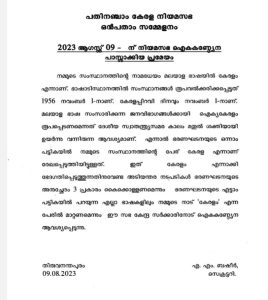
The resolution passed in 2023.
Chief Minister Pinarayi Vijayan moved the resolution under Rule 118 of the Rules of Procedure and Conduct of Business in the Kerala Assembly.
In his address, he pointed out that while the state is known as “Keralam” in Malayalam, it continues to be recorded as “Kerala” in English and in the First Schedule of the Constitution.
He recalled that the demand for a unified state for Malayalam-speaking people had gained strength during the freedom struggle, culminating in the linguistic reorganisation of states on 1 November 1956 — celebrated as Keralappiravi Day.
Yet, despite this historical and cultural context, the Constitution still lists the state as “Kerala.”
The resolution requested the Centre to initiate immediate steps under Article 3 of the Constitution — which deals with the formation of new states and alteration of areas, boundaries, or names of existing states — to amend the First Schedule and officially rename the state as “Keralam.”
It further urged that the name “Keralam” be reflected in all languages listed in the Eighth Schedule of the Constitution.
The Congress-led Opposition UDF supported the motion without proposing amendments, and Speaker AN Shamseer declared it passed unanimously.
The resolution was subsequently forwarded to the Ministry of Home Affairs for consideration.
The matter resurfaced in June 2024 after it emerged that a technical issue had crept into the earlier resolution.
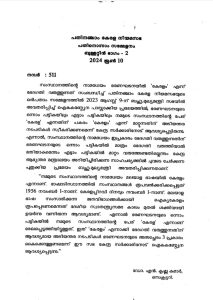
The resolution passed in 2024.
The Union Home Ministry reportedly responded that amending the First Schedule of the Constitution alone would suffice, suggesting a narrower formulation than what had originally been proposed.
In light of this, the Assembly revisited the issue.
On 24 June 2024, Chief Minister Vijayan introduced a revised resolution, once again seeking amendment of the First Schedule to change the state’s name from “Kerala” to “Keralam.”
During the debate, MLA N. Shamsudeen criticised the earlier drafting, calling the fresh resolution “imprecise” and demanding accountability from those who had provided technical advice in framing the initial version. He also proposed certain modifications.
However, the suggested changes were rejected, and the version presented by the Chief Minister was passed unanimously for a second time.
After a relatively quiet phase, the issue returned to the spotlight on 13 January, 2026.
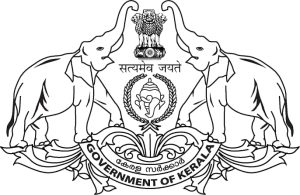
Kerala’s official emblem.
The immediate trigger was a letter from BJP state president Rajeev Chandrasekhar to Prime Minister Modi, seeking his intervention to expedite the renaming process.
In his communication, Chandrasekhar referred to the June 2024 resolution and reiterated the BJP’s support for the move, noting that the party had earlier conveyed its position in a letter to the Chief Minister.
He argued that “Keralam,” rooted in Malayalam, more authentically reflects the state’s heritage and cultural identity.
According to him, adopting the name would not only preserve linguistic heritage but also promote social harmony and counter divisive tendencies.
The renewed push to officially rename the state as Keralam has sparked fresh conversations.
Speaking to South First, Mathew T. Thomas, MLA, who also chairs the Legislative Committee for Official Languages, welcomed the move, calling even the consideration of the change “applaudable.”
He noted that the demand has surfaced repeatedly over the years and said the name Keralam resonates more deeply with the state’s linguistic and cultural identity.
The Malayalam form carries emotional weight and would instil a stronger sense of pride among people than the anglicised “Kerala,” he opined.
However, officials point out that the transition may not be seamless.
A senior functionary in the Official Language Department told South First that a change in nomenclature could pose practical challenges.
“Kerala” is embedded in official communications, government branding initiatives such as Kerala Tourism, multiple institutional domains, and even the state insignia that reads “Government of Kerala.”
Reworking these would require administrative, legal and technical adjustments.
Meanwhile, BJP’s Chandrasekhar backed the Union Cabinet decision, saying the name Keralam would be more appropriate as the state seeks to reclaim and protect its traditions while building a forward-looking economy.
He added that Malayalis are looking for change and a shift towards what he described as “politics of performance” over “lies and fake promises.”
At the same time, adding a touch of wit, Thiruvananthapuram MP Shashi Tharoor weighed in on the name change.
In a post on X, he mused:
“All to the good, no doubt, but a small linguistic question for the Anglophones among us: what happens now to the terms ‘Keralite’ and ‘Keralan’ for the denizens of the new ‘Keralam’? ‘Keralamite’ sounds like a microbe and ‘Keralamian’ like a rare earth mineral…!”
With tongue firmly in cheek, he suggested that Chief Minister Vijayan might even consider launching a competition to coin the perfect new demonym.
Though most English writings use the anglicised form Kerala, the older and more rooted expression is Keralam — a name layered with history, language, geography and legend.
Historians have long debated how this land between the Western Ghats and the Arabian Sea came to be called Keralam.
What is striking is that from very early times, the words Kerala and Chera appear almost interchangeably in literary and historical sources.
In A Survey of Kerala History, eminent historian A Sreedhara Menon notes that ancient Sanskrit texts refer to the region as Kerala, while early historical records speak of the land as the country of the Chera rulers.
The terms “Kerala” and “Chera” were often treated as synonymous.
The ruler was the Chera (or *Cheral*), and the land, naturally, the Chera country.
This identification gains further support from classical sources.
In a work in 1924, History of Kerala, KP Padmanabha Menon noted that Greek and Roman writers such as Ptolemy and Pliny referred to the ruling line as the Keralaputra or its variants — names that scholars like Bishop Robert Caldwell linked to the Tamil Keralaputra mentioned in Ashokan edicts.
Over time, linguistic shifts seem to have shaped the variations: Chera, Kerala, Keralaputra — all pointing to the same political and cultural region.
Indologist Rev. Thomas Foulkes, who worked extensively in South India, and Dr Caldwell were convinced that “Chera” and “Kerala” were essentially the same word, altered by dialect and usage.
Dr Hermann Gundert, compiler of the monumental Malayalam dictionary, observed that Keram was simply the Canarese pronunciation of Cheram. To him, Keralam meant Cheram — the land between Gokarnam and Kanniyakumari.
Some scholars sought a geographical explanation.
One popular theory links the word to kera (coconut), a characteristic feature of the west coast.
But this derivation has never commanded universal agreement.
Another interpretation draws from Tamil roots.
The word charal refers to the slope or declivity of a mountain — a fitting description for a narrow strip of land pressed between hills and sea. Though this theory highlights Kerala’s mountainous backdrop, historians point out that ancient texts consistently use Chera, not Charal.
A more evocative theory breaks down Cheralam into cher (added) and alam (land or region), suggesting “the land that was added.”
In this reading, Keralam becomes the land reclaimed or added on to the mountainous country — an idea that resonates with the well-known Parasurama legend of the land rising from the sea.
Over time, Cheralam may have been Sanskritised into Keralam.
Each interpretation reflects a different facet of the land — its rulers, its hills, its coastline, or its mythic origins.
That question now lingers.
Name changes are not new in India — Bombay to Mumbai, Madras to Chennai, Calcutta to Kolkata — each carried symbolic weight, sometimes cultural correction, sometimes political assertion.
In Kerala’s case, there is no linguistic contestation on the ground.
“Keralam” is already the Malayalam name. The shift is constitutional, not lived.
Whether this constitutional affirmation translates into electoral impact is uncertain.
Voters traditionally weigh bread-and-butter issues — welfare, employment, price rise, governance performance — more heavily than symbolic gestures.
Yet, identity matters.
In a state intensely conscious of language and history, even a symbolic act can resonate — if framed effectively.
For now, what is clear is this: in a season usually marked by promises of projects and packages, it is a name that has moved to the centre of politics.
And in Kerala — or Keralam — names carry history.
(Edited by Majnu Babu).


