

Published Jun 18, 2026 | 7:00 AM ⚊ Updated Jun 18, 2026 | 7:00 AM

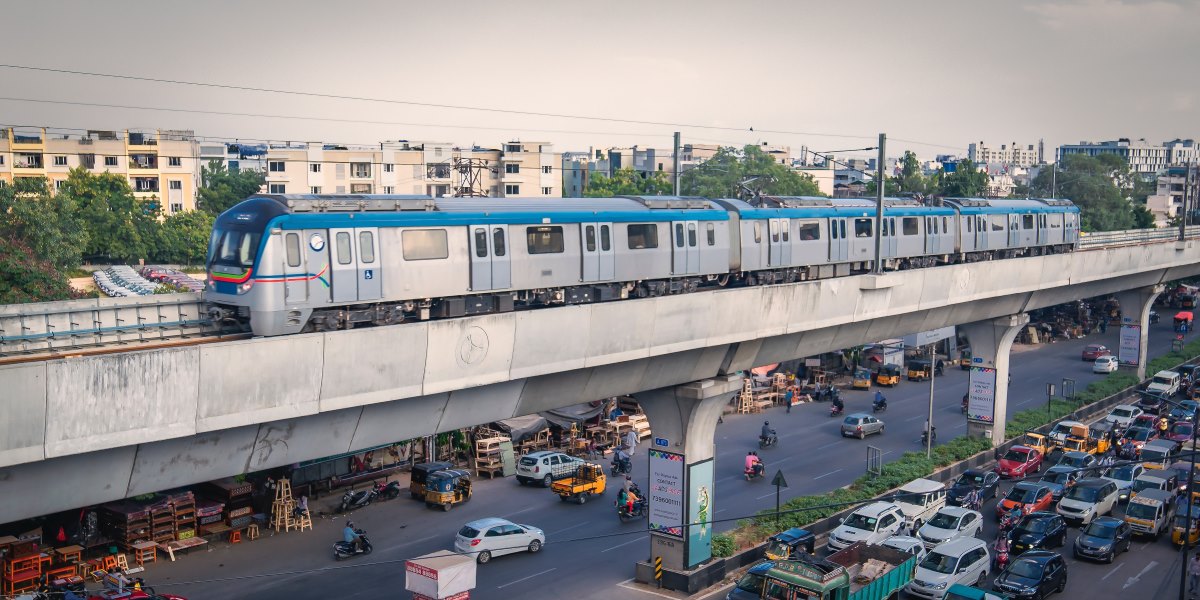
Once Hyderabad Metro Rail's Phase 1 operations are fully under government ownership, the state inherits not just the debt...

Synopsis: The Metro deal has been couched as an of-the-public, for-the-public agreement. It needs to be honest in its stated aim.
When the Telangana government closed its acquisition of L&T’s stake in Hyderabad Metro Rail at the end of April, the transaction was presented in the language of consolidation and public ownership, a state stepping in to secure a strategic asset for its citizens. The reality, visible in the government orders that authorised the deal and in the acquired company’s own audited accounts, is considerably less flattering.
This was not the state buying a valuable asset from a willing seller at a fair price. It was the state absorbing the liabilities of a venture that its private partner had spent years trying to exit, on terms that were negotiated under a self-imposed deadline, financed through a currency-mismatched loan, and concluded without the underlying agreement being shown to the public that will service the debt.
Calling this a bailout rather than an acquisition would not be an insult to the transaction. It would simply be accurate, and accuracy matters because it changes what scrutiny the deal deserves.
Start with the seller’s own motivation. L&T did not approach this transaction as a company cashing in on a profitable investment. It approached it as a company that had concluded, after seven years of operating losses, that the metro concession could not be made to work on the terms originally agreed, and that wanted out.
The company’s own annual report shows losses in every year since the network opened, with cumulative losses approaching ₹8,000 crore, an accumulated deficit large enough that the entity’s net equity on paper is a small fraction of the face value of its shares. A buyer acquiring a profitable business pays a premium for future earnings. A buyer acquiring a business that has lost money every year for seven years, and that the seller has been trying to leave, is not making an investment. It is taking over a problem, and the price should reflect that the seller was the party with the stronger incentive to get the deal done.
Instead, the terms agreed look like a transaction structured to make the seller’s exit as comfortable as possible. The state has assumed approximately ₹13,000 crore of the company’s debt and has separately agreed to pay roughly ₹2,000 crore for the equity, even though that equity, once the accumulated losses are netted against the paid-up capital, is worth a small fraction of that sum on the company’s own books.
The cabinet order authorising the deal describes the financing arrangement in terms that reveal how the timeline was set: the state needed an Indian Railway Finance Corporation loan structured as seventy-five per cent yen-denominated and twenty-five per cent rupee-denominated, but because the government had committed to closing the transaction by the end of March, the entire amount was initially drawn in rupees, with the yen portion to follow once the paperwork could be completed.
A transaction that requires this kind of financial improvisation to meet an externally imposed deadline is not being driven by careful negotiation of the best terms available to the public exchequer. It is being driven by the desire to close quickly, and sellers who sense that buyers are in a hurry rarely leave money on the table.
The contingent liabilities embedded in the deal compound the concern.
The cabinet order conditions the transaction on the resolution of a dispute with Thales, the company’s signalling and train control supplier, and on confirmation of compliance with the safety standards set by the Commissioner of Metro Rail Safety. Both of these are named as conditions precedent in the government’s own order, which means the government itself has acknowledged that unresolved technical and contractual exposure exists. Yet neither the nature of the Thales dispute nor its likely cost, nor the current state of safety compliance across the network, has been disclosed to the public that is now the owner of these liabilities.
A private buyer conducting proper due diligence would insist on knowing the size of these exposures before signing. The public, who did not get to conduct due diligence and did not get to negotiate the price, is entitled to know what it has inherited, and at present it does not.
There is a structural reason the bailout framing matters beyond simple accuracy.
A genuine asset acquisition is judged by whether the price paid reflects the value received, and that judgment can be made on commercial grounds once the figures are public. A bailout is judged by a different and harder question: whether continuing to fund the underlying enterprise, rather than restructuring or scaling it back, is the right use of public money at all.
Once Hyderabad Metro Rail’s Phase 1 operations are fully under government ownership, the state inherits not just the debt but the obligation to keep paying Keolis, the French operator, to run a system that loses money every year, while simultaneously being asked by the same cabinet order to accelerate approval for a second phase nearly twice the size of the first.
A company being bailed out is not normally handed authorisation to expand. The order authorising this acquisition, read carefully, does exactly that, directing the metro rail authority to simultaneously pursue Central government approval for two new phases even as it absorbs the existing entity’s debts. This sequencing deserves to be questioned on its own terms, independent of whether the underlying corridors have any merit.
None of this is an argument against public ownership of metro rail in principle. There may be good reasons for the state to take direct control of Phase 1 rather than continue with a reluctant private partner, particularly if public ownership allows fares and operations to be run with the interests of commuters placed above the interests of a concessionaire seeking to recover its investment. But that case has to be made honestly, on the basis of disclosed terms, and it has not been made at all.
The Share Purchase Agreement remains unpublished. The due diligence report prepared by the Committee of Secretaries has not been shared with the legislature, let alone the public. The board appointed to run the company post-acquisition consists entirely of serving bureaucrats from the departments that negotiated the deal, with no independent director, no transport economist, and no representative of the municipal body that contributed land to the project without ever becoming a shareholder in it.
A state government that believes this acquisition was genuinely in the public interest should have no difficulty defending it once the numbers are open to inspection. The unwillingness to publish the agreement, quantify the contingent liabilities, or explain why an entity losing money every year for seven years was acquired on terms this generous to the departing partner, suggests that the defence would not survive that scrutiny intact. Telangana’s commuters, who will ultimately service this debt through fares, taxes, or both, deserve to know whether they have just inherited a transport asset or simply picked up the bill for someone else’s failed investment.
The comparison with how the state treats other forms of public support is instructive here.
When the road transport corporation seeks budgetary support to keep bus fares affordable, that support is debated in the legislature, scrutinised by the finance department, and reported publicly as a subsidy with a defined annual cost.
The metro takeover involves a far larger sum, structured across debt assumption, equity settlement, a prior interest-free loan, and an open-ended currency exposure on the financing, and none of it has been presented to the legislature as a single consolidated figure that the public can hold the government accountable for. A subsidy that is broken into pieces and distributed across several instruments and several years is not thereby smaller. It is simply harder to see, and that opacity should not be mistaken for fiscal discipline.
There is a reasonable path forward that does not require reversing the acquisition, which has in any case already closed. It requires the government to do now what it should have done before signing: place the Share Purchase Agreement, the due diligence report, and the full schedule of assumed and contingent liabilities before the legislature, and commission an independent valuation of what was actually acquired against what was actually paid.
If the terms turn out to have been reasonable once examined in the open, the government loses nothing by demonstrating that. If they do not, the public is at least entitled to know the size of the bill it has been handed before being asked to fund a second, larger phase on the strength of the same institutional process that produced this one.
A transaction conducted in the public’s name, financed with public money, and intended to operate a public service, has no legitimate claim to being shielded from the public’s eyes. Until the documents are public, the honest answer is that nobody outside a small circle of officials actually knows what this deal cost, and that uncertainty is itself the clearest evidence that this was a bailout dressed up as an acquisition.
Also Read: Telangana’s takeover of Hyderabad Metro — A visionary step or a high stakes political gamble?



