

Published Jan 27, 2026 | 12:29 PM ⚊ Updated Feb 05, 2026 | 6:02 PM

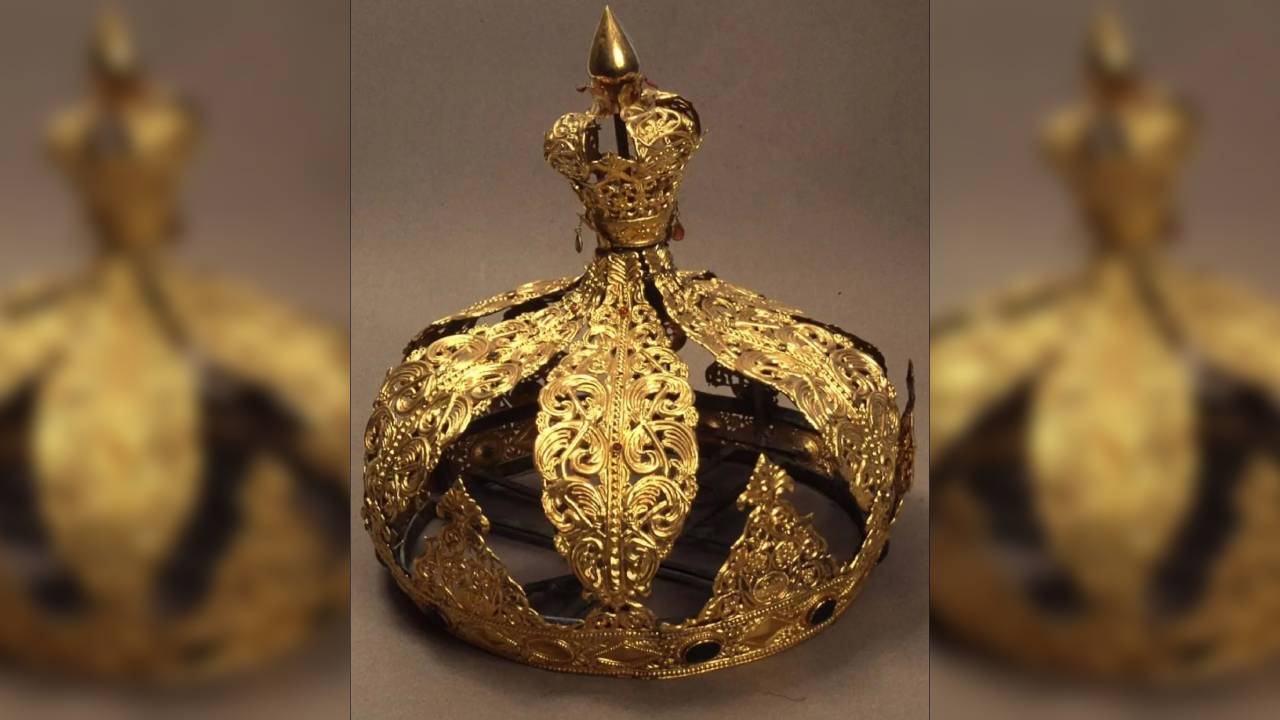
The Gold Torah Crown gifted to the Paradesi Synagogue
Synopsis: A newly installed commemorative plaque has reopened historical questions around a jewel-studded golden crown kept at the Paradesi Synagogue in Mattanchery, an artefact long associated with the relationship between the Travancore kingdom and Kerala’s Jewish community. For generations, synagogue tradition has held that the crown was gifted in 1805 by Maharaja Avittom Thirunal Bala Rama Varma, but archival reports and inscriptions suggest it may instead have been presented in 1807 by Travancore’s Dewan Velu Thampi Dalawa along with the British Resident.
Two centuries ago, in the quiet waterside town of Mattanchery in present-day Kerala, an extraordinary gesture quietly entered history.
In 1805, a jewel-studded golden crown was presented to the Paradesi Synagogue.
Who commissioned the crown, and for what precise purpose, remains an open question.
Yet local tradition and long-held belief point to a striking possibility: that Avittom Thirunal Bala Rama Varma, then the young ruler of Travancore, personally handed over the ceremonial artefact.
A fading painting inside the synagogue is often cited as visual testimony to this moment. It reinforces the belief that the crown symbolised deep trust and mutual respect between the Travancore kingdom and the Jewish community, whose commercial and cultural contributions had long enriched the region.
But historians say the story does not end there. They argue that the crown may carry political and social meanings still waiting to be fully unpacked.
Now, 221 years later, that half-forgotten chapter has been brought back into public memory through a commemorative plaque, jointly installed by the erstwhile Travancore royal family and the Jewish American Society for Historic Preservation.
The Paradesi Synagogue preserves some of the most striking remnants of Kerala’s layered past: copper plates attributed to Chera king Bhaskara Ravi Varma, known as the Cochin plates; a silver hanging lamp gifted by British Resident Colin Macaulay; and a carpet sent by Ethiopian Emperor Haile Selassie.
Among these, the golden crown made for the Torah commands particular attention.
For generations, synagogue tradition has held that the crown was gifted in 1805 by Maharaja Avittom Thirunal Bala Rama Varma of Travancore.
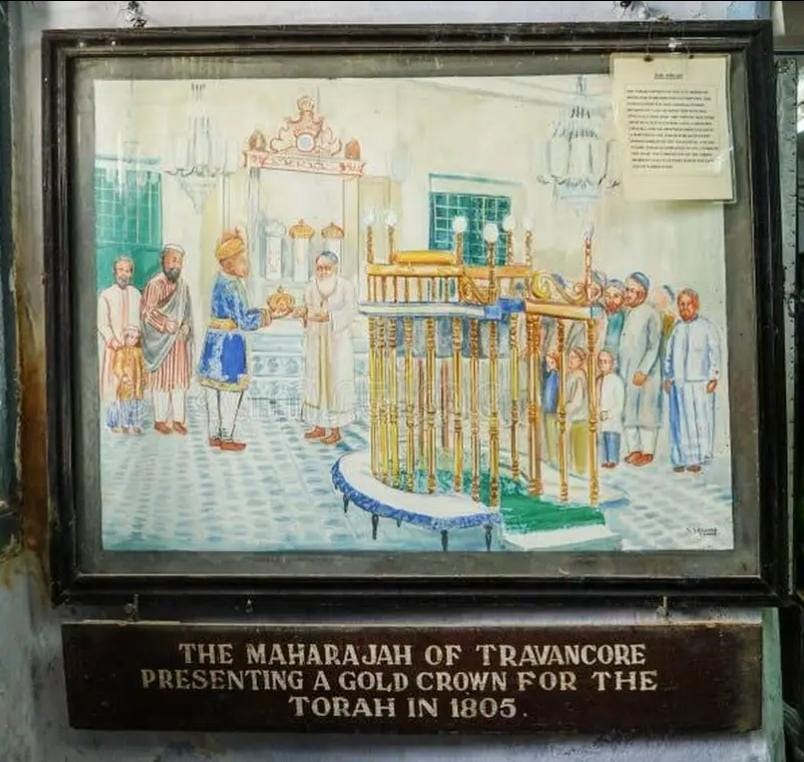
Painting inside the Paradesi Synagogue
This belief is reinforced by a painting inside the synagogue, which shows the Maharaja presenting a gold crown for the Torah. The accompanying inscription reads: “The Maharajah of Travancore presenting a gold crown for the Torah in 1805.”
The painting has long shaped public memory and historical understanding of the artefact.
But archival records complicate this seemingly settled narrative.
A report published in The Bombay Courier on 20 January 1808 describes a Hanukkah celebration held at the Paradesi Synagogue on 25 December 1807.
According to the report, the occasion was marked by the presentation of a golden Torah crown and two silver chandeliers, not by the Maharaja, but jointly by Travancore Dewan Velu Thampi Dalawa and British Resident Colin Macaulay.
Further weight for this account comes from a Hebrew inscription on the crown itself, which some scholars say points to the 1807 event rather than 1805.
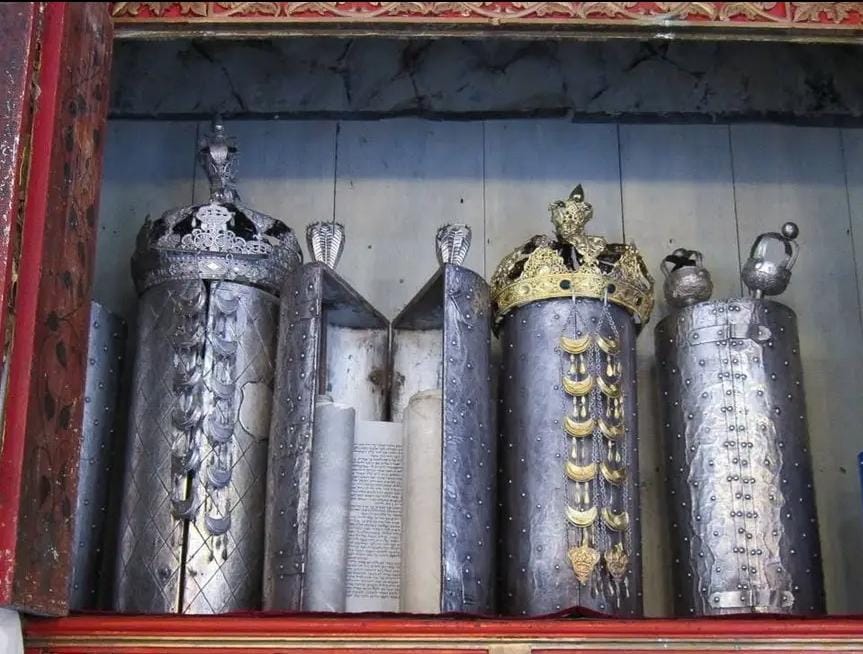
Crown placed on Torah
If this reading is accepted, it calls into question the older attribution. It also suggests that the crown’s provenance may lie in a moment of careful political alliance between the Travancore court and the British administration, rather than in a direct royal offering alone.
The historical context further complicates matters.
Velu Thampi Dalawa, a central figure in the 1807 account, fell dramatically from power just two years later.
In 1809, after rebelling against British authority in Travancore, Velu Thampi is believed to have taken his own life to evade capture.
This timeline casts doubt on later attempts to link the crown and chandeliers to the 1808 assassination attempt on British Resident Colin Macaulay, a theory that conflicts with the documented presentation date of December 1807.
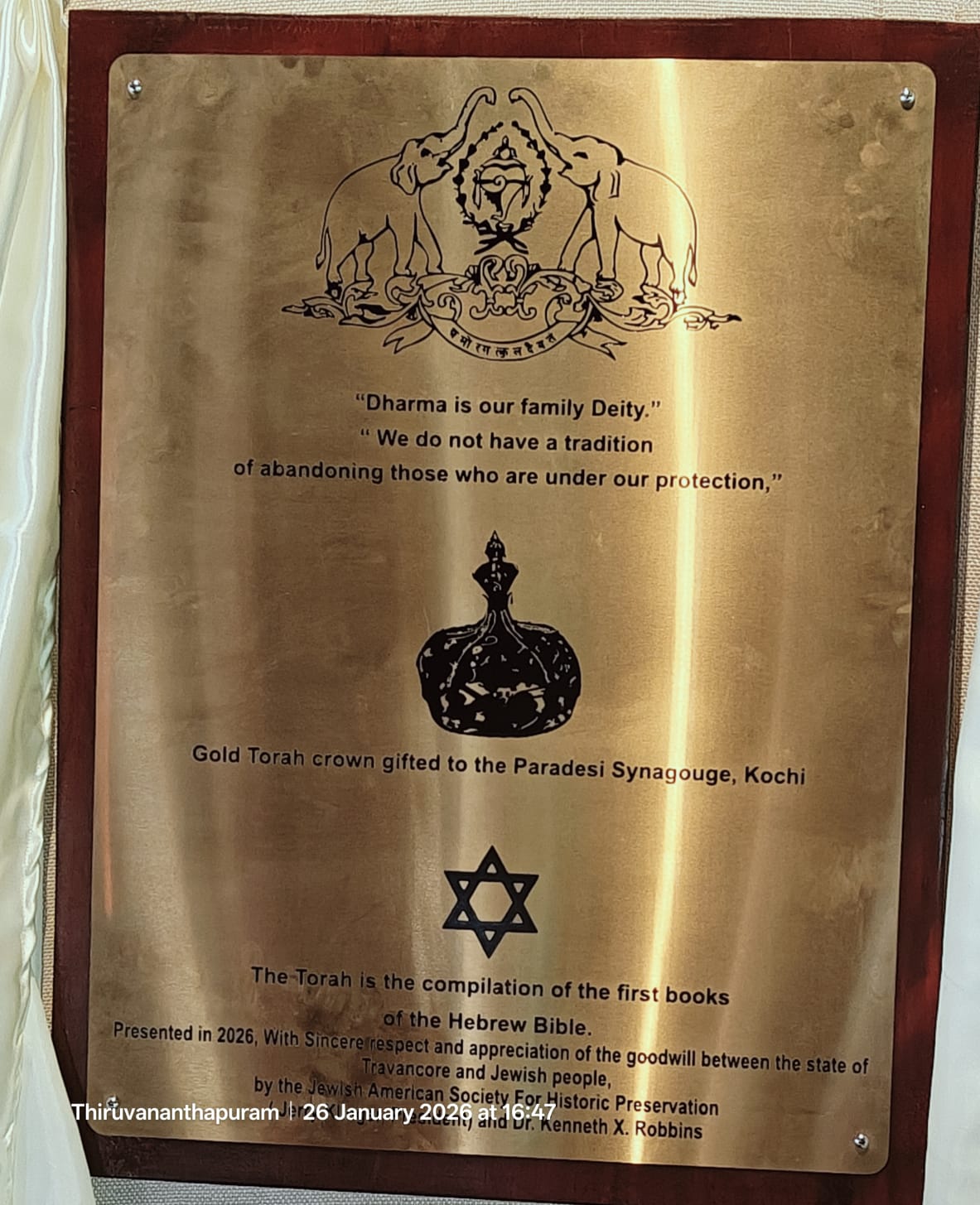
The plaque
The debate resurfaced in a contemporary setting on 26 January 2026, when a plaque was unveiled at Puthenmalika Palace, associated with the erstwhile Travancore royal family.
Installed by the Jewish American Society for Historic Preservation, the plaque commemorates historic goodwill between Travancore and the Jewish community.
It bears inscriptions tied to ethical ideals traditionally associated with the Travancore state:
“Dharma is our family deity,” and “We do not have a tradition of abandoning those who are under our protection.”
Alongside these declarations is an image of the golden Torah crown, captioned: “Gold Torah crown gifted to the Paradesi Synagogue, Kochi.”
The plaque also includes a brief explanation of the Torah as the compilation of the first books of the Hebrew Bible, placing the artefact in its religious and cultural context.
Notably, the plaque does not name a specific donor or date. This silence stands in quiet contrast to the certainty asserted in the synagogue mural.
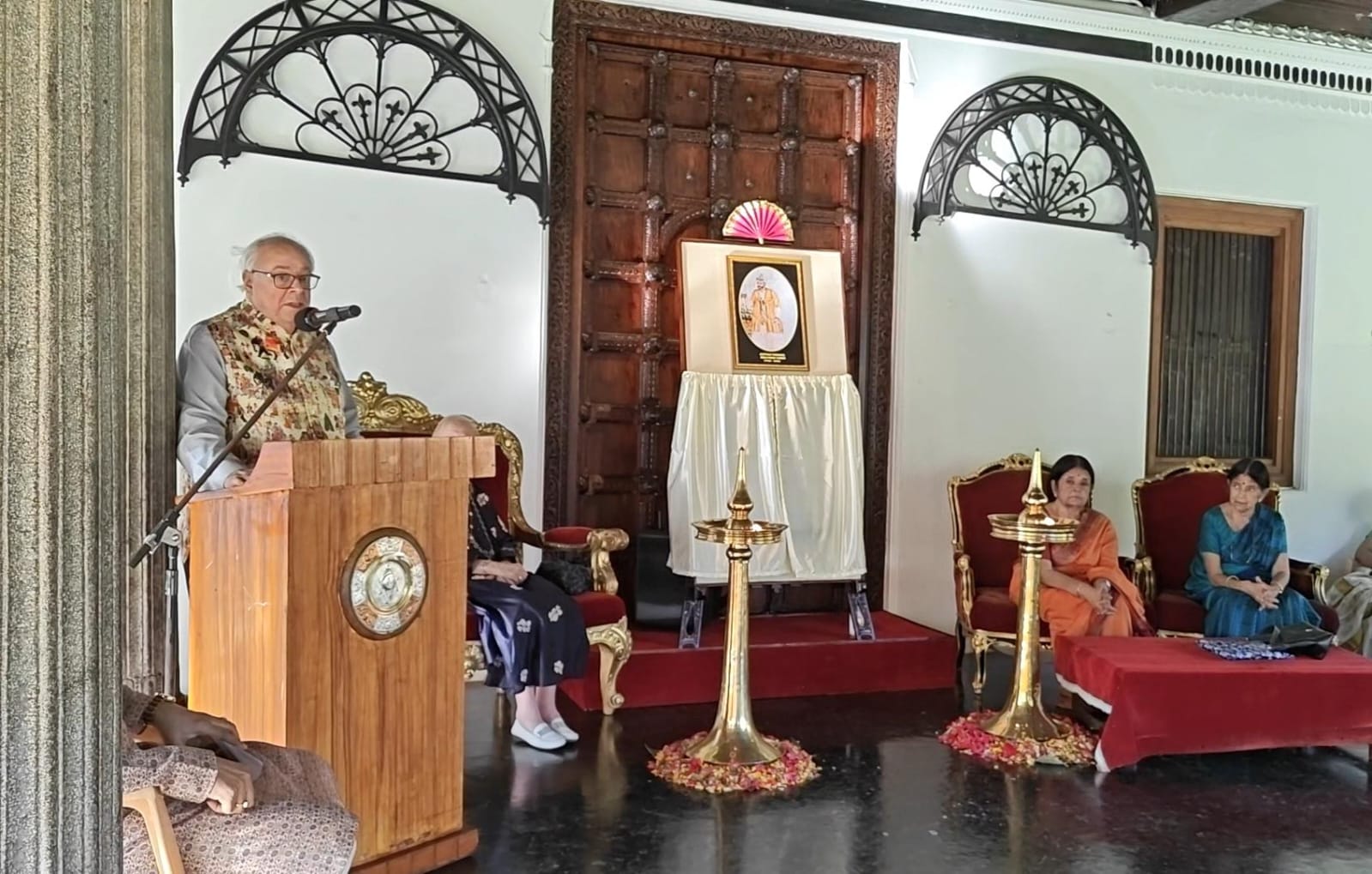
Kenneth X. Robbins during the unveiling of the plaque
Together, the two depictions, one painted on a synagogue wall and the other engraved in a modern commemorative display, show how history is shaped as much by reverence and remembrance as by records and reportage.
The golden crown thus remains more than a ceremonial ornament.
It stands suspended between narratives: royal generosity and administrative diplomacy, faith and politics, memory and archive.
At the same time, according to Aswathi Thirunal Gowri Lakshmi Bayi, the plaque is a sign of a long-standing tradition of friendship and goodwill between communities.
At the unveiling ceremony, she said:
“I am deeply thankful for this plaque, which stands not merely as a marker of history, but as a tribute to friendship itself. Maharaja Avittom Thirunal Bala Rama Varma, often remembered as the more vulnerable link in our lineage, lived through considerable financial hardship. Yet it was in those very circumstances that he chose to give the golden crown to the synagogue. He did so because he believed—quietly but firmly—that people of different faiths must come together in friendship and goodwill. That belief is etched into this plaque today. It speaks of friendship and goodwill, values that transcend time, and I sincerely hope they endure for many generations and many years to come.”
Speaking to South First, Jewish historian Kenneth X Robbins urges caution against romanticised readings of Kerala’s Jewish past, but underscores what he sees as India’s exceptional civilisational record.
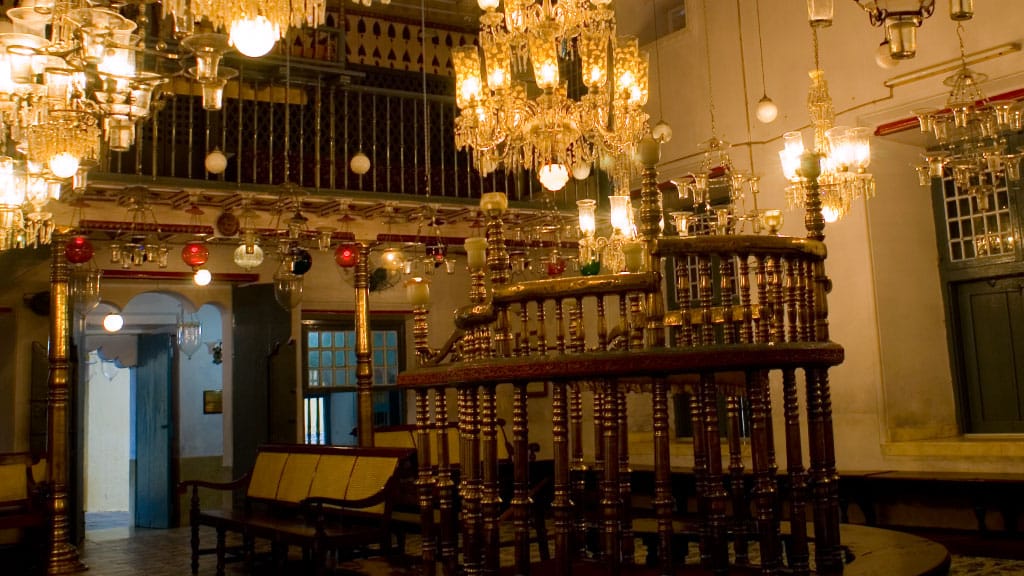
Interior of Paradesi Synagogue
Pointing to a frequently cited episode involving Velu Thampi Dalawa and the Paradesi Synagogue, Robbins says popular versions do not stand up to scrutiny.
The painting often linked to Velu Thampi, he explains, in fact depicts a Maharaja, not the rebellious Dewan.
“We can only say with confidence that the gift (crown) came from the Maharaja of Travancore,” Robbins said.
Yet for Robbins, the larger political meaning matters more than the error.
The idea of an Indian ruler, and a Hindu king, patronising a synagogue in the early nineteenth century would have seemed implausible in much of Europe at the time.
That such acts were possible in Kerala, he said, points to a distinctive culture of religious accommodation.
Tracing Jewish presence in the region, Robbins points to copper plate grants from Quilon dating to 849 AD. They bear Hebrew signatures and record multi-religious trade guilds.
Later grants, dating to around 1000 AD, were issued to Jewish traders during the Chola dynasty incursions.
While legends speak of a Jewish kingdom at Cranganore, Robbins is clear that no historical evidence supports the claim. He says it likely grew out of European fantasies about Christian and Jewish realms in India.
Kerala’s Jewish community itself, he notes, was diverse and divided, with Malabari Jews forming the majority, while later Paradesi Jews remained socially exclusive.
Even so, Robbins believes the broader lesson holds.
Despite internal fractures, the region offers a long, if imperfect, record of communities coexisting without sustained violence, a tradition he says is poorly understood and too easily taken for granted.
Kerala’s long engagement with Judaism points to its role as a crossroads of faiths, trade and cultures.
From early royal grants that placed Jews on par with local elites to shared urban spaces where temples and synagogues stood side by side, acceptance grew through everyday interaction.
The Paradesi Synagogue, standing beside a Hindu temple, remains a living reminder of this layered past and of rulers who encouraged coexistence.
Although migration after 1950 greatly reduced the community, the legacy of the Cochin Jews endures as a sign of Kerala’s plural social fabric and its capacity for peaceful cultural fusion.


