


Published Mar 20, 2026 | 10:24 PM ⚊ Updated Mar 20, 2026 | 10:24 PM

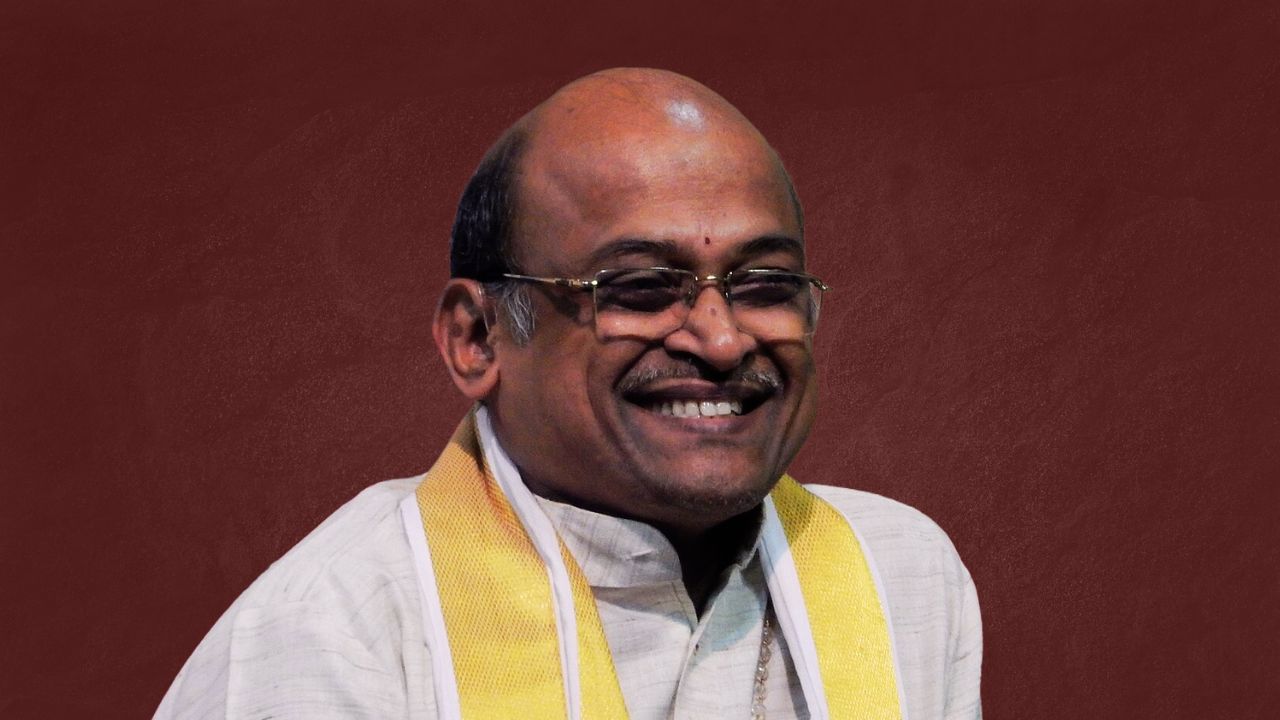
Garikapati Narasimha Rao.
Synopsis: Telugu orator Avadhani Garikapati Narasimha Rao has sparked outrage after likening children who rely on the mid-day meal scheme to “sobhanapu pellikodukulu” (bridegrooms on the nuptial night). He claimed students attend school for free food rather than learning and criticised welfare measures as harmful.
Telugu religious orator Avadhani Garikapati Narasimha Rao on Friday, 20 March, kicked up yet another controversy after comparing schoolchildren who depend on the government’s mid-day meal scheme to “sobhanapu pellikodukulu (bridegrooms on the nuptial night)”.
His rant came after the state government announced an expansion of the scheme in the 2026–27 budget.
A Padma Shri awardee, Rao’s comments, captured in multiple clips, quickly spread on social media and drew widespread condemnation.
The 67-year-old said students in government schools attend classes not to learn but to consume taxpayer-funded meals, free uniforms and textbooks.
“Aren’t these children like sobhanapu pellikodukulu? They come only for the pleasure of that night—here, the one midday meal—and enjoy it fully,” he said.
He also objected to the inclusion of eggs in the mid-day meal scheme, saying teachers and headmasters are burdened with tracking how many students eat the meal, how many take eggs and how many do not.
“Then there will be allegations of lizards falling into food. What is all this? This will only sideline the primary aim of schools – helping students learn. In the process, education becomes a casualty,” he said.
Rao said governments in the two Telugu states should focus on providing education, not food or other support.
“Let students bring their own lunch, buy their own uniforms and books, go to school and sit in classes if they are really interested in learning. If you provide food, students will never learn anything, as they will be interested only in the food that is served,” he said.
He also criticised welfare policies, calling them vote-bank politics that spoil children and damage their work ethic.
The response from Telugu netizens, parents and teachers was swift.
“My father was a daily-wage labourer; the midday meal was the only reason I stayed in school and became an engineer,” said one widely shared post.
Women’s groups and child rights activists described the bridegroom analogy as “vulgar and dehumanising.”
The mid-day meal scheme exists to ensure children do not have to choose between education and survival.
It was launched nationwide on 15 August 1995 and expanded after a Supreme Court order in 2001. Now known as PM POSHAN, it was designed to address malnutrition, reduce child labour and tackle caste discrimination in schools.
The programme aims to keep children in classrooms rather than in fields, factories or on the streets. Tamil Nadu’s earlier models, introduced in phases from the 1920s and expanded in the 1960s, showed sharp increases in enrolment and retention. The national scheme built on this, reaching more than 120 million children each day.
Studies have found the scheme raises attendance by 10–20 percent, reduces dropout rates—particularly among girls and marginalised communities—and improves nutrition. In the two Telugu states, it also provides work for women’s self-help groups and helps prevent children from entering labour due to hunger.
Rao’s rant follows earlier controversial remarks on women’s clothing, where he spoke of a “decline” in women’s dress, contrasting traditional clothing with modern outfits he said contribute to moral decline and harassment.
Critics said these comments place responsibility on women for men’s behaviour and reinforce patriarchal attitudes.
(Edited by Dese Gowda)


