

Published Oct 19, 2023 | 7:51 PM ⚊ Updated Oct 19, 2023 | 7:52 PM

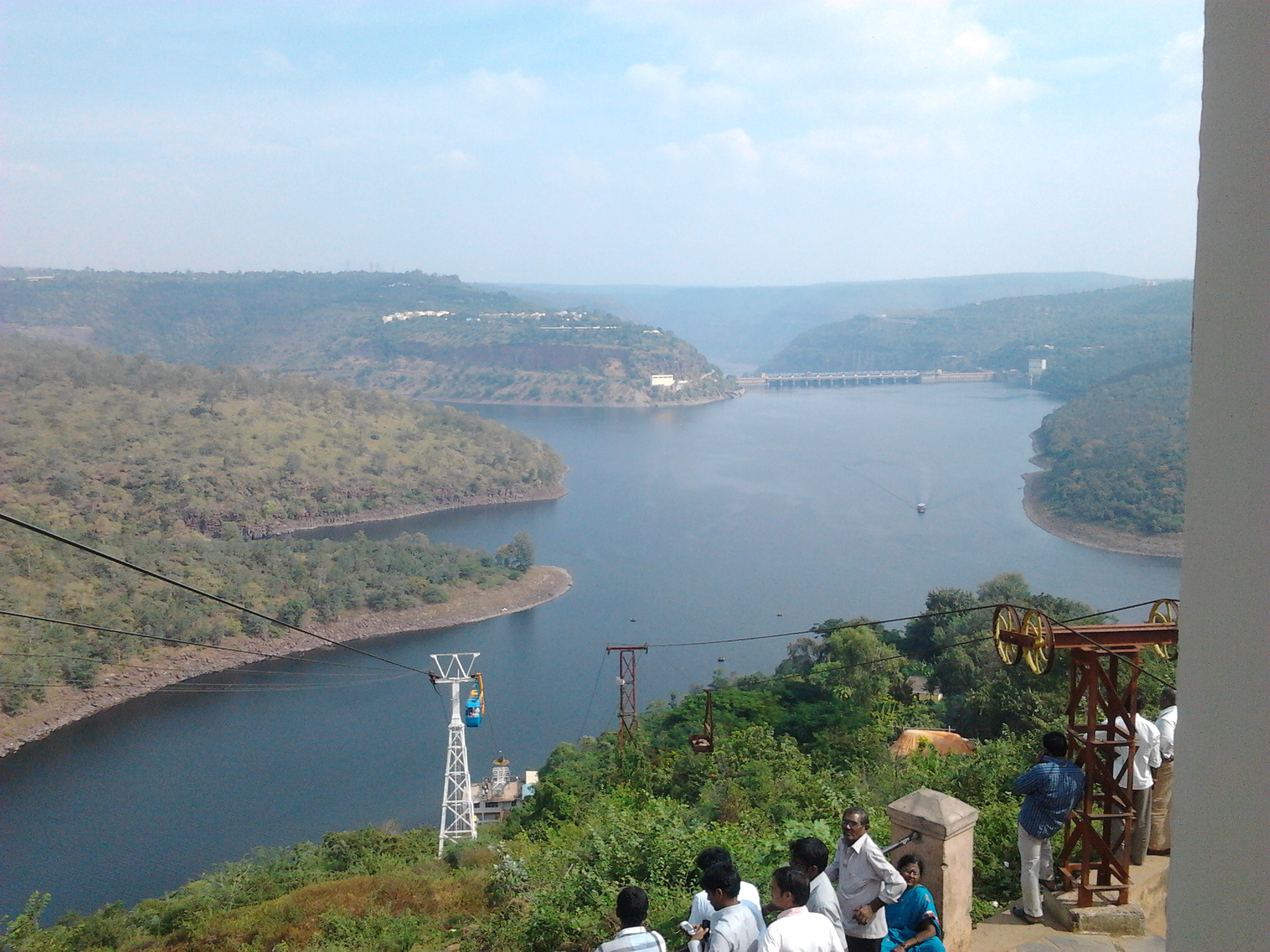
Srisailam dam and Krishna river. (Wikimedia Commons)

Telangana requested the Krishna River Management Board (KRMB) to restrain Andhra Pradesh from executing the ‘unauthorised’ Veligonda Project and adding new components to it, which are intended to divert water outside the basin.
In a letter addressed to the Board Chairman, Engineer-in-Chief (General) of the Telangana Irrigation and Command Area Development, C Muralidhar, said that it was reported in Eenadu that the Andhra Pradesh government had provided administrative sanction for two lift schemes under Veligonda.
Raising its concerns in the letter, Telangana requested KRMB to restrain Andhra Pradesh from taking up the construction of the Veligonda Project, components, and expansions by diverting Krishna water outside the basin without any appraisal by the Board and approval of the Apex Council.
It is also pertinent to note that Telangana Chief Minister K Chandrashekhar Rao opposed the illegal and unauthorised diversions and requested Gajendra Shekhawat, the Union Minister for Jal Shakti, to take immediate and effective action to stop the diversion of Krishna waters through the Srisailam reservoir.
Further, during the second Apex Council meeting, the Union minister stated that inter-basin transfer of water could be done only after first fulfilling the needs of the in-basin.
The Union minister, in his letter dated 5 January 2021, directed Andhra Pradesh not to go ahead with any of the activities of awarding, construction, and implementation of new projects until the detailed project reports (DPRs) are appraised and approved by the KRMB and the Apex Council.
However, ignoring the directions of the Ministry of Jal Shakti, Andhra Pradesh is going ahead with the execution of the above works. Further, on the issue of diversion of Krishna waters outside the river basin, the Krishna Water Disputes Tribunal-I (KWDT-I) decided that more weightage should be given to the inside basin use.
Hence, in view of the above, taking up surplus-based projects, including Veligonda, would be detrimental to the interests of projects of Telangana which has acute drought-prone and fluoride-affected in-basin areas, apart from the settled ayacuts of the Nagarjuna Sagar Project command downstream of the Srisailam Project and the drinking water needs of Hyderabad.
It is to be noted that more than 85 percent of cultivable area in erstwhile Mahabubnagar and Rangareddy districts is without assured water supply and these districts are 100 percent and 84 percent drought-prone areas, respectively.



