


Published Mar 20, 2026 | 5:20 PM ⚊ Updated Mar 20, 2026 | 5:20 PM

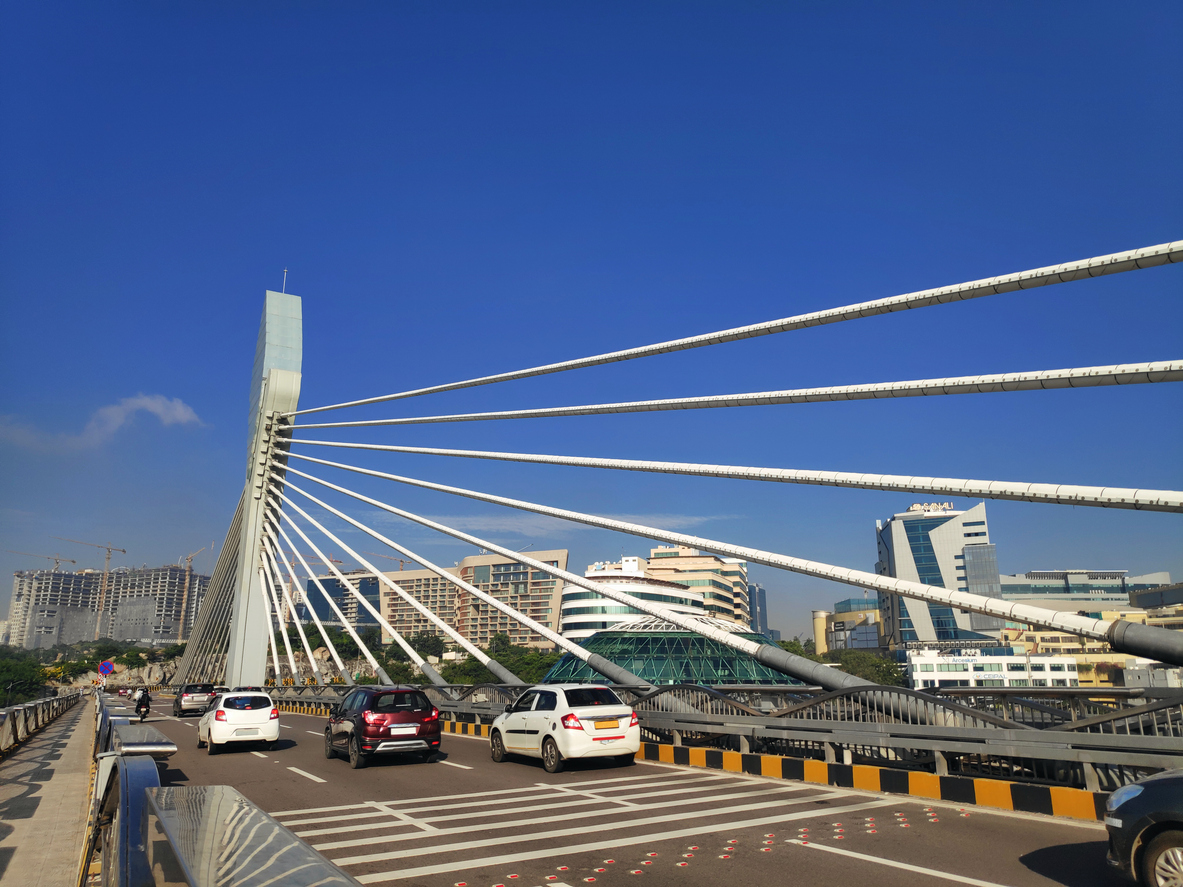
The government has laid out a blueprint aimed at transforming both urban and rural landscapes. (iStock)
Synopsis: Deputy Chief Minister Mallu Bhatti Vikramarka underscored that sustained investment in infrastructure would play a critical role in driving economic expansion, improving urban liveability and creating job opportunities. The Budget reflects the direction, with an emphasis on integrated planning, sustainable development and future-ready infrastructure systems.
Large-scale infrastructure development has emerged as the main theme of the Telangana Budget 2026–27, with the State government unveiling an ambitious and wide-ranging pipeline of projects.
The projects span urban development, irrigation, transport, industry and tourism. Positioning infrastructure as the primary engine of long-term economic growth, the government has laid out a blueprint aimed at transforming both urban and rural landscapes while generating employment and attracting investments.
Deputy Chief Minister Mallu Bhatti Vikramarka underscored that sustained investment in infrastructure would play a critical role in driving economic expansion, improving urban liveability and creating job opportunities. The Budget reflects the direction, with an emphasis on integrated planning, sustainable development and future-ready infrastructure systems.
Among the most ambitious urban initiatives is the Musi River rejuvenation project, which seeks to transform a 55-km stretch of the river into a clean and vibrant urban corridor. The project includes the supply of 2.5 TMC of water from the Godavari, expansion of sewage treatment infrastructure—45 existing STPs and 39 new ones—and the development of the Gandhi Sarovar riverfront.
By integrating flood management, river cleaning and recreational infrastructure, the project is expected to significantly enhance the city’s environmental and aesthetic profile.
Central to the government’s vision is the proposed “Bharat Future City”, a flagship greenfield urban project to be developed over an expansive 30,000 acres. Envisaged as a model for next-generation urbanisation, the project the government hopes will feature radial road networks, greenfield highway connectivity to Machilipatnam Port in neighbouring Andhra Pradesh, underground power infrastructure and utility grids. The government aims to position the city as a benchmark in sustainable and technology-driven urban planning.
Hyderabad continues to remain the focal point of infrastructure investments, with multiple high-impact projects planned to ease congestion, improve civic services and expand urban mobility. A key component is the Hyderabad City Innovative and Transformative Infrastructure (H-CITI) programme, which has been allocated ₹2,654 crore. The initiative will focus on strengthening core urban infrastructure, including water supply and sewerage systems.
Significant investments have also been earmarked for water management. The Godavari Drinking Water Project, along with the construction of new reservoirs and 39 additional sewage treatment plants (STPs), is expected to enhance water availability and improve sanitation infrastructure.
Urban transport is another major focus area. The Hyderabad Metropolitan Development Authority (HMDA) has lined up several projects, including elevated corridors such as Paradise–Shamirpet and Paradise–Dairy Farm Road, along with new flyovers, skywalks and expansion of radial roads connecting the Outer Ring Road (ORR) and the proposed Regional Ring Road (RRR). These initiatives are aimed at improving traffic flow and strengthening regional connectivity.
The Hyderabad Metro Rail project is set for significant expansion under Phase II and Phase III. Plans include extending connectivity to the Old City, the airport and emerging growth corridors. Currently serving around five lakh passengers, the metro is expected to play a pivotal role in shaping the city’s public transport network. In a notable policy shift, the State government has also decided to take over the project from L&T.
For the irrigation sector, the government has allocated ₹22,615 crore, reflecting its continued emphasis on water resource management and agricultural support. Key projects include the Palamuru–Rangareddy, Kalwakurthy, Nettempadu and Bheema lift irrigation schemes, along with the SLBC project. The long-pending Dr BR Ambedkar Pranahita–Chevella project is also set to be revived, indicating renewed focus on completing legacy irrigation works.
A large-scale de-siltation drive has been planned to restore the storage capacity of major water reservoirs such as Sriramsagar, Nagarjunasagar and Jurala. The initiative will follow national guidelines and adopt a revenue-generating model, marking a shift towards more sustainable maintenance of water infrastructure.
Infrastructure-led industrialisation forms another key pillar of the budget. The government has proposed the development of industrial corridors and clusters, including the Kodangal Industrial Cluster, multipurpose industrial parks and the Zaheerabad Industrial Smart City. Land pooling mechanisms will be used to facilitate industrial expansion. These initiatives are aligned with the National Industrial Corridor programme and aim to boost manufacturing and exports.
Telangana’s export performance has shown strong growth, reaching ₹1.61 lakh crore, with aerospace and defence sectors contributing nearly 30 per cent. The government expects that improved industrial infrastructure will further accelerate this momentum.
In the aviation sector, land acquisition for the Warangal airport is set to be completed, while the master plan for the Adilabad airport is in its final stages. These developments are expected to improve regional connectivity and support economic growth in emerging urban centres.
The State is also pushing ahead with its electric mobility agenda. Currently, 1,036 electric vehicle (EV) charging stations are operational, and the network is set to expand further under green mobility initiatives. This aligns with the broader focus on sustainable and environmentally friendly infrastructure.
Beyond Hyderabad, the government aims to replicate the capital’s development model across Tier-2 cities and towns. Investments will focus on improving connectivity, strengthening public services and upgrading urban infrastructure in smaller urban centres, thereby promoting balanced regional development.
The scale of the infrastructure push is evident in the financial outlay. The government has sanctioned infrastructure works worth ₹43,592 crore, of which projects valued at ₹24,752 crore are already under implementation. This reflects both the ambition and the execution focus of the State’s development strategy.
Tourism and spiritual infrastructure have also received significant attention. With the Godavari Pushkaralu scheduled for 2027 and an expected footfall of eight crore devotees, the government has allocated ₹500 crore for the event. Investments will be made in roads, ghats and temple infrastructure to accommodate the surge in pilgrims.
In addition, nine new spiritual tourism circuits are planned, integrating religious destinations with broader tourism infrastructure. Under the Tourism Policy 2025–2030, investment proposals worth ₹25,000 crore are currently under consideration, signalling strong interest in the sector.
The government has also outlined plans to develop Telangana as a sports hub by 2047. This includes upgrading sports infrastructure and strengthening grassroots talent identification and training systems.
On the social infrastructure front, measures have been proposed to strengthen law enforcement and public safety. These include the establishment of a special task force to tackle drug-related issues, the expansion of surveillance systems and forensic laboratories, and the setting up of de-addiction centres. These measures gained importance with the EAGLE team’s drug bust in a farmhouse in Hyderabad recently, where a TDP MP was caught allegedly consuming drugs.
(Edited by Majnu Babu).


