

Published Apr 22, 2026 | 3:44 PM ⚊ Updated Apr 22, 2026 | 3:46 PM

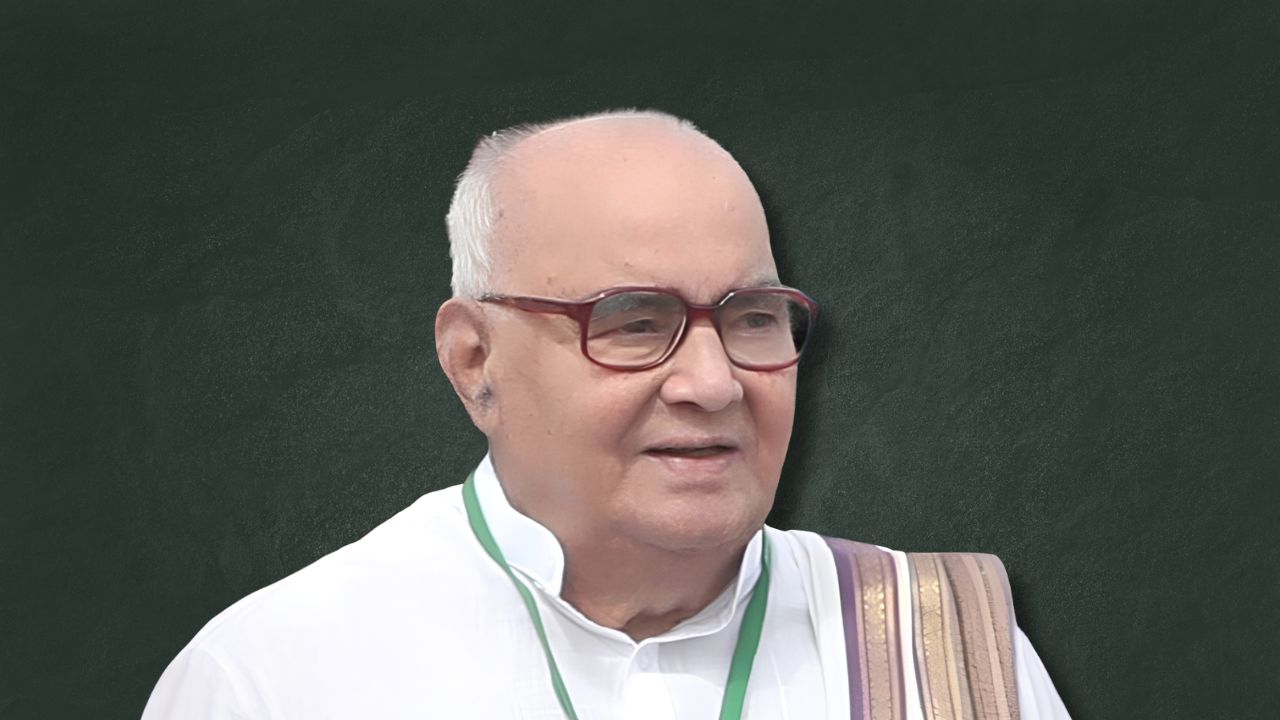
Nadendla Bhaskara Rao.

Synopsis: Bhaskara Rao’s life offers a dual lesson. It highlights the importance of administrative competence and political strategy, while also underscoring the consequences of overlooking democratic morality. As tributes pour in from across the political spectrum, including from his adversaries, it is evident that Nadendla Bhaskara Rao commanded respect beyond immediate political divides.
The passing of Nadendla Bhaskara Rao marks more than the loss of a former chief minister. It signals the closing of a distinctive and complex chapter in the political history of undivided Andhra Pradesh.
Some leaders are remembered for the offices they held. Others are etched into history for the political tremors they created. Bhaskara Rao belongs firmly to the latter category.
Born on 23 June 1935 in Guntur district, Bhaskara Rao began his professional life as a lawyer. Yet, his true calling lay beyond courtrooms, in the dynamic and often unpredictable arena of public life.
Known for his sharp articulation, strategic clarity and administrative capability, he quickly emerged as a formidable political figure. His political journey began with the Congress party. In 1978, he was elected as an MLA from Vijayawada East, marking his entry into the legislative assembly.
He went on to serve in the cabinets of leaders like Marri Chenna Reddy and T Anjaiah, where he demonstrated considerable administrative skill and political acumen.
However, Bhaskara Rao’s most defining role came during the early 1980s, a period that reshaped Andhra Pradesh politics. He left the Congress and became a key architect in the formation of the Telugu Desam Party alongside NT Rama Rao.
Also Read: No! Chandrababu Naidu is not going anywhere
While NTR commanded immense public popularity, it was leaders like Bhaskara Rao who helped translate that mass appeal into a structured political force. From organisational building to candidate selection, financial management to political strategy, his imprint on the early growth of the party was unmistakable.
Serving as finance minister in the first TDP government, he played a crucial role in shaping the administrative and institutional backbone of the new regime. His contributions underscored a fundamental truth in politics: charisma may win elections, but strategy sustains power.
Yet, the same man would soon find himself at the centre of one of the most dramatic political crises in the state’s history.
In August 1984, while NTR was in the United States undergoing heart surgery, Andhra Pradesh witnessed an abrupt political upheaval. With the support of then Governor Thakur Ram Lal and a section of legislators, Bhaskara Rao assumed office as chief minister on 16 August 1984.
What followed was not merely a change in leadership, but a crisis of legitimacy. In a democracy, numbers alone are not sufficient. Public sentiment, ethical grounding and political trust are equally vital. The manner in which NTR was unseated triggered widespread public outrage.
Protests erupted across the state, and the episode quickly became a national talking point on democratic values and constitutional propriety. Bhaskara Rao’s tenure as chief minister lasted just 31 days. Unable to prove his majority, he resigned on 16 September 1984.
Also Read: Tejasvi Surya claims formation of Telangana was ‘worse than Partition’, draws condemnation
Though brief, this period ensured his place in history as the chief minister with one of the shortest tenures in the state, but with one of the most lasting political impacts.
To view Bhaskara Rao solely through the lens of that episode would be an oversimplification. He was not merely a symbol of political ambition; he was also a leader of considerable intellect, administrative experience and strategic depth. However, leadership is not just about calculation.
It is also about timing, ethics and public trust. It was at this intersection that his political journey faltered. Politics ultimately is not just about acquiring power, but about sustaining it with legitimacy.
Bhaskara Rao succeeded in reaching the pinnacle of authority, but struggled to retain the confidence of the people. That contrast became the defining narrative of his career.
In the years that followed, he returned to the Congress party. He was elected again as an MLA from Tenali in 1989 and later served as an MP from Khammam in 1998.
Though he continued to remain politically active, the defining chapter of his career remained rooted in the events of 1984. His legacy, therefore, is not confined to positions held, but shaped by the circumstances under which he held them.
The crisis he was part of also triggered one of the most significant public mobilisations in the state, leading to NTR’s return to power. It raised enduring questions about democratic ethics, gubernatorial roles and the limits of political manoeuvring.
Bhaskara Rao’s life offers a dual lesson. It highlights the importance of administrative competence and political strategy, while also underscoring the consequences of overlooking democratic morality.
Power can elevate a leader, but only public trust can sustain that elevation. As tributes pour in from across the political spectrum, including from his adversaries, it is evident that Bhaskara Rao commanded respect beyond immediate political divides.
His life remains a subject of study for students of politics, not just for what he achieved, but for what his journey reveals about the nature of power itself.
For today’s generation of leaders, his story stands as both inspiration and caution. Skill can make one a leader, but credibility alone can make one a people’s leader.



