

Published Jul 15, 2023 | 11:41 AM ⚊ Updated Jul 15, 2023 | 11:41 AM

The proposed AI-powered township project aims to acquire over 7,481 acres of farmland across nine revenue villages near Bidadi.

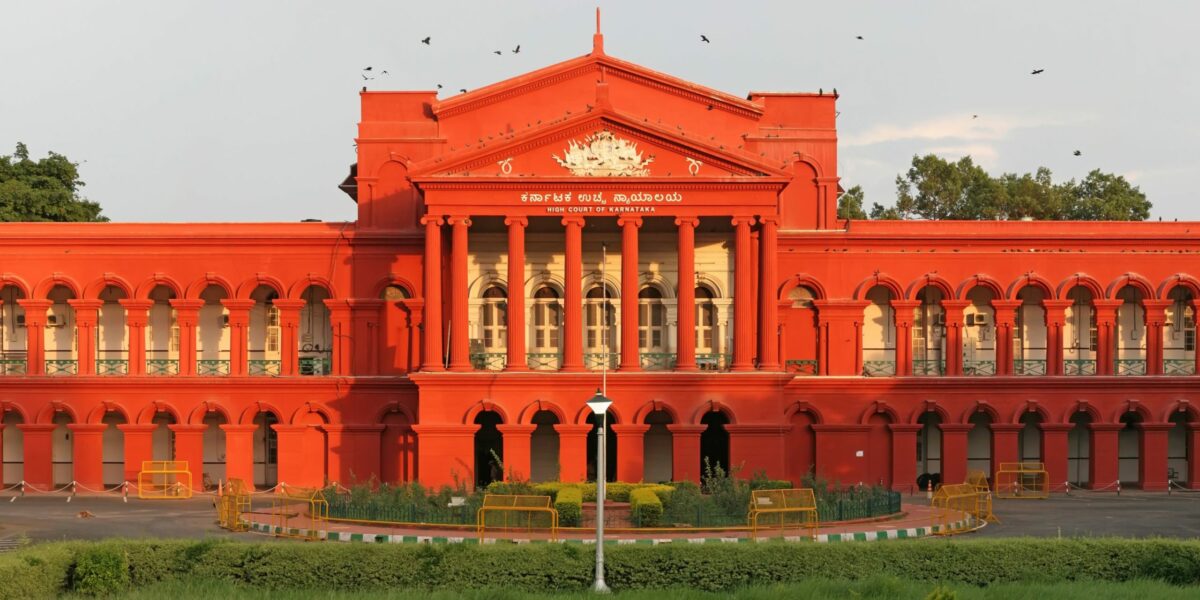
The High Court of Karnataka has rejected the contentions of two brothers who were unwilling to pay the ₹10,000 per month maintenance they were ordered to pay their aged mother, stating that they are bound by law, religion and custom.
Gopal and Mahesh, the two brothers, had been ordered by the assistant commissioner, Mysuru, to pay maintenance of ₹5,000 each to their mother Venkatamma, in May 2019.
They challenged it before the deputy commissioner (DC), who enhanced the maintenance to ₹10,000 each. They then approached the high court challenging this order.
Justice Krishna S Dixit, while upholding the DC’s order, dismissed every contention raised by the brothers, and also imposed a cost of ₹5,000 on them for bringing up the petition.
“If an able-bodied person is bound to maintain his dependent wife, there is no reason why such a rule should not apply when it comes to the case of a dependent mother. An argument to the contra falls foul of law and religion, to which the petitioners belong,” the high court said dismissing their petition.
The brothers had contended that they did not have the means to pay their mother.
The court however said, “The argument that the petitioners do not have the means to pay is too poor a justification for not looking after the aged and ailing mother, especially when it is not their case that they are not able-bodied, or are diseased.”
The court also noted, “The first petitioner is hale and healthy; the second petitioner is not before the court, but it is not his case too that he is weak and incapable of earning.”
Quoting the scriptures, the high court said, “Law, religion and custom mandate sons to look after their parents, and more particularly aged mother. ‘Smrutikaaraas’ say: ‘Aakshanti sthavire putra…’ nearly meaning that it is the duty of the son to look after his mother, who is in the evening of her life.”
The high court also said that in an ancient scripture of India entitled “Taittiriya Upanishad”, it is said that when a student on graduation is leaving the “gurukula” (school/college), the guru/teacher gives him the parting message as under: “May you be one for whom his mother is a ‘Deva’. May you be one for whom his father is a ‘Deva’. May you be one for whom a guest is a ‘Deva’. May you be one for whom his teacher is a ‘Deva’.”
Quoted the “Brahmanda Purana” the court said, “To neglect the parents, particularly in their old age, when they become weak and dependent and to cause anguish, is a heinous act for which there is no atonement available.”
The high court noted that the first son owns three shops and is earning ₹20,000 as rental income while only disclosing ₹10,000 as his income. The sons contended that they were willing to take care of the mother, but she must live with them and not the daughters.
The high court said that it is “neither legally sustainable nor factually desirable”.
“This court saw the mother who is absolutely illiterate, and who has a fragile health condition; she is aged, about 84 years. Her eyesight is considerably diminished. The law of marriage generally provides for restitution of conjugal rights qua the deserting spouse, which is true. No law or ruling of the kind is cited at the Bar that unwilling parents can be forced to reside with their children. Such a contention is incongruous and abhorrent to our culture and tradition, to say the least.”
The high court also dismissed another contention of the brothers and said, “Absolutely no material is produced by the petitioners to substantiate their allegation that the mother is being manipulated by her daughters. It is not that the daughters want any share in the family property. It is they who have been looking after the mother abandoned by the sons.”
The high court also dismissed the contention that the amount of ₹10,000 is on the higher side.
“We are living in an age when bread is costlier than blood. Money is losing its purchasing power; days are proving very costly; a sum of ₹10,000 by any measure cannot be said to be excess.”
(Disclaimer: The headline, subheads, and intro of this report along with the photos may have been reworked by South First. The rest of the content is from a syndicated feed, and has been edited for style.)



