

Published Oct 25, 2026 | 2:17 PM ⚊ Updated Oct 25, 2026 | 2:19 PM

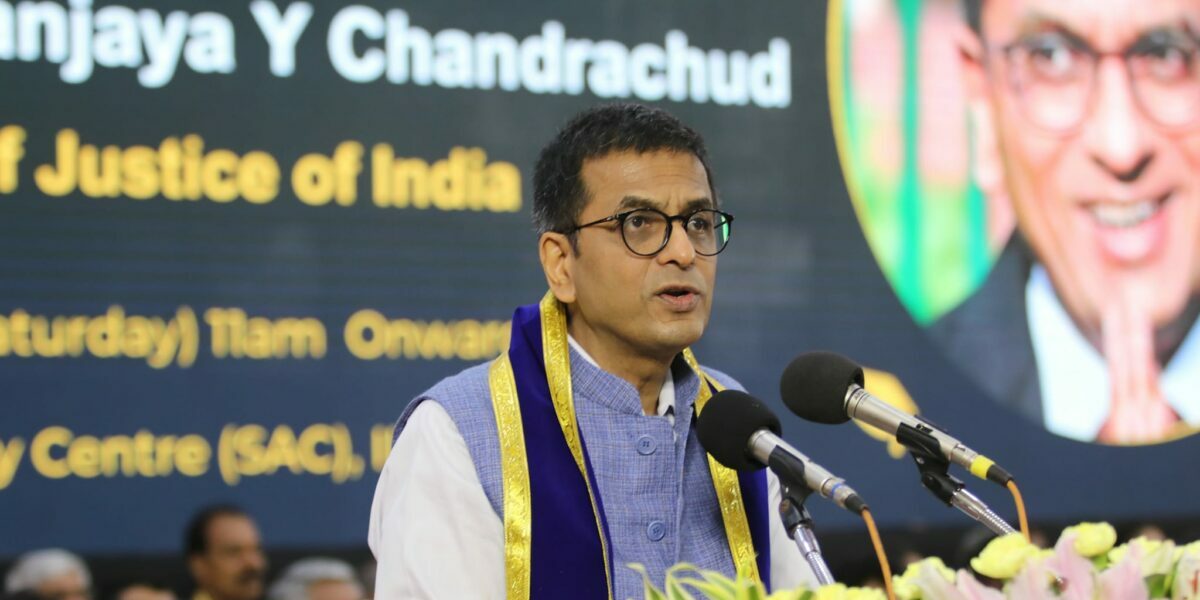
DY Chandrachud addressing IIT Madras students. (File Photo)

Synopsis: Former Supreme Court judge Sanjay Kishan Kaul has alleged that former Chief Justice of India DY Chandrachud was “too deferential” to the government on judicial appointments, recounting an instance in which Justice Chandrachud proposed seeking the government’s views on a candidate before the Supreme Court Collegium had considered the name. Justice Kaul said expectations of Chandrachud as CJI had been higher than what he ultimately delivered.
Former Supreme Court judge Sanjay Kishan Kaul has alleged former Chief Justice of India DY Chandrachud was “too deferential to the government on appointment matters”, recounting an instance in which Justice Chandrachud proposed checking the government’s view of a candidate before the Supreme Court Collegium had considered the name.
In an interview with veteran journalist Karan Thapar for The Wire, discussing his memoir Without Fear or Favour, Justice Kaul said he had opposed the move because it risked turning prior government approval into an accepted practice in judicial appointments. He said the Collegium must consider the government’s suggestions and take the final decision, rather than seek the government’s approval before formally deliberating on candidates.
Justice Kaul said five names had been discussed and agreed upon before a Collegium meeting, but a sixth name was introduced just before the meeting. He said he told Justice Chandrachud that the proposed name would not be acceptable to him or the other Collegium members.
“I said, ‘That name is not acceptable to me and will not be acceptable.’ He wanted me to go along with the name. I said, ‘Even if I do that, the others will not, I believe.’ And that’s what happened in the meeting,” Justice Kaul told Thapar.
He said he suspected that the government’s approval might already have been obtained for the names, including the sixth candidate.
“So this has become, unfortunately, a practice of names being discussed and some kind of previous discussion with the government. That used to happen certainly. It has been happening, I think, before and after, which is what troubles me,” he said.
“Concept of discussion is not bad, but at what stage and in what manner it takes place is the problem.”
Justice Kaul served as a Supreme Court judge from 17 February 2017 to 25 December 2023. Justice Chandrachud served as CJI from 9 November 2022 to 10 November 2024, for nearly two years.
Prime Minister Narendra Modi visited Chandrachud’s residence for Ganesh Puja in 2024 while he was still the CJI.
Justice Kaul said he had tried to discourage Justice Chandrachud from discussing the entire list of candidates with the government in advance because the practice could constrain his successors.
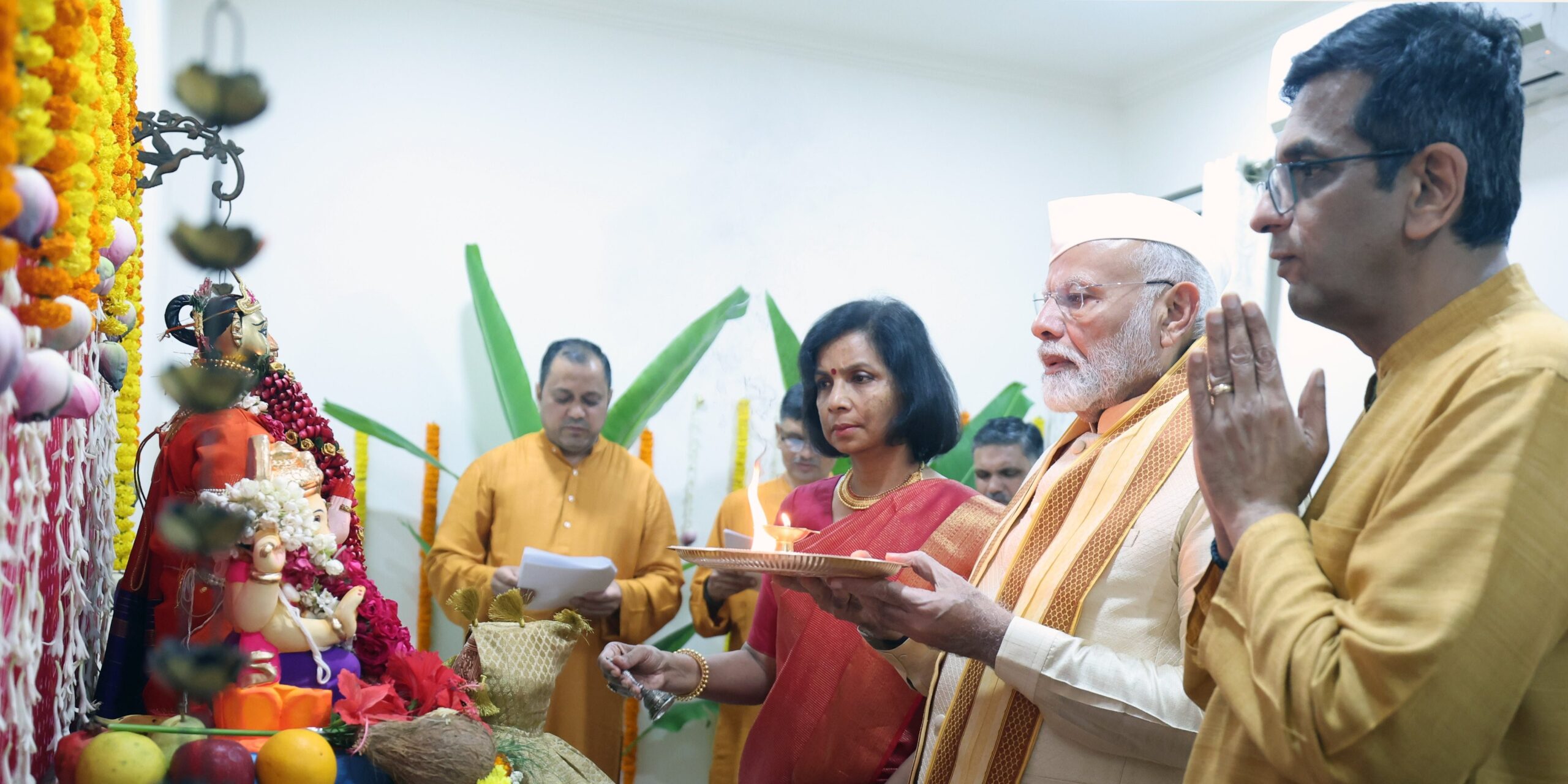
Prime Minister Narendra Modi at the residence of former CJI DY Chandrachud for Ganesh Puja.
He said a Chief Justice with a longer tenure and the authority to resist government pressure had a responsibility not to establish a procedure that future Chief Justices might find difficult to reject.
“He believes that this is how it had been happening. I was of the view that, with a Chief Justice like him, with a two-year tenure, and with his own merit and the trust he commanded, adopting this practice would create a problem for his successors. They have shorter tenures, and the government would get used to a particular methodology before appointments to the Supreme Court were made,” he said.
Justice Kaul said the government could make suggestions, but the Collegium had to decide whether to accept them. Discussing the entire list beforehand, he said, would create problems and alter the dynamics of judicial appointments.
“When the government introduced the AJC, we would at least have sat across the table and discussed it. It could have been fine-tuned, it could have been modulated, instead of this whole concept of pre-approvals and then putting it to the Collegium,” he added.
“I think he was a little bothered by the fact that the sixth name was not getting through, and I think that was troubling him.”
Also Read: Justice Chandrachud’s mega-legacy could sink India’s electoral democracy
Justice Kaul said Justice Chandrachud had been more deferential than necessary to the government.
“There is a judicial side and an administrative side to a Chief Justice’s powers. I wouldn’t be concerned with the judicial side. I believe he had the intellectual heft, capacity and work ethic to handle it. But in consultation and collaboration with the government, I felt he was more deferential than necessary,” he told Thapar.
“I’ve tried to be as blunt as I could, at the cost of something I deliberated for a long time about whether I should write.”
Justice Kaul said he had offered to help Justice Chandrachud when he began his tenure as Chief Justice, but the two differed in their approach to dealing with the government. He said the judiciary needed to be firmer, particularly on appointments, because vacancies and the appointment of suitable judges were major problems for the judicial system.
“[Chandrachud] was somebody about whom there were a lot of expectations. At the beginning of his tenure, I told him I would be there to help him. I don’t believe the second judge’s job is to keep pulling the leg of the senior Chief Justice; the idea is to support him. But perhaps we differed in our thinking. I felt that, in dealing with the government, especially on judicial appointments, we should have been firmer. That was my view,” he said.
Asked whether Justice Chandrachud had failed to live up to the high expectations people had of him, Justice Kaul agreed:
“Yes. I would say the expectations were higher from him.”
(Edited by Dese Gowda)



