

Published Jun 11, 2026 | 7:12 PM ⚊ Updated Jun 11, 2026 | 7:23 PM

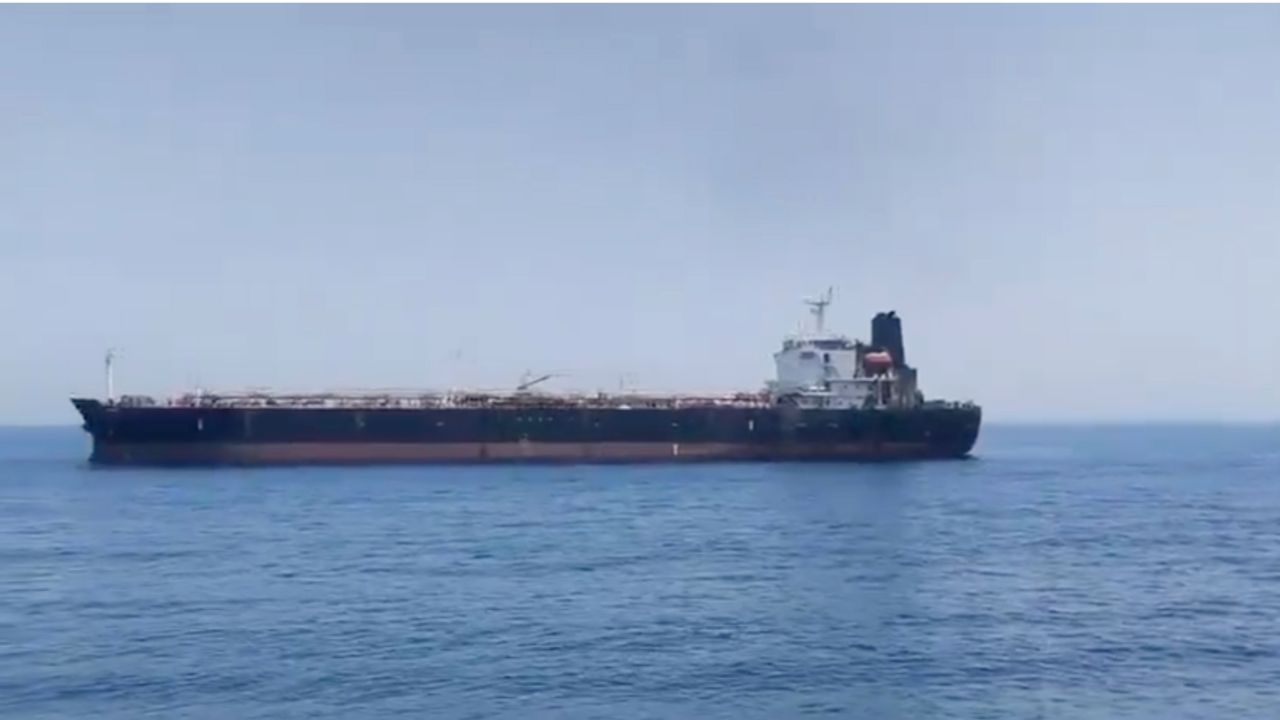
Oil tanker Settebello was attacked by US forces off the coast of Oman.

Synopsis: The US Central Command has warned that the Strait of Hormuz blockade is being “enforced impartially” while attacking another ship with Indian crew members on board. Meanwhile, President Trump has threatened to go full throttle.
The US Central Command (CENTCOM) has defended targeting three commercial vessels in the Strait of Hormuz, despite the deaths of three Indian sailors when it fired on MT Settebello.
On Thursday, the Guinea-Bissau-flagged MT Jalveer—with 20 Indian crew members on board—became the latest to come under US fire, in the Gulf of Oman. All of the crew members were safe.
“US forces disabled an oil tanker in the Gulf of Oman at 11:20 pm Eastern Time on June 10 after the vessel violated the blockade against Iran by attempting to transport Iranian oil, marking the third commercial ship disabled by American forces this week,” CENTCOM said in a statement.
“CENTCOM acted against MT Jalveer as it attempted to transport oil from Iran through the Gulf of Oman. A US aircraft fired two Hellfire missiles into the ship’s engine room after the crew repeatedly failed to comply with directions from US forces,” the statement continued.
MEA Spokesperson Randhir Jaiswal said India was “deeply concerned about US attacks” and hoped “they come to an end”.
On June 8, MT Marivex—a Palau-flagged vessel like MT Settebello—had also come under fire from US aircraft.
CENTCOM claimed Marivex too was guilty of violating the blockade and “attempting to sail to an Iranian port”.
Manoj Yadav, general secretary of Forward Seamen’s Union of India (FSUI), had identified Aditya Sharma, deck cadet, Shivanand Chaurasiya, engine fitter, and Patnala Suresh, chief engineer, as the three who died in the June 9 attack on Settebello.
Yadav questioned CENTCOM’s claims while talking to Sputnik India. He insisted the ships were anchored and said the US forces had given no warning before opening fire. He also said CENTCOM knew that the vessels had crew from India and yet went ahead.
Union Minister of Ports, Shipping and Waterways Sarbananda Sonowal, while confirming the deaths of the three sailors on Thursday, had called it “a profound loss to our maritime family”. He said the government “is fully committed to supporting the next of kin”.
On Wednesday, India—in a first during President Trump’s second term—had summoned the US Embassy’s deputy chief of mission in New Delhi, James Meeks, and conveyed its displeasure over the commercial ships by American forces.
Some on Twitter questioned why even India’s summoning of the US diplomat had yielded no results, as MT Jalveer was attacked the very next day after James Meeks had been spoken to. They wondered if it also meant that the US was dialling up its attacks on Iran?
In the evening (Indian Standard Time) came the confirmation as Trump announced that “United States will be hitting Iran (whose Navy, Air Force, Radar, Anti-Aircraft, and all other forms of Defense, together with most its offensive capability, are GONE!), VERY HARD TONIGHT. At some point in the not too distant future, we will be taking Kharg Island, and other oil infrastructure points, and assume total control of their Oil and Gas Markets, much like we have with Venezuela, which is working out brilliantly for both Venezuela and the United States of America.”
For context, the CENTCOM statement said their forces had in all “disabled nine non-compliant vessels, redirected 135 ships that complied, and allowed 42 vessels supporting humanitarian aid to pass” since the beginning of the US-imposed blockade on April 13.
“The blockade is being enforced impartially against vessels of all nations entering or departing Iranian ports and coastal areas, including all Iranian ports on the Arabian Gulf and Gulf of Oman.



