

Published Mar 05, 2026 | 6:15 PM ⚊ Updated Mar 05, 2026 | 9:32 PM

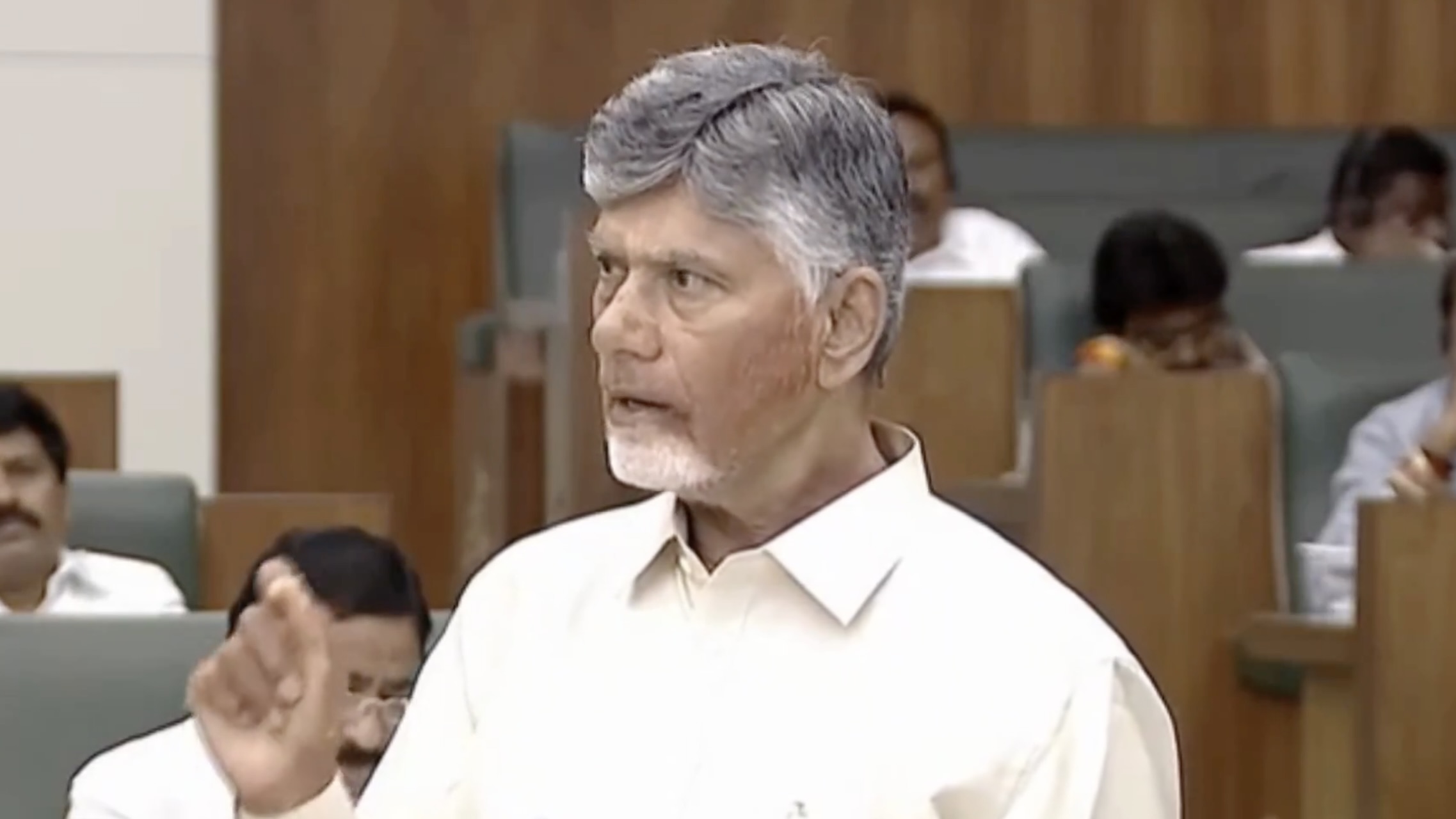
Andhra Pradesh Chief Minister N Chandrababu Naidu.
Synopsis: Andhra Pradesh Chief Minister N Chandrababu Naidu has proposed a ₹25,000 cash incentive for parents who have two or more children, along with additional delivery and paternity leave for government employees, to address falling birth rates in the state. The move, a policy about-turn from decades of championing smaller families and family planning, follows the state’s Total Fertility Rate dropping to 1.5, well below the replacement level of 2.1.
Andhra Pradesh Chief Minister N Chandrababu Naidu has proposed a ₹25,000 cash incentive for parents who decide to have two or more children, alongside additional delivery and paternity leave if the parents are government employees, to address the state’s declining fertility rates.
Addressing the state assembly on Thursday, 5 March, he said the Total Fertility Rate (TFR) in Andhra Pradesh needed to rise from its current 1.5 to 2.1.
“Now we have to take 1.5 percent TFR to 2.1 percent,” he said. “The whole challenge is that the economy is growing. When the economy grows, there is a chance that children will automatically get the means to earn money. Because of this, many countries are in trouble.”
“Thus we are proposing a new incentive. For those parents who have 2 children, we can give ₹25,000 during delivery. This will be a big game changer,” he said.
Naidu also proposed one month of leave for government employees on the birth of a second child and an additional month for a third.
“For men also, if it is the second child, we will grant leave for one month for equal parenting. Similarly, if it is the third child, we will give another one month,” he said.
A strong and youthful population is the foundation of long-term prosperity. Andhra Pradesh will introduce India’s first-of-its-kind Population Management Policy, shifting the focus from population control to population care. With fertility declining sharply, we must act now to… pic.twitter.com/EJg4TWcoVh
— N Chandrababu Naidu (@ncbn) March 5, 2026
Andhra Pradesh recorded a TFR of 1.5 against India’s national average of 1.9 and the replacement level of 2.1, according to the Sample Registration System Statistical Report 2023, published by the Office of the Registrar General and Census Commissioner of India in September 2025.
The state’s TFR fell 16.7 percent between 2011–13 and 2021–23. In urban areas the fall was steeper, dropping 17.6 percent over the same period.
The SRS report shows that in rural Andhra Pradesh, 72.4 percent of all births in 2023 were first children. Only 3.1 percent were third-order births and a mere 0.4 percent were fourth or above – among the lowest third-order birth shares nationally.
“In many parts of South India, population growth has slowed dramatically and in some places it has even turned negative. If this continues, South India will face demographic challenges in the future, including a possible reduction in political representation in Parliament,” Naidu said.
“We will examine these suggestions carefully. Ultimately, our objective is to ensure that population is managed properly while strengthening society.”
The new incentives are a policy about-turn from the approach previous Naidu governments held and acted on since the early 1990s.
The Chief Minister told the assembly that his government had actively driven fertility down during that period.
“During those years we strongly promoted family planning. At that time the TFR was around 3 percent. By the late 1990s it came down to about 2.5 percent, and by 2002 it fell to around 2.2 percent. Those policies worked,” he said.
He also recalled his role in breaking public silence on HIV/AIDS during the same period.
“In 1996–97, there was even an event in Hyderabad where condoms were displayed publicly to create awareness. At that time I said clearly: break the silence and talk about AIDS, otherwise the country would face a major health crisis. Many people criticised me then, but I spoke openly because it was necessary,” he said.
Naidu added that the government was considering including population awareness as part of the intermediate-level education curriculum.
He told the House that welfare policies should also account for family size, with larger households receiving proportionally greater support rather than being penalised.
(Edited by Dese Gowda)


