

Published Mar 14, 2026 | 1:09 PM ⚊ Updated Mar 14, 2026 | 1:09 PM

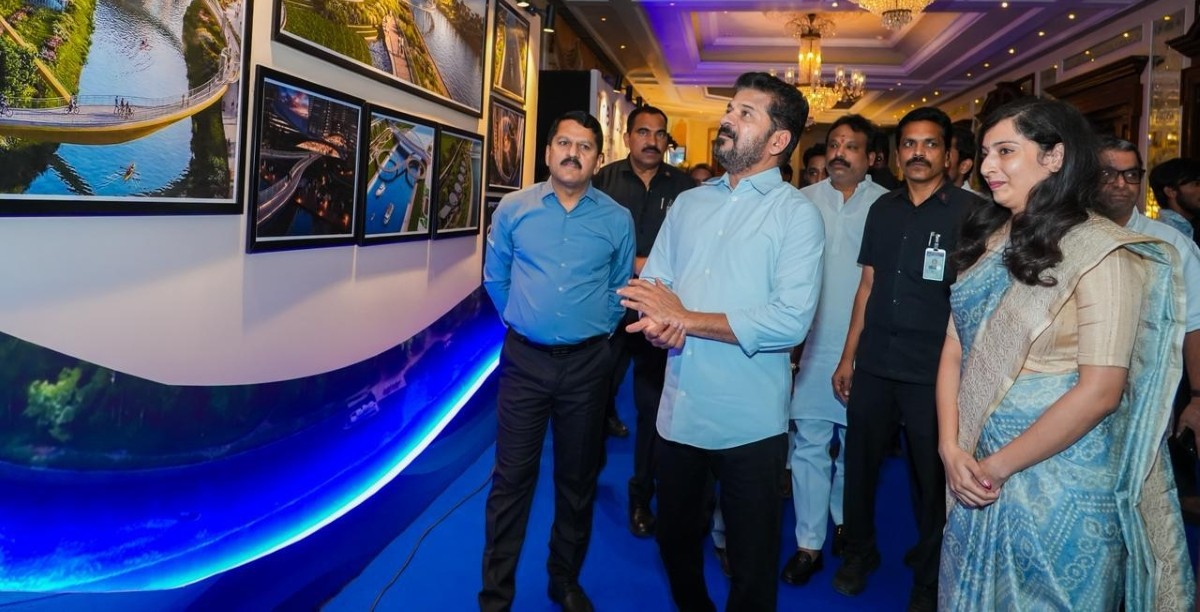
Revanth Reddy pushes the first phase of Rs 7,000 crore Musi Riverfront Vision. (X/ Revanth Reddy)
Synopsis: Major engineering works proposed under the first phase include river cleaning, removal of accumulated silt and debris, hydrology-based riverbed profiling, flood mitigation walls, slope stabilisation and construction of roads along both banks. Additional works will include trunk sewer mains, stormwater drainage systems and water retention structures such as weirs and barrages, alongside comprehensive riverfront development.
Brushing aside the Opposition’s trenchant criticism, Telangana Chief Minister A Revanth Reddy on Friday, 13 March, pressed ahead with his ambitious vision to rejuvenate the Musi River and transform its banks into a vibrant urban corridor, unveiling a detailed roadmap for the Musi Riverfront Development Project that is estimated to cost between ₹6,500 crore and ₹7,000 crore in its first phase.
The Chief Minister presented the blueprint to select stakeholders at an event titled “Musi Invites” held at a star hotel in Hyderabad. Following a presentation by the Musi River Development Corporation, Reddy mounted a spirited defence of the project, describing it as a historic and long-overdue effort to restore the river’s ecological health while reimagining Hyderabad’s urban landscape for future generations.
Reddy said the project seeks to turn Hyderabad into a “Blue and Green City”, blending environmental restoration with modern public infrastructure. The first phase comprises the proposed Gandhi Sarovar, to be developed at the confluence of the Musi and Easa rivers — a site steeped in historical and spiritual significance where the ashes of Mahatma Gandhi were immersed.
If executed as envisioned, the site could become a cultural landmark that reconnects the city with one of its most meaningful historical locations.
The Musi rejuvenation programme is anchored in a 55-kilometre master vision plan, with the first phase focusing on two stretches of the river that converge near Gandhi Sarovar. The estimated cost of Phase I — between ₹6,500 crore and ₹7,000 crore — excludes expenses related to land acquisition and Transferable Development Rights (TDR).
Major engineering works proposed under the first phase include river cleaning, removal of accumulated silt and debris, hydrology-based riverbed profiling, flood mitigation walls, slope stabilisation and construction of roads along both banks. Additional works will include trunk sewer mains, stormwater drainage systems and water retention structures such as weirs and barrages, alongside comprehensive riverfront development.
Beyond Gandhi Sarovar, the broader riverfront development proposes a continuous network of public spaces along the Musi. The design includes promenades running along both banks of the river, cycling tracks, landscaped parks, viewing decks, seating areas and recreational zones that will open up the waterfront to the public.
The presentation gave a detailed account of the design framework, which follows the National River Conservation Plan guidelines of the central government, which permit amenities such as walkways, parks, cycling tracks and promenades along riverfront zones. In addition, public facilities including amphitheatres, plazas, parking areas and approach roads may be developed in designated buffer zones, ensuring connectivity to the city while preserving the integrity of the floodplain.
The presentation said the floodplain management and hydrological planning are being undertaken in line with norms issued by the Central Water Commission under the Union Ministry of Jal Shakti. These regulations classify urban floodplains into regulatory zones where limited development — such as landscaping, roads and public amenities — is permitted in areas that experience flooding between once-in-five-year and once-in-25-year cycles.
At its core, the Musi rejuvenation initiative aims to tackle the river’s environmental degradation while enhancing urban connectivity and public access. The programme envisions a clean river free from sewage inflows, robust flood mitigation infrastructure, improved transport links across the city and a large expansion of green spaces and recreational areas.
“Musi’s revival is not a choice. It is a necessity,” the Chief Minister asserted.
One of the major infrastructure components linked to the riverfront plan is the East–West Corridor, which is expected to dramatically improve connectivity across Hyderabad. The corridor will run roughly along the river and is projected to cut travel time and distance by nearly 50 percent, allowing commuters to traverse the 43-kilometre stretch between Gandipet and Gowrelly in about 45 minutes.
By creating an alternative transport spine, planners expect it to ease congestion in the core city and the Old City areas. Mobility infrastructure along the riverbanks will also include roads, pedestrian promenades and cycling tracks, integrating transport with recreation.
Hydrological studies conducted as part of the master planning process indicated that the Musi’s downstream catchment area covers about 890 square kilometres. The catchment feeding Osman Sagar spans roughly 740 sq km, while the catchment for Himayat Sagar extends over 1,362 sq km. These reservoirs, constructed more than a century ago, continue to play a crucial role in regulating floods and supplying water to the city.
The presentation said that at present, Hyderabad has 25 existing Sewage Treatment Plants (STPs), while 27 additional plants have already been commissioned. Another 99 STPs are under implementation under the AMRUT scheme, aimed at intercepting and treating sewage before it reaches the river. These facilities are expected to significantly reduce untreated wastewater entering the Musi through the city’s network of nalas.
To ensure year-round ecological flow in the river, the government is also planning a Godavari linkage project. Under this proposal, 20 TMC of water will be transferred from the Godavari River basin. Of this, 17.5 TMC will be allocated for Hyderabad’s drinking water needs, while 2.5 TMC will be released into the Musi to help rejuvenate the river and sustain water levels.
The project’s planning framework comprises a Blue Master Plan, Green Master Plan, Land Use Master Plan, Infrastructure Master Plan and a financial strategy, ensuring an integrated approach to river restoration and urban development. The overall master planning is being prepared by an international consortium comprising Meinhardt Group, Rios, and Cushman & Wakefield, appointed as the aggregate master planner.
Addressing the political storm surrounding the project, Revanth Reddy said misinformation and half-truths were fuelling unnecessary anxiety among the public. “Some people are deliberately spreading half-truths, while others are doing so due to incomplete information,” he said, adding that the government had organised the presentation precisely to clarify facts and maintain transparency. “As a responsible government, we believe power should be used as a guardian for the people — not to dominate them,” he remarked.
Without directly naming political rivals, Reddy questioned why efforts to purify the river were being opposed. “Those who governed the state for ten years — why are they opposing the cleaning of the Musi now?” he asked, adding that constructive suggestions would always be welcome. “Stopping development is not a solution. If there are flaws in the plan, tell us how to correct them,” he said. “Do we want to bury Hyderabad’s history for political gains, or revive both the Musi and the city together?” he asked.
Responding to concerns about displacement, the Chief Minister said the government has compiled detailed data on families living along the Musi floodplains and is working on rehabilitation plans. “Our government does not want to render the poor homeless,” he said. Discussions are underway with civil society groups to provide housing with access to schools and employment opportunities in nearby areas.
Rejecting allegations that the project was driven by real estate interests, Reddy said the initiative was meant to benefit future generations. “If the government undertakes development for the benefit of the state, is that wrong? Is developing tourism wrong?” he asked.
(Edited by Sumavarsha)


