

Published Mar 28, 2026 | 1:00 PM ⚊ Updated Mar 28, 2026 | 1:00 PM

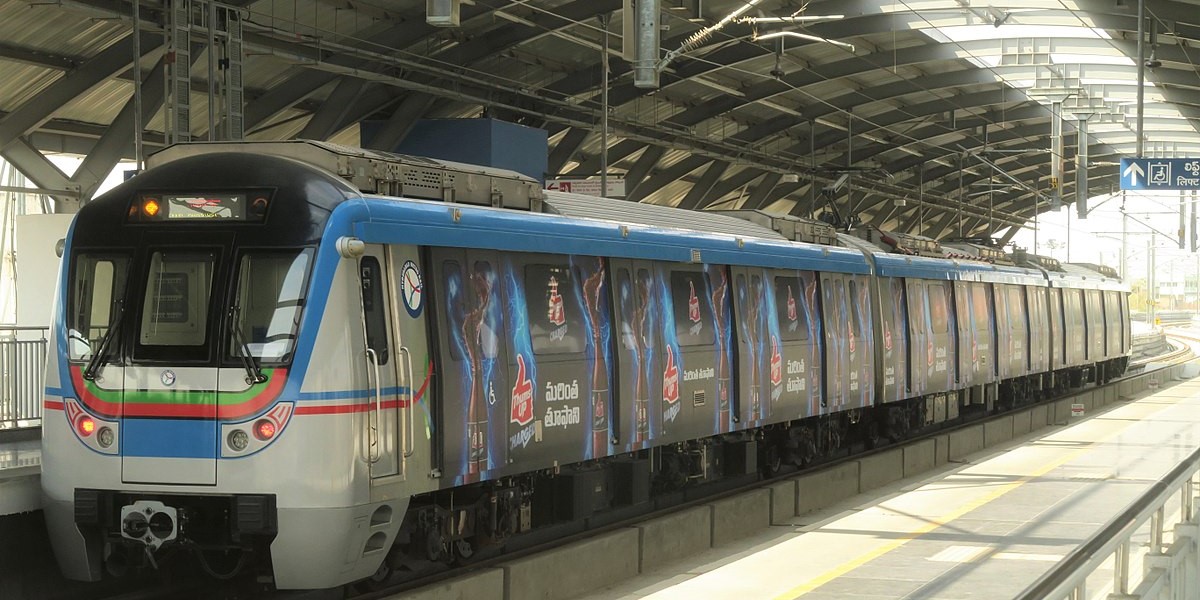
Hyderabad metro. (Wikimedia Commons)
Synopsis: The Telangana government is fast-tracking the takeover of the Hyderabad Metro Rail Phase I. The cabinet cleared buying out of the project at ₹15,000 crore, including ₹13,000 crore in debt liabilities and ₹2,000 crore for equity.
The Telangana government is fast-tracking the takeover of the 69 km Hyderabad Metro Rail Phase I from private operator Larsen & Toubro (L&T).
The state Cabinet, at its recent meeting, approved the takeover, marking the end of a long-running Public-Private Partnership (PPP) model and paving the way for the ambitious Phase II expansion.
The cabinet cleared buying out of the project at ₹15,000 crore, including ₹13,000 crore in debt liabilities and ₹2,000 crore for equity.
A cabinet sub-committee will oversee the takeover and present a report to the Cabinet, with the date finalised, at its next meeting, since L&T is seeking the date of takeover.
The takeover consolidates ownership under the state, enabling seamless integration of operations, maintenance, and expansion. The government would now bear costs for the remaining works while urging the Union government to release funds for Phases II-A and II-B.
This shift from a fragmented PPP model to unified state-led governance is being projected as essential for addressing Hyderabad’s chronic traffic congestion and the last-mile connectivity gaps in an IT-driven megacity.
Phase I, spanning the Red (LB Nagar-Miyapur), Blue (Nagole-Raidurg), and Green (JBS-MGBS) corridors, has been operational since 2017-2019 but faced criticism for limited ridership and integration issues.
According to official sources, by taking direct control, the Congress government aims to optimise fares, non-fare revenues (like station commercial development), and feeder services. Officials are exploring long-term, low-interest financing through entities like the Indian Railway Finance Corporation (IRFC) to refinance existing high-cost loans (around 8% interest), potentially easing the repayment burden over 20 years.
Plans also include debt restructuring and land monetisation to offset the massive acquisition cost—one of the largest ever by a state government in India.
The real prize lies in unlocking Phase II. The Cabinet has cleared administrative sanctions for expansions totalling 76-86 km across key corridors: Shamshabad Airport to Future City (39.6 km), JBS to Medchal (24.5 km), JBS to Shamirpet (22 km), and others linking Nagole, Raidurg, Old City, and Miyapur-Patancheru.
Estimated at ₹19,579-24,269 crore, these will be executed as a 50:50 joint venture with the Union government, with the state contributing 30 percent (around ₹5,874-7,313 crore), the Union 18 percent, and the rest via multilateral loans and PPP components.
Airport connectivity, in particular, is touted as a game-changer for Hyderabad’s global ambitions. Chief Minister A Revanth Reddy has pressed Union ministers for swift Detailed Project Report (DPR) approvals, and officials hope they will be through soon.
On the positive side, state control could accelerate decision-making and improve service quality. Hyderabad’s booming population and IT hubs demand world-class mobility; a fully integrated network could boost ridership, reduce carbon emissions, and spur real estate and commercial activity.
The move also fulfils Congress’s infrastructure promises, contrasting with perceived delays under the prior BRS government and positioning the party as proactive ahead of future electoral cycles.
The Cabinet’s decision on the metro is a high-stakes shift from private concession to public stewardship. If delivered, it could transform Hyderabad into a model of efficient urban transit; if mired in audits or debt, it risks becoming an albatross around the government’s neck.
(Edited by Muhammed Fazil.)


