

Published Apr 10, 2026 | 6:17 PM ⚊ Updated Apr 10, 2026 | 6:17 PM

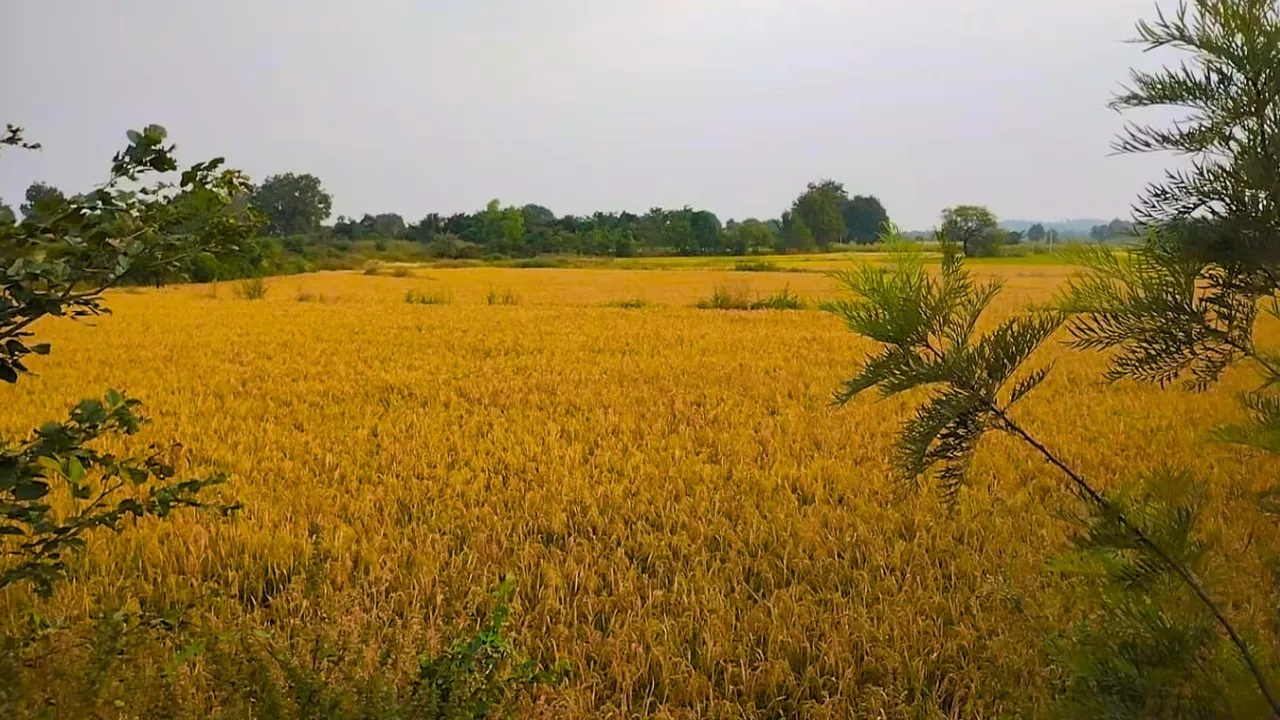
Without legal titles, farmers could not use their land as collateral for availing loans.
Synopsis: Sada bainama – literally “plain-paper sale deed” – refers to informal, unregistered agreements for the sale or transfer of agricultural land. These documents, common in rural Telangana due to high stamp duty and registration costs, lack legal validity under the Registration Act, 1908, and were never reflected in official revenue records.
In a major relief to lakhs of small and marginal farmers across rural Telangana, the state government has streamlined the long-pending regularisation of “Sada Bainama” properties.
Revenue Minister Ponguleti Srinivasa Reddy recently announced in the Legislative Council that only the purchaser’s affidavit will now be required instead of affidavits from both buyer and seller for registration of Sada Bainamas.
This effectively addresses practical difficulties at the field level. The decision, formalised through G.O. 76, aims to expedite the disposal of more than nine lakh applications that have been stuck since 2020.
Sada bainama – literally “plain-paper sale deed” – refers to informal, unregistered agreements for the sale or transfer of agricultural land. These documents, common in rural Telangana due to high stamp duty and registration costs, lack legal validity under the Registration Act, 1908, and were never reflected in official revenue records.
Regularisation of sada bainama properties is also expected to have beneficial political fallout for the Congress. In fact, it fought the last Assembly elections, accusing the previous BRS government of engineering “land scams” through the Dharani Portal.
As a result, thousands of farmers who purchased land decades ago found themselves without Pattadar Passbooks, facing hurdles in accessing bank loans, government schemes, or selling the property.
The journey towards regularisation began years ago. In June 2016, the then BRS government issued G.O.Ms. No.153, offering a one-time settlement for unregistered transactions before 2 June 2014. Stamp duty and registration fees were exempted for up to 5 acres of dry land or 2.5 acres of wet land, subject to conditions such as the land being in rural areas, the buyer being a small or marginal farmer, and no violation of land ceiling or assignment laws.
Operational guidelines were circulated to district collectors, requiring applications to be routed through MeeSeva centres, along with documents such as the sada bainama deed, Aadhaar cards, and tax receipts. Tahsildars were tasked with field verification and cross-checking records.
In October 2020, the then BRS government went a step further with G.O.Ms. No.112, inviting fresh applications between 12 October and 11 November 2020. Over nine lakh farmers responded, covering nearly 10 lakh acres.
However, the process hit a legal roadblock. A Public Interest Litigation (PIL) in the Telangana High Court pointed out that the Telangana Rights in Land and Pattadar Passbooks Act, 1971 (as amended in 2020), did not explicitly provide for regularising unregistered transfers. The court stayed the proceedings, leaving applicants in limbo for nearly five years.
The breakthrough came in 2025 with the enactment of the landmark Telangana Bhu Bharati (Record of Rights in Land) Act. Section 6 of the new law specifically empowers the government to issue certificates validating alienations or transfers “effected otherwise than by a registered document” where the buyer is a small or marginal farmer, has held continuous possession for more than 12 years before 2 June 2014, and the land is agricultural and located in rural areas. Urban lands and commercial properties were deliberately kept out to prevent misuse.
On 27 August 2025, the Telangana High Court disposed of the PIL, vacating the interim stay and paving the way for processing all pending applications under the new Act. A subsequent government notification (G.O.Ms. No.106) in September 2025 directed Revenue Divisional Officers (RDOs) to oversee verification. The process involves online submission (or through MeeSeva), scrutiny of documents, field inspections, and issuance of a certificate under the Bhu Bharati framework.
Once regularised, the land is entered into the Bhu Bharati portal, and a Pattadar Passbook is issued.
The latest relaxation in March 2026 via G.O. 76 is expected to significantly speed up the exercise. Minister Ponguleti Srinivasa Reddy told the Legislative Council that the earlier dual-affidavit requirement had created “practical difficulties at the field level.” Now, only the purchaser needs to submit an affidavit confirming the transaction details, possession, and compliance with all conditions. The minister assured that all nine lakh-plus applications would be cleared in a phased manner.
Farmers and land-rights experts have welcomed the move. For many small landholders, regularisation means access to institutional credit, crop insurance, and subsidy schemes that were previously out of reach. It also reduces long-standing family disputes and litigation over “paper” ownership.
According to official sources, the Bhu Bharati portal has been simplified to just six modules (down from 40-41 in the earlier Dharani system), making the entire process more transparent and farmer-friendly. The full rollout of the new portal is targeted for the end of April 2026.
However, it is easier said than done. With over nine lakh cases, the verification process – involving physical inspection of every survey number – is expected to take several months. Revenue officials have been instructed to prioritise genuine cases while guarding against fraudulent claims. The government has also clarified that only pre-2014 transactions qualify, and the land must not violate provisions of the Andhra Pradesh Land Reforms (Ceiling on Agricultural Holdings) Act, 1973, or the Assigned Lands (Prohibition of Transfer) Act, 1977.
The Telangana government has reiterated its commitment to resolving all genuine claims at the earliest, describing the initiative as a “one-time settlement” that honours the spirit of land reforms while modernising record-keeping. With the latest guidelines and relaxations in place, sada bainama holders in rural Telangana are now closer than ever to securing undisputed legal ownership of their hard-earned land.
(Edited by Majnu Babu).


