

Published Apr 06, 2026 | 3:08 PM ⚊ Updated Apr 06, 2026 | 3:08 PM

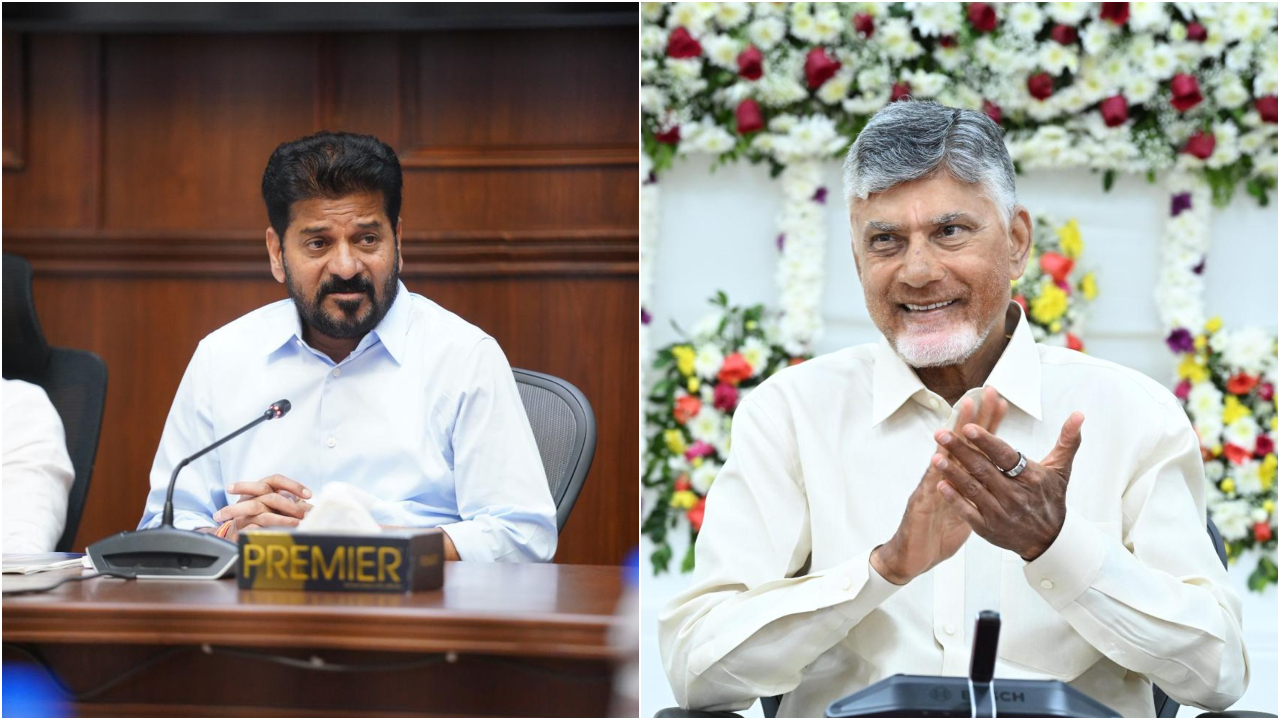
Revanth Reddy (L) and Chandrababu Naidu. Credit: x.com/revanth_anumula, x.com/ncbn
Synopsis: Telangana has renewed its demand for five border gram panchayats transferred to Andhra Pradesh during the 2014 bifurcation. Agriculture Minister Thummala Nageswara Rao urged an amendment to the AP Reorganisation Act, citing administrative, cultural, and security challenges. Tribal residents face hardships due to distance from services, while Telangana insists Polavaram won’t be affected. Andhra’s response remains cautious, leaving communities in limbo.
A long-simmering border issue has once again come to the forefront. Telangana has renewed its demand for the return of five gram panchayats now under Andhra Pradesh’s control. The move adds fresh heat to a dispute that traces its roots to the 2014 bifurcation.
Telangana Agriculture Minister Thummala Nageswara Rao, who hails from erstwhile Khammam district, has written to Union Home Minister Amit Shah, urging a an amendment to the AP Reorgnsaitoin Act, 2014, to redraw the boundary. In his letter sent on Sunday, the minister flagged an incongruity.
He argued that the current arrangement has become a daily headache—administratively messy, culturally awkward, and logistically taxing. Importantly, he said, the issue has little to do with the backwaters of the Polavaram Irrigation Project, which was the reason why seven canals in erstwhile Khammam were transferred to Andhra Pradesh of which five villages in Bhadrachalam mandal were part of.
At the heart of the dispute lie five gram panchayats—Yatapaka, Kannaigudem, Pitchikalapadu, Purushothapatnam, and Gundala. These villages sit next to Telangana’s Bhadrachalam in Bhadradri Kothagudem district. They are boxed in—Telangana on two sides, forests and the Godavari river on the remaining two sides.
Bhadrachalam town itself stayed with Telangana after bifurcation. So did the famed Sri Seetha Ramachandra Swamy Temple. Yet, these neighbouring panchayats were sliced away and stitched into Andhra Pradesh. What was meant to smoothen governance has instead left a patchwork quilt.
As Telangana was carved out on 2 June, 2014 by an Act in in Parliament – AP Reorgansiation Act, 2014, political bargaining was at its peak. In that churn, seven mandals from the then Khammam district were transferred to Andhra Pradesh. The idea was to keep the Polavaram project on a single administrative track.
Those mandals were Kukunoor, Velerupadu, VR Puram, Chinturu, Kunavaram, parts of Burgampadu, and parts of Bhadrachalam. The logic was driven by the needs of Polavaram—a national project that demanded seamless land acquisition, rehabilitation, and construction.
But here’s where Telangana draws the line. Officials say the five panchayats near Bhadrachalam were never central to Polavaram’s core needs. They sit outside the main submergence zone. They do not decide the fate of the reservoir. As a result an “administrative island” that serves neither side well was created.
For residents, this is not just a dispute, but is a lived reality. Most villagers belong to Scheduled Tribe communities. Over the years, they have raised their voice through gram sabha resolutions, protests, and petitions. Their message has been consistent: bring us back to Telangana.
On paper, they fall under Andhra Pradesh’s Alluri Sitarama Raju district.
In practice, that means dealing with an administrative centre nearly 282 km away. By contrast, Bhadradrachalam, headquarters of Bhadradri-Kothagudem district in Telangana is just about 40 km. For basic services—schools, hospitals, revenue offices—distance becomes destiny. Even travel turns into a maze. Villagers say they often have to “pass through” these pockets while moving within Telangana.
Security concerns add another twist. The broken geography makes coordination between forces tricky, especially in areas inhabited by Maoists. In his letter, Thummala underlined how fragmented jurisdiction weakens policing and slows response times.
Then comes the cultural thread. The Bhadrachalam temple is not just a shrine; it is a spiritual anchor across Telugu-speaking regions. Yet, large chunks of its land lie in Purushothapatnam, now under Andhra Pradesh. Telangana has proposed development works worth nearly Rs 300 crore around the temple. But split control, officials say, turns planning into a tug-of-war.
Thummala has been raising the issue for quite some time now. He first wrote to Amit Shah and N. Chandrababu Naidu in November 2025. He followed it up with a meeting in Amaravati on 16 February, 2026. According to him, Naidu responded with an open mind and agreed to examine the issue.
The minister now wants both state assemblies to pass resolutions. That, he believes, would set the stage for Parliament to step in and amend the law.
Support within Telangana cuts across party lines. Leaders from the ruling Congress, former BRS and civil groups have all backed the demand. For them, this is about correcting what they call a “backdoor decision” taken in haste.
Across the border, for obvious reasons, the mood is more measured. Andhra Pradesh has not slammed the door, but neither has it rolled out the red carpet. Some irrigation experts warn against reopening the 2014 arrangement. They argue that even small changes could set off a domino effect—impacting clearances, rehabilitation plans, or legal frameworks tied to Polavaram.
Fixing this issue is easier said than done. It requires a legislative tweak at the Centre. The Reorganisation Act would need to be amended through Parliament. Ideally, both states would have to sing the same tune which is easier said than done.
Telangana insists that returning these five panchayats will not derail Polavaram. The core project areas will remain untouched. What will change is life on the ground—better governance, easier access to services, and a sense of belonging for residents.
But so far, the response from Andhra is rather cold even though both Chandrababu Naidu and Telangana CM reportedly share same political wave length on several issues. For the tribal communities caught in this administrative limbo, it is like stretching their patience.


