


Published Mar 22, 2026 | 10:01 PM ⚊ Updated Mar 22, 2026 | 10:01 PM

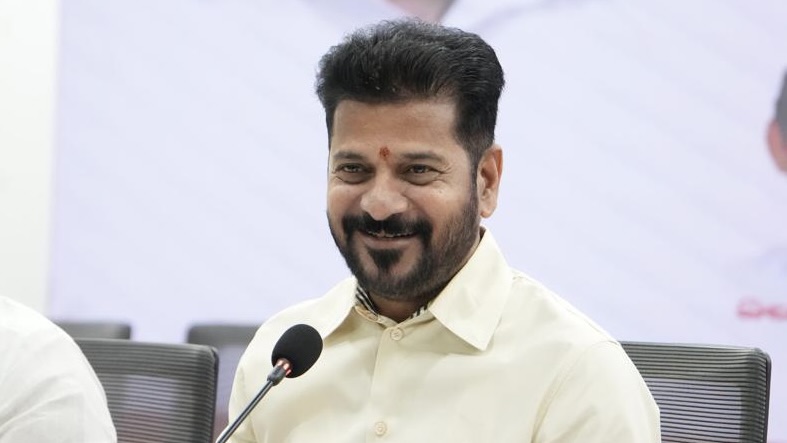
Telangana Chief Minister A Revanth Reddy.
Synopsis: Telangana has released ₹3,590 crore as the first tranche of Rythu Bharosa, limiting payments to one acre and shifting to staggered disbursal due to a fiscal constraint. The timing has raised eyebrows as it comes when the rabi crop is nearing harvest. Farmers say the delay undermines the scheme’s core aim of providing pre-sowing financial support.
Telangana Chief Minister A Revanth Reddy on Sunday, 22 March, announced the release of ₹3,590 crore as the first instalment of financial support under the Rythu Bharosa scheme for the ongoing Yasangi (rabi) season.
The amount will be credited to farmers’ bank accounts on Monday, 23 March. The initial tranche is limited to one acre, regardless of a farmer’s total landholding.
Under Rythu Bharosa, the state government pays ₹12,000 per acre for both kharif (Vana Kalam) and rabi (Yasangi) crops in an agricultural year to help farmers procure inputs for farm operations.
The government will make the remaining payments for the current rabi season in two further phases over the next 45 days. The Chief Minister said this is due to a temporary financial constraint. The total payable to 70 lakh farmers is ₹9,000 crore, covering 1.5 crore acres.
“In the last crop season, ₹9,000 crore was disbursed within nine days. This time, due to financial difficulties, payments are being staggered. Within 45 days, all farmers will receive assistance at ₹6,000 per acre,” Revanth Reddy said at a public meeting in Narmetta in Siddipet district, after inaugurating a government oil palm factory.
The phased rollout departs from the earlier pattern, where the entire amount was credited within a short span. The government released about ₹9,000 crore for the previous rabi season within nine days.
The timing of the current disbursement has raised eyebrows as it comes when the rabi crop is nearing harvest. Farmers say the delay undermines the scheme’s core aim, which is to provide pre-sowing financial support.
Many cultivators say assistance that arrives after most input costs—such as seeds, fertilisers and labour—are already incurred offers little relief. Such schemes are meant to provide liquidity at the start of the agricultural cycle.
The lack of clarity on the scale and sequencing of subsequent tranches adds to the uncertainty. Beyond the first instalment, the government has not said how much acreage each of the two phases will cover.
Telangana has about 70 lakh farmers cultivating around 1.5 crore acres. The total outlay under the Rythu Bharosa scheme is expected to be about ₹9,000 crore.
The Chief Minister said the Congress government had spent an average of ₹5,500 crore a month over the past 28 months on welfare programmes for farmers, higher than the ₹2,553 crore monthly spend under the previous Bharat Rashtra Samithi government.
He made the announcement at a public meeting in Siddipet, where he also urged voters to elect a Congress candidate in the constituency. He said a Congress MLA would be made a minister, which would accelerate the district’s development.
The remarks were seen as an indirect swipe at sitting BRS MLA T Harish Rao, who served as a minister during the party’s two terms in the state.
Calling for a political shift, the Chief Minister urged voters to give the Congress “one opportunity” to represent them in the Assembly from Siddipet.
He promised faster development and said the party would return to power in 2029. The overlap between welfare delivery and political messaging adds another layer to the debate, even as farmers await clarity on the remaining instalments.


