

Published Mar 23, 2026 | 2:41 PM ⚊ Updated Mar 23, 2026 | 2:41 PM

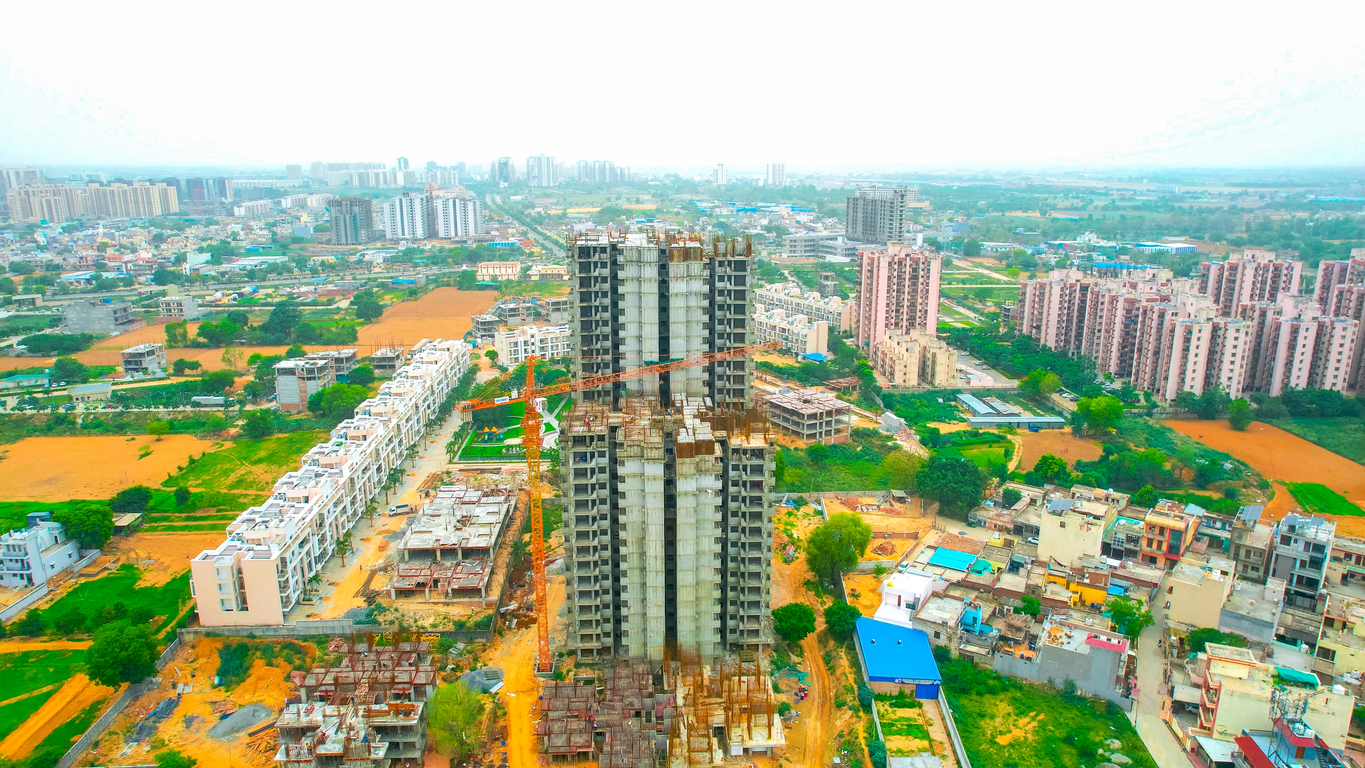
Representational image. Credit: iStock
Synopsis: Telangana has revised its Building Rules, raising the high-rise threshold to 21 metres and expanding Transferable Development Rights (TDR) use. The move eases compliance for mid-rise projects, accelerates approvals, and boosts housing supply along Hyderabad’s ORR corridor. Developers gain cost and timeline relief, though experts urge caution on safety norms. CREDAI welcomed the reforms as growth-friendly.
In a major policy shift aimed at stimulating Hyderabad’s real estate market, the Telangana government has amended the Telangana Building Rules, 2012, re-defining high-rise buildings and expanding the scope for utilising Transferable Development Rights (TDR).
The changes, notified through Government Order (GO) Ms No. 95 by the Municipal Administration and Urban Development (MA&UD) Department, are expected to reduce compliance burdens for developers, accelerate project timelines, and increase housing supply in the city and its Outer Ring Road (ORR) corridor.
The 21 March amendments, announced on Sunday, 22 March, represent a move to lower the barriers for builders while aiming to deliver more housing options and moderated prices for buyers.
The most prominent reform reclassifies as “high-rise building” any structure of 21 metres in height or above, excluding non-functional elements such as water tanks, lift machine rooms, chimneys, and cooling towers.
This marks an increase from the previous threshold of 18 metres, which typically corresponded to ground-plus-four or ground-plus-five floors depending on floor heights.
The adjustment effectively exempts many mid-rise residential and commercial projects from stringent high-rise regulations, including mandatory clearances from the State Disaster Response and Fire Services Department, third-party structural audits, higher insurance requirements, and extended approval processes.
Under the revised norms, buildings falling in the 18–21 metre height range on plots between 750 square metres and 2,000 square metres can now be constructed only by utilising TDR. Such projects must still comply with mandatory parking provisions and other standard rules. For genuine high-rises (21 metres and above), developers can avail up to 10 per cent relaxation in setbacks through TDR, provided a minimum all-round setback of 7 metres is maintained to ensure safety and ventilation.
The amendments also introduce greater flexibility for larger plots exceeding 2,000 square metres, particularly those abutting wider roads. Depending on road width — 3 extra floors on 40-foot roads, 4 on 60-foot roads, and up to 5 on 80 foot roads — additional floors can be added via TDR, subject to necessary fire, airport height, and other safety clearances. This provision is seen as particularly beneficial in growth corridors such as Kokapet, Tellapur, Bachupally, and areas along the ORR, where land scarcity drives vertical development.
The Confederation of Real Estate Developers’ Associations of India (CREDAI) Hyderabad chapter has welcomed the decision CREDAI President N. Jaideep Reddy described the GO as “a testament to the government’s commitment to making Telangana a global real estate destination.” He said the phased TDR submission will be a major relief on initial capital requirements.
For developers, particularly those targeting the mid-income and affordable housing segments, the 21-metre threshold offers substantial advantages. Projects that previously triggered high-rise protocols—adding 8–12 per cent to costs and 4–6 months to timelines—can now proceed as standard mid-rises, enabling faster execution and lower overheads.
However, experts caution that the exemption of 18–21 metre buildings from high-rise fire and structural norms requires vigilance. While National Building Code standards continue to apply, the absence of specialised high-rise clearances means buyers should exercise caution in choosing developers.
The policy seeks to trigger planned urban growth, better land utilisation near metro and ORR corridors, and infrastructure funding through TDR monetisation. It is also anticipated to boost ancillary sectors such as construction and related services.


