

Published Apr 07, 2026 | 6:29 PM ⚊ Updated Apr 07, 2026 | 6:29 PM

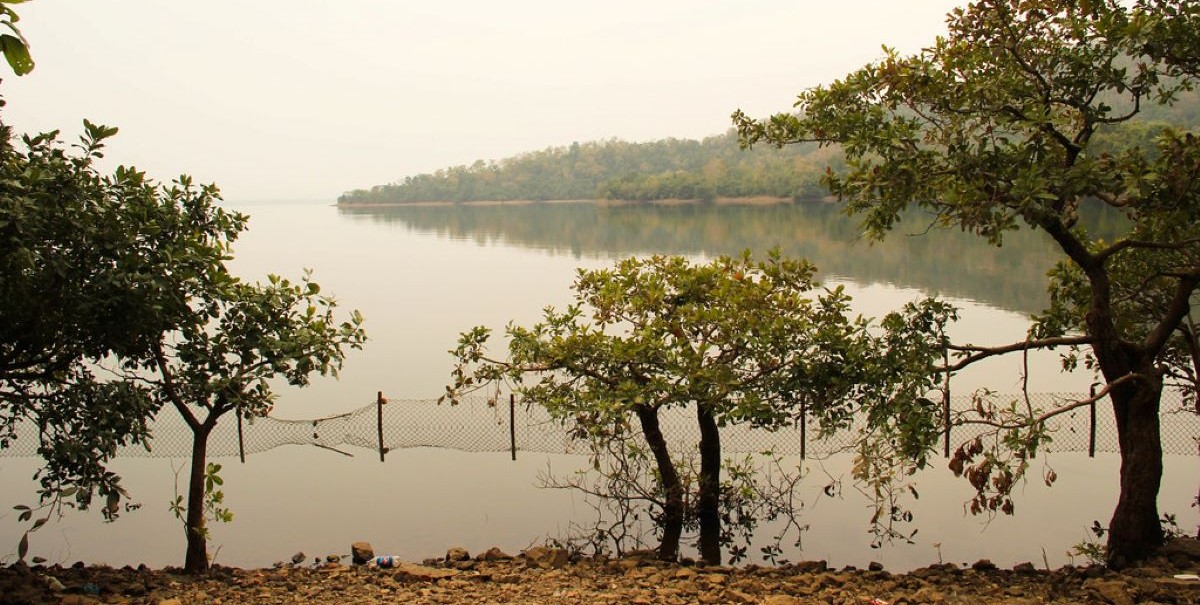
Telangana has constituted district-level committees to identify deemed forests.
Synopsis: The Government Order has set objective, measurable parameters to determine whether a land parcel qualifies as a deemed forest. All four criteria must be satisfied simultaneously. They include a minimum canopy density of 0.4 (40 percent) or above, and at least 70% of tree species must be natural forestry species.
In a move intended to protect the environment, the Telangana government has issued guidelines for identifying and safeguarding “deemed forests” — tracts of land that exhibit forest characteristics but lack formal legal notification.
The guidelines are expected to bring clarity to land classification while ensuring that ecologically sensitive areas are protected from indiscriminate diversion.
The Environment, Forest, Science and Technology Department formalised the rules through G.O.Ms. No.8 (dated 4 April 2026), accepting the recommendations of a state-level Expert Committee.
The decision is in line with the directions issued by the Supreme Court and complies with provisions of the Van Sanrakshan Evam Samvardhan Rules (Forest Conservation and Development Rules), 2023.
To identify deemed forests on government and private lands, district-level committees headed by the district collector concerned have been constituted. Other members of the committees are: Additional Collector (Revenue), District Forest Officer, and Assistant Director or Inspector of Survey (Survey and Land Records).
The order traces its roots to the landmark 1996 judgment in the TN Godavarman Thirumulpad v. Union of India, which expanded the definition of forests beyond officially notified categories. The court had ruled that any land meeting the description of a forest — regardless of ownership or legal status — must be treated as forest land under the Forest Conservation Act, 1980.
This interpretation effectively created the category of “deemed forests,” placing millions of hectares under regulatory oversight.
In its 19 February 2024 order, the Supreme Court directed that the broad definition laid down in the Godavarman case must continue to apply nationwide until further notice. Subsequent directions in March 2025 reiterated that forest land — including deemed forests — cannot be diverted without compensatory safeguards. Against this backdrop, states were asked to identify and document such lands using scientific criteria. Telangana’s latest order is a direct response to these judicial mandates.
The Government Order has set objective, measurable parameters to determine whether a land parcel qualifies as a deemed forest. All four criteria must be satisfied simultaneously. They include a minimum canopy density of 0.4 (40 percent) or above, and at least 70% of tree species must be natural forestry species.
Also, density should be at least 240 trees per hectare, with each tree having a trunk diameter of 10 cm or more and a minimum contiguous area of 25 hectares. Officials say the insistence on meeting all criteria ensures that only genuine forest-like ecosystems are included, while preventing misclassification of marginal or artificially created green patches.
Equally detailed are the exclusion criteria, which aim to protect legitimate land use and avoid overlaps with existing classifications. Areas will be excluded if they fall under any of the following:
Already notified or recorded forest lands, lands earmarked for compensatory afforestation, all types of plantations, including agro-forestry and horticulture and government land allotted for specific institutional or industrial use, and areas where tree growth is solely due to pending litigation
These provisions are expected to reassure farmers, private landowners, and investors that commercial plantations and lawful land use activities will not be adversely affected. To operationalise the exercise, the government has constituted District Level Committees across all districts. Each committee will be chaired by the District Collector and include revenue and forest officials, along with survey authorities.
Their responsibilities include conducting field surveys, demarcating eligible areas with precise survey details, and issuing public notices to stakeholders. A 15-day window will be provided for objections, after which the committees will finalise their reports.
The data, including GIS-based KML files (the standard way to store and display geographic information on digital maps), will be submitted to the Principal Chief Conservator of Forests (HoFF), who will consolidate inputs from all 33 districts and forward a comprehensive report to the government.
This two-tier mechanism — district-level identification followed by state-level consolidation — is designed to ensure both accuracy and uniformity.
Telangana, like several other states, has vast tracts of land that support natural vegetation but were never formally classified as forests under colonial or post-Independence frameworks. These areas often fall under revenue or private ownership and have remained vulnerable to conversion for agriculture, real estate, or industrial projects.
By formally identifying such lands, the official sources said, the government aims to prevent unauthorised diversion of ecologically sensitive areas and strengthen biodiversity conservation and green cover. The identification will also contribute to climate commitments through carbon sequestration and aid in reducing legal disputes between forest and revenue departments.
While the Government Order does not prescribe a strict deadline, the involvement of district collectors is expected to expedite the process. Field surveys, mapping, and public consultations are likely to be carried out in a time-bound manner, enabling the state to submit its findings to the Centre and the Supreme Court. Once finalised, the consolidated list of deemed forests is expected to be placed in the public domain.
(Edited by Majnu Babu).


