

Published Jan 12, 2026 | 12:17 PM ⚊ Updated Jan 12, 2026 | 12:17 PM

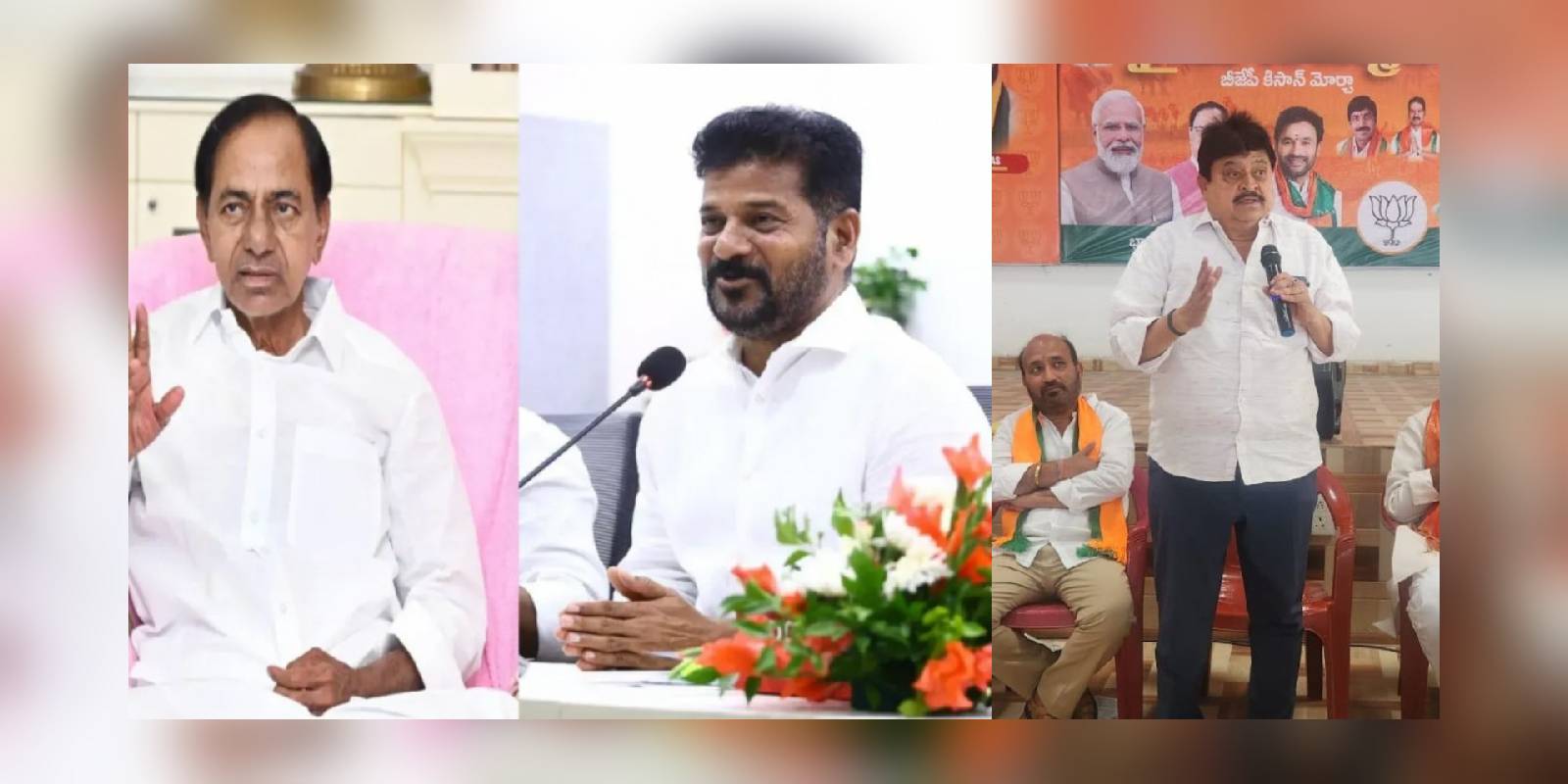
KCR, Revanth Reddy, and Ramachander Rao. (X)
Synopsis: As Telangana braces for a series of local body polls, including municipal elections across the state and the high-stakes GHMC contest, political parties have stepped up preparations, reading the election as a crucial political barometer. The developments follow the recently concluded gram panchayat elections, where the Opposition BRS claimed significant gains, indicating a possible revival after its defeat in the 2023 Assembly elections.
As Telangana braces for a series of local body polls, including municipal elections across the state and the high-stakes Greater Hyderabad Municipal Corporation (GHMC) contest, political parties have stepped up preparations, reading the election as a crucial political barometer.
The State Election Commission (SEC) has set the stage by notifying the publication of final polling station-wise electoral rolls on January 10, 2026, with the election notification for municipalities and corporations, excluding GHMC, expected by late January.
The GHMC polls, however, are likely to be held much later, as the current civic body’s term expires only on 10 February.
The developments follow the recently concluded gram panchayat elections, where the Opposition BRS claimed significant gains, indicating a possible revival after its defeat in the 2023 Assembly elections.
The municipal elections are seen as a crucial litmus test for Telangana’s evolving political landscape. Congress is looking to consolidate power, BRS seeks redemption, BJP aims for expansion, and the Jana Sena Party, led by actor-politician Pawan Kalyan, hopes to carve out a foothold — against the backdrop of inflation, unemployment, and shifting voter expectations.
The ruling Congress, led by Chief Minister A Revanth Reddy, is approaching the municipal elections with a blend of confidence and caution. Having swept to power in 2023 on promises of welfare delivery, farm loan waivers, and job creation, the party now faces the challenge of convincing the voters why it had not been fully successful in keeping them.
“Local bodies are the backbone of governance, and our government is committed to empowering them with funds, functions, and functionaries,” Revanth Reddy said while addressing party leaders in Hyderabad on 9 January, expressing confidence that Congress’s welfare agenda would resonate with urban voters.
He is kicking off the campaign from Adilabad district on 16 January, by laying foundation stones for local irrigation projects and addressing a public meeting there.
He was to begin campaigning on 3 February from Jadcherla in the Mahabubnagar district, but has advanced the date to make the most of the available time to prepare for the municipal polls, which he is taking seriously.
As BRS reportedly secured over 4,000 gram panchayats in the recent polls, it has set alarm bells ringing within Congress ranks. Revanth Reddy’s apparent reluctance to immediately hold ZPTC (Zilla Praja Parishad Territorial Constituency) and MPTC (Mandal Parishad Territorial Constituency) elections is being viewed as a strategic pause to prevent loss of momentum.
He has, in fact, brought municipal polls forward to have enough time for the rural polls — MPTCs and ZPTCs.
Congress is banking on grassroots mobilisation and incumbency advantages, focusing on visible urban infrastructure works such as road repairs, drinking water supply, and sanitation improvements.
Yet, urban dissatisfaction over delays in implementing electoral promises could dent its prospects. Internal factionalism in districts like Warangal and Khammam also threatens to blunt a unified campaign.
For the BRS, under former chief minister K Chandrashekar Rao (KCR) and the party’s working president, KT Rama Rao (KTR), the municipal polls are central to an aggressive comeback strategy.
After losing power in 2023, the party has projected its panchayat victories as proof of renewed public support.
“These local body elections will decide whether Telangana wants stability and experience or broken promises,” KTR said while addressing a district-level review meeting in Sircilla on 7 January, urging party cadres to treat the municipal elections as a stepping stone towards reclaiming power.
BRS has conducted district-level strategy meetings, sharpening its focus on urban strongholds such as Hyderabad and surrounding municipalities.
Its campaign narrative revolves around alleged governance failures of the Congress, including claims of corruption and economic slowdown, while highlighting its own track record in irrigation projects, urban development, and IT sector expansion.
However, internal fissures — such as indications by K Kavitha about floating a new political platform — pose challenges and risk fragmenting the party’s vote base.
The BJP, which finished a distant third in the 2023 Assembly polls but made notable inroads in select urban pockets, is intensifying its municipal push. With senior national leaders expected to campaign, the party is combining Hindutva rhetoric with a focus on central welfare schemes to appeal to urban and migrant populations.
Dismissing rumours of an alliance with the Jana Sena Party, BJP Telangana President N Ramachander Rao said a couple of days ago that his party would not have any truck with Pawan Kalyan and that it would go alone in municipal polls.
He said the BJP would demonstrate its strength in municipalities with its own strength. The BJP’s strategy hinges on creating multi-cornered contests, while its challenges include anti-incumbency sentiments against the central government and its limited resonance with Telangana’s regional identity.
Adding an interesting dimension is the Jana Sena Party, which has officially announced its participation in the municipal elections. The party constituted committees for oversight and candidate selection, targeting youth and first-time voters in urban centres.
While Pawan Kalyan’s popularity may help mobilise support, Jana Sena Party faces questions over organisational depth and regional relevance. Its presence could potentially split votes, particularly affecting the BJP or the BRS in select urban pockets.
If it fails to make any impact, it may withdraw to Andhra Pradesh, where it is part of the ruling coalition headed by the TDP.
(Edited by Muhammed Fazil.)


