

Published Mar 03, 2024 | 4:00 PM ⚊ Updated Mar 03, 2024 | 4:01 PM

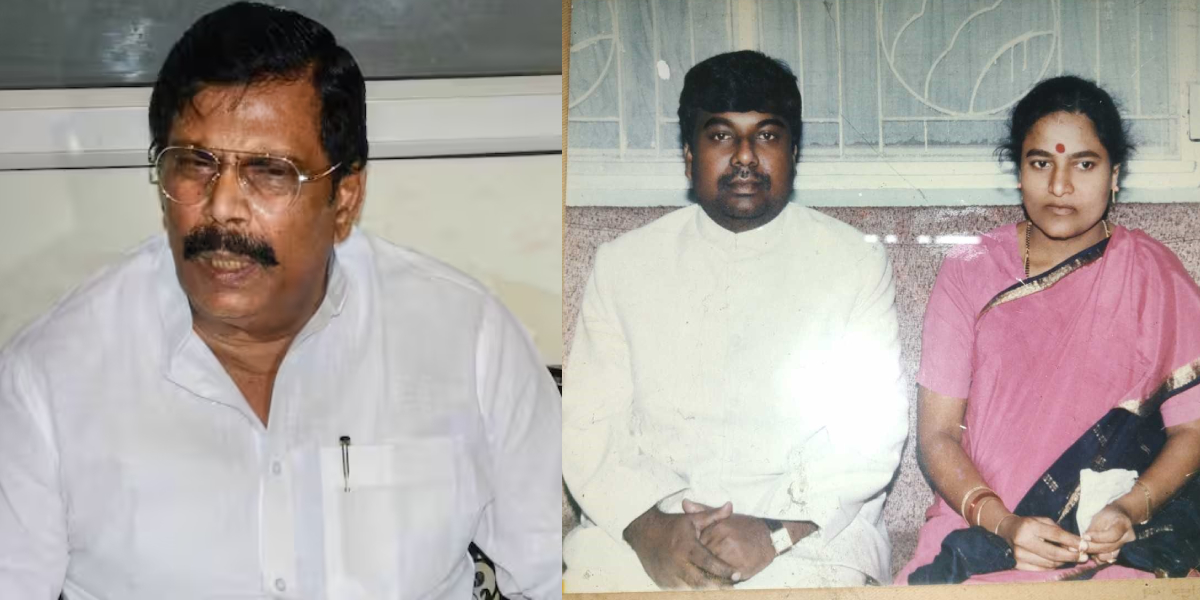
Anand Mohan Singh (left), and G Krishnaiah and T Uma Devi. (Supplied)

The Supreme Court is scheduled to hear on Monday, 4 March, a plea challenging the remission granted to former Lok Sabha member Anand Mohan, who was serving a life term in the 1994 murder case of the then Gopalganj district magistrate G Krishnaiah.
A bench of Justices Surya Kant and KV Viswanathan is slated to hear the plea filed by Uma Krishnaiah, the wife of the slain officer.
Mohan was released from Bihar’s Saharsa jail in April last year, after serving more than 14 years in prison, following a 10 April, 2023, amendment to the Bihar Prison Manual by the state government, whereby the restriction on early release of those involved in the killing of a public servant on duty was done away with.
Critics claim the government amended the Bihar Prison Manual to facilitate the release of Mohan, a Rajput strongman.
Mohan was awarded the death penalty on 5 October, 2007, by a trial court, which was commuted to rigorous life imprisonment by the Patna High Court on 10 December, 2008, and confirmed by the Supreme Court on 10 July, 2012.
Krishnaiah, who hailed from Telangana (then a part of Andhra Pradesh), was beaten to death by a mob in 1994 when his vehicle tried to overtake the funeral procession of gangster Chhotan Shukla in the Muzaffarpur district of Bihar.
Mohan, then an MLA, was leading the procession and was alleged to have instigated the mob to kill Krishnaiah.
While hearing the plea against Mohan’s remission on 6 February, the apex court asked the former MP to deposit his passport and record his presence at the local police station every fortnight.
On 11 August last year, the top court asked the Bihar government how many of the convicts, granted remission along with Mohan, were held guilty of murdering public servants on duty.
The Bihar government informed the court that a total of 97 convicts, including Mohan, were prematurely released at the same time.
The petitioner contended the life imprisonment awarded to Mohan meant incarceration for his entire natural life and it could not be mechanically interpreted to last just 14 years.
“Life imprisonment, when awarded as a substitute for the death penalty, has to be carried out strictly as directed by the court and would be beyond the application of remission,” Krishnaiah’s wife said in her petition.
“Neither the chief minister nor the prime minister should have the authority to reduce the sentence of a criminal like this. Only the Supreme Court should have the authority over that,” Uma Devi told South First earlier.
She asserted that law and order would not prevail if each and every chief minister started taking such decisions.
She demanded that Anand Mohan’s life imprisonment continue.
Mohan’s name figured in a list of more than 20 prisoners who were ordered to be set free under a notification issued by the state’s Law Department, as they had spent more than 14 years behind bars.
The remission of his sentence followed a 10 April amendment to the Bihar Prison Manual by the Nitish Kumar government, whereby the restriction on early release of those involved in the killing of a public servant on duty was done away with.
Bihar People’s Party (BPP) member and gangster Kaushlendra alias Chhotan Shukla was murdered in 1994.
An altercation over his funeral triggered the attack on the IAS officer Krishnaiah, which was led by Anand Mohan Singh, founder of BPP.
The 37-year-old bureaucrat was attacked and killed on the evening of 5 December, 1994, in a village on the outskirts of Muzaffarpur city by the mob protesting with the body of Shukla.
Krishnaiah’s driver Deepak Kumar’s testimony was key to getting Anand Mohan convicted.
Mohan was sentenced to death by a lower court in 2007, along with two others. But the Patna High Court later commuted the penalty to life imprisonment. Mohan has been in jail since 2007.
Four others, including Mohan’s wife Lovely Anand, were given life imprisonment and a fine of ₹25,000. The remaining 29 accused were acquitted in the joint trial.
(With PTI inputs)



