


Published Apr 03, 2026 | 12:52 PM ⚊ Updated Apr 03, 2026 | 12:52 PM

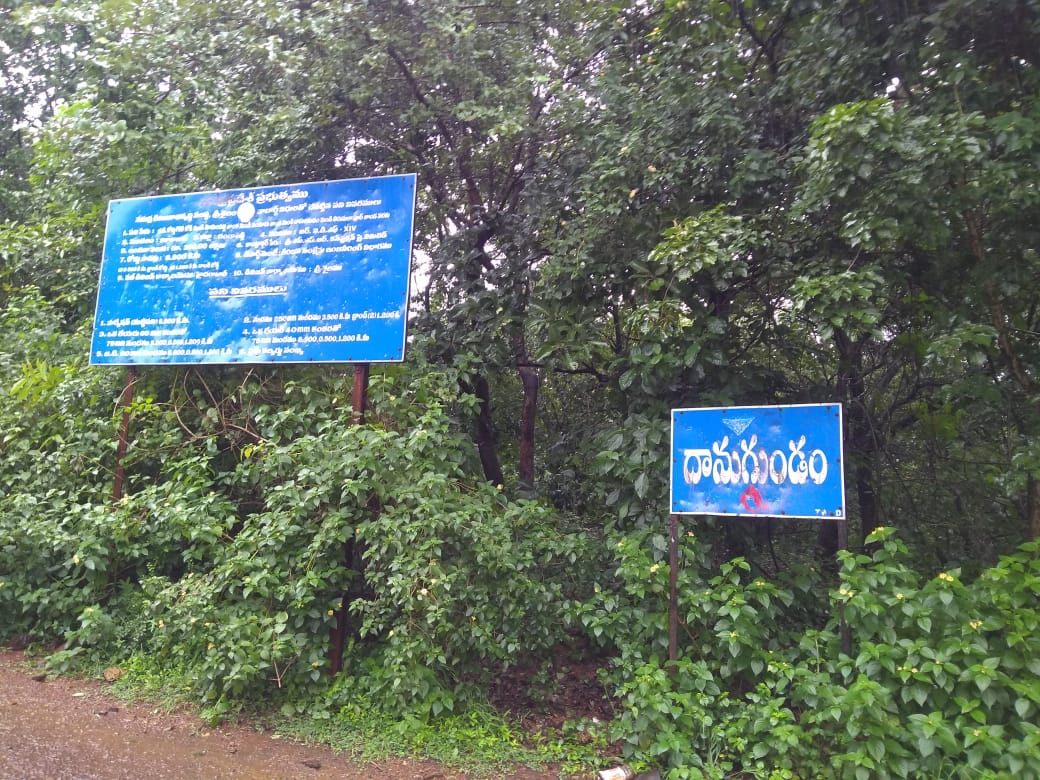
Telangana Chief Minister A Revanth Reddy handed over the Damagundam reserve forest land to the Indian Navy in January 2024. (Adv Spandana Reddy/
Synopsis: The court held that the project complied with conditions set by the Ministry of Environment, Forest and Climate Change, and adjourned the PIL for six months—coinciding with the planting season (May to December). The judges stressed the need for continued monitoring and insisted that environmental safeguards be strictly followed as the project advances.
The Telangana High Court on Thursday, 2 April, permitted the Indian Navy to proceed with its proposed Very Low Frequency (VLF) communication station in the Damagundam reserve forest area of the Vikarabad district.
While giving the green signal, a Division Bench of Chief Justice Aparesh Kumar Singh and Justice GM Mohiuddin expressed satisfaction over the ongoing compensatory afforestation.
However, the court stopped short of closing the matter. It kept the Public Interest Litigation (PIL) pending for another six months to monitor the progress of afforestation on the ground.
The PIL, filed by the Damagundam Forest Protection JAC–Save Damagundam, challenged the diversion of approximately 2,900 acres (1,174 hectares) of reserve forest land in Pudur village for the project. The petitioners raised concerns over environmental damage, biodiversity loss, potential threats to local water sources, and the adequacy of compensatory measures.
The VLF station is a strategically critical project—India’s second such facility after Visakhapatnam. Designed for secure, long-range communication with naval ships and submarines, it will cover the Indian Ocean Region, the Arabian Sea, and the Bay of Bengal.
Estimated to cost around ₹3,200 crore, the project involves the installation of large transmitter towers. Vikarabad was chosen for its flat terrain and absence of high mountains, both favorable for signal transmission. Defence Minister Rajnath Singh laid the foundation stone in October 2024.
The Chief Conservator of Forests submitted an affidavit detailing afforestation progress: plantation has been completed on 688.5 hectares, with the remaining 581.5 hectares to be taken up in 2026–27 and 2027–28.
The Chief Conservator said that the survival rate of saplings stood at 89.88%, with about 8.23 lakh of the 9.16 lakh planted still alive. The plan also includes replanting dead saplings and promoting assisted natural regeneration in degraded forest areas.
In total, compensatory afforestation is planned over roughly 2,348 hectares across Vikarabad and Rangareddy districts. Authorities have committed to maintaining the plantations for 10 years to ensure full survival.
The court held that the project complied with conditions set by the Ministry of Environment, Forest and Climate Change, and adjourned the PIL for six months—coinciding with the planting season (May to December). The judges stressed the need for continued monitoring and insisted that environmental safeguards be strictly followed as the project advances.
While the order effectively removed immediate legal hurdles, allowing construction and related work to proceed, the matter would remain under judicial watch.
The project has previously drawn protests from environmental groups and residents concerned about its impact on the Anantagiri hills and surrounding forests, including risks to flora, fauna, and long-term ecological balance.
The state government, however, has backed the project, emphasising its national security importance and noting that all necessary clearances were granted during the previous BRS government.


