

Published Aug 13, 2026 | 9:40 AM ⚊ Updated Aug 13, 2026 | 9:40 AM

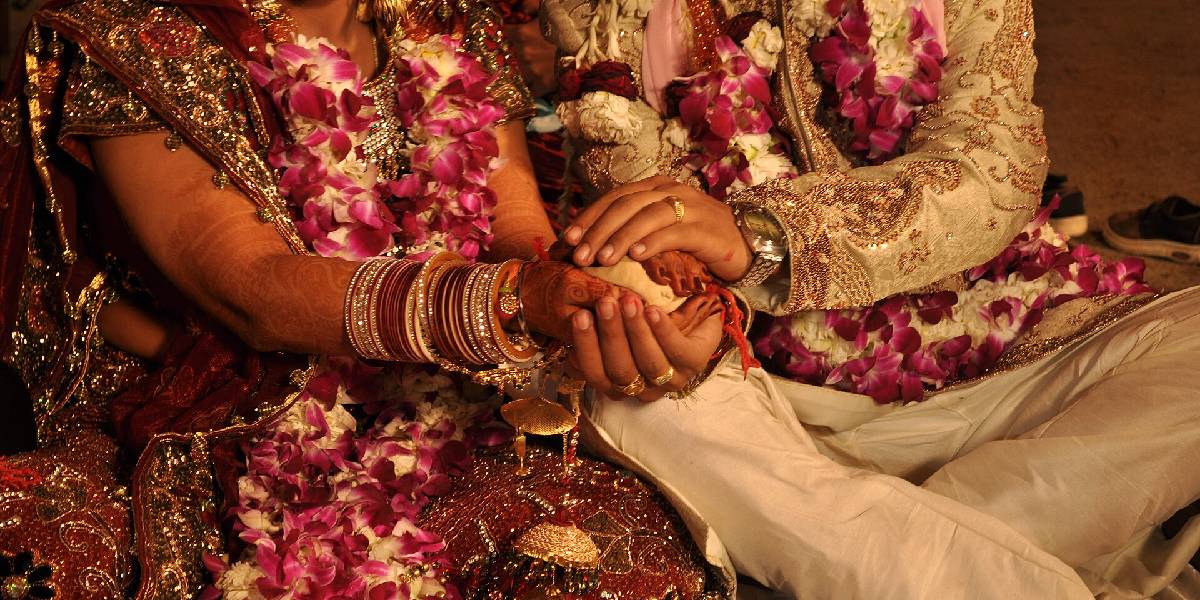
Indian wedding representational image

Synopsis: Kalyana Lakshmi and Shaadi Mubarak were launched in 2014 by the then Chief Minister K Chandrasekhar Rao to provide financial assistance for the marriage of unmarried women from SC/ST and minority communities. A PIL challenged the constitutional validity of the government orders, besides questioning the exclusion of poor unmarried girls belonging to upper caste communities from the scheme.
The Telangana High Court on Wednesday, 12 August, ordered a stay on eight government orders (GOs) that created and expanded the state’s flagship Kalyana Lakshmi and Shaadi Mubarak marriage assistance schemes. It also halted further disbursement of funds to beneficiaries until the next date of hearing.
Kalyana Lakshmi and Shaadi Mubarak were launched in 2014 by the then Chief Minister K Chandrasekhar Rao to provide financial assistance for the marriage of unmarried women from SC/ST and minority communities. The scheme was later expanded to include women from Backward Classes and Economically Backward Classes. The one-time grant was originally set at ₹51,000 and has since been increased in stages to ₹1,00,116.
The interim stay on the schemes came after the state government failed to file a counter affidavit in the hearing of a public interest litigation (PIL), despite being granted time at an earlier hearing on 8 July. The matter has now been posted for 9 September.
Also Read: Story of Telangana’s consistently underutilised funds
The PIL was filed by Advocate Vijay Gopal, challenging the constitutional validity of the eight GOs that brought the welfare schemes into force and subsequently modified them between 2014 and 2019.
The state government, the Backwards Classes Welfare, Scheduled Castes Development, Tribal Welfare, Minorities Welfare, Women Development and Child Welfare, and Finance departments were all made respondents.
The petition argued that the two schemes were never backed by any law passed by the state legislature and that the executive encroached upon legislative functions by framing the policies and setting eligibility criteria, benefit amounts, and age limits. The petition stated that issuing such GOs without state assembly approval violates Articles 245, 246, 162, and 13(2) of the Indian Constitution.
The petition also contended that an expenditure of around ₹13,485 crore for the scheme from public money between 2014-15 and 2025-26 raised questions under Articles 202(3), 204(30), 266(3), and 283(2) that govern withdrawals from the state’s Consolidated Fund.
Invoking Schedule 7 of the Constitution, the petitioner maintained that marriage is a private contract between individuals and does not justify the use of the public funds without legislative backing.
Arguing that welfare disbursals of this scale could not rest on executive orders alone, the Gopal said that the state had not pointed to any statutory provision underlying the scheme despite being asked to do so.
The petition cited the 1965 Supreme Court ruling in AH Magermans V/s SK Ghose and Others to argue that making policies and setting criteria are essential legislative functions that cannot be delegated to the executive.
Also Read: Telangana issues order for ₹1L financial assistance to eligible minorities
Separately, the petition invoked Article 15 to raise an issue with the exclusion of poor unmarried girls belonging to upper caste communities from the scheme.
The petition challenged the state’s claim of empowering unmarried women and girls through the scheme, pointing out that the benefit cheques were being issued in the name of the bride’s mother rather than the bride. It flagged that no action was taken against people claiming benefits without meeting eligibility criteria.
The petition also expressed concern that large cash incentives could inadvertently encourage early marriages in vulnerable families.
Also Read: After Andhra, Tamil Nadu may consider incentives to boost fertility
Justice Shravan Kumar noted the arguments made in the petition and considered the constitutional challenges to be of serious in nature.
The court observed that despite granting time to file a formal counter-affidavit justifying the legal authority behind the schemes, the state government failed to do so, and the office of the Additional Advocate General requested more time.
As no counter was filed and considering the gravity of the issue, the judge granted a stay on the operation of eight GOs and halted payouts to the beneficiaries, pending the next hearing.
The state government has been ordered to file its official written response ahead of the next scheduled hearing on 9 September.
(Edited by Majnu Babu).



