

Published Apr 22, 2026 | 11:22 AM ⚊ Updated Apr 22, 2026 | 11:22 AM

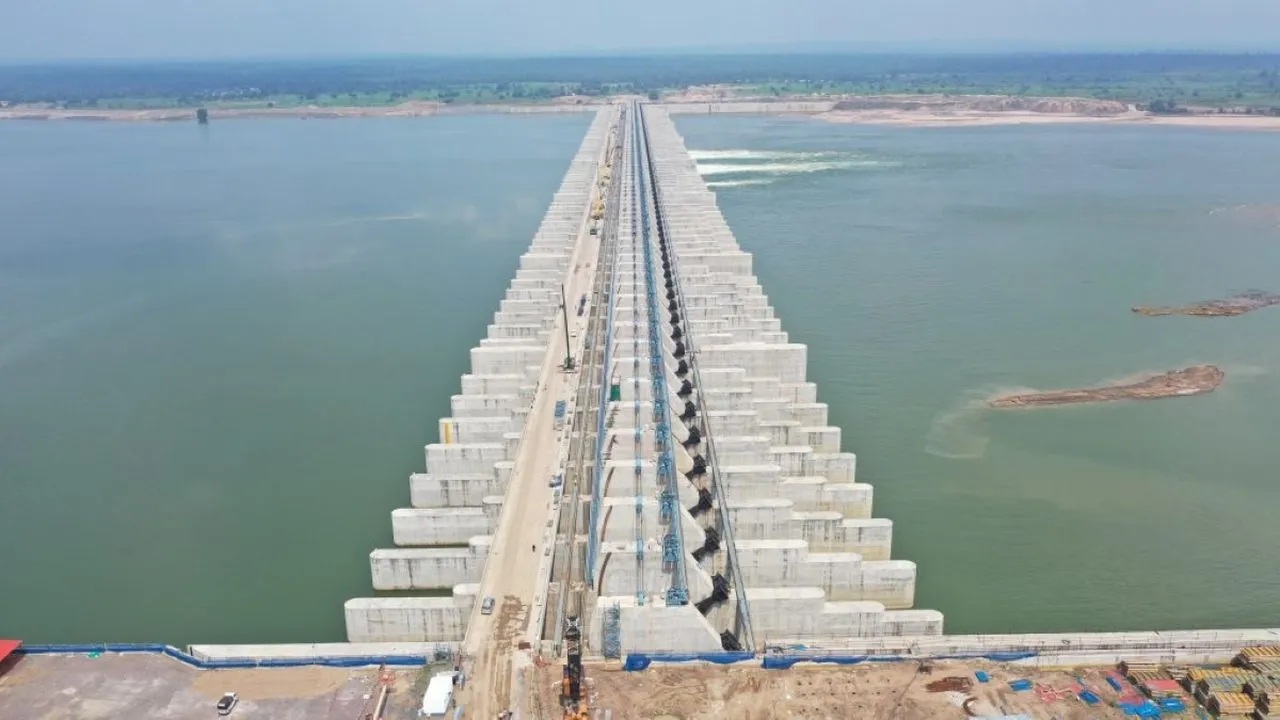
The PC Ghose Commission’s findings included negligence, hiding facts, and financial irregularities in the construction of the Medigadda, Annaram, and Sundilla barrages of the Kaleshwaram project.

Synopsis: The Telangana High Court ruled that no action can be taken based on the report of the Justice PC Ghose Commission, which was set up to probe alleged irregularities in the Kaleshwaram irrigation project. A bench observed that the commission had failed to follow due procedure while arriving at its findings. The court directed that the commission’s report “shall be inoperative” for now.
In a significant relief to BRS president and former chief minister K Chandrashekar Rao and former minister T Harish Rao, the Telangana High Court on Wednesday, 22 April, ruled that no action can be taken based on the report of the Justice PC Ghose Commission, which was set up to probe alleged irregularities in the Kaleshwaram irrigation project.
A bench comprising Chief Justice Apareesh Kumar Singh and Justice GM Mohiuddin observed that the commission had failed to follow due procedure while arriving at its findings. The court directed that the commission’s report, which had indicted Chandrashekar Rao and others, “shall be inoperative” for now.
The petitions challenged Government Order (GO) Ms No. 6 issued on 14 March 2024, by the government led by A Revanth Reddy, which constituted the commission under former Supreme Court judge PC Ghose to examine alleged irregularities in the Kaleshwaram project.
Also Read: Revanth Reddy accuses KCR of Rs 1 lakh crore Kaleshwaram scam
While upholding the validity of the commission’s appointment, the high court flagged procedural lapses in the way the inquiry was conducted and its conclusions drawn. It barred any immediate action against Chandrashekar Rao (KCR), Harish Rao, and others based on the report.
The state government is expected to challenge the high court’s order in the Supreme Court.
The former chief minister had sought suspension of the report mainly on the grounds that he was not given an opportunity to defend himself or submit evidence in support of his claims before the Commission, which, he said, was in violation of the principles of natural justice.
In his petition, KCR said that he should have been given the opportunity available under Section 8-B and Section 8-C of the Commissions of Inquiry Act, 1952. It was not within the ambit of the Commission to prejudicially affect any person’s reputation under the pretext of inquiry without allowing him to be heard.
KCR drew the court’s attention to how the Commission had violated the provisions of the Commission of Inquiry Act, 1952, under which it was set up, while finalising the report.
He said that the terms of reference of the Commission presumed negligence, irregularities, and lacunae in the planning, designing, and construction of the Medigadda, Annaram, and Sundilla barrages of the Kaleshwaram project.
KCR also pointed out that it was incumbent upon the Commission to allow a person before any comment is made or opinion is expressed in its report, which is likely to prejudicially affect the person. Needless to emphasise that failure to comply with the principles of natural justice renders the action non-est (legally not valid) as well as the consequences thereof.
(With inputs from Sumit Jha.)



