


Published Feb 27, 2026 | 11:52 AM ⚊ Updated Feb 27, 2026 | 11:52 AM

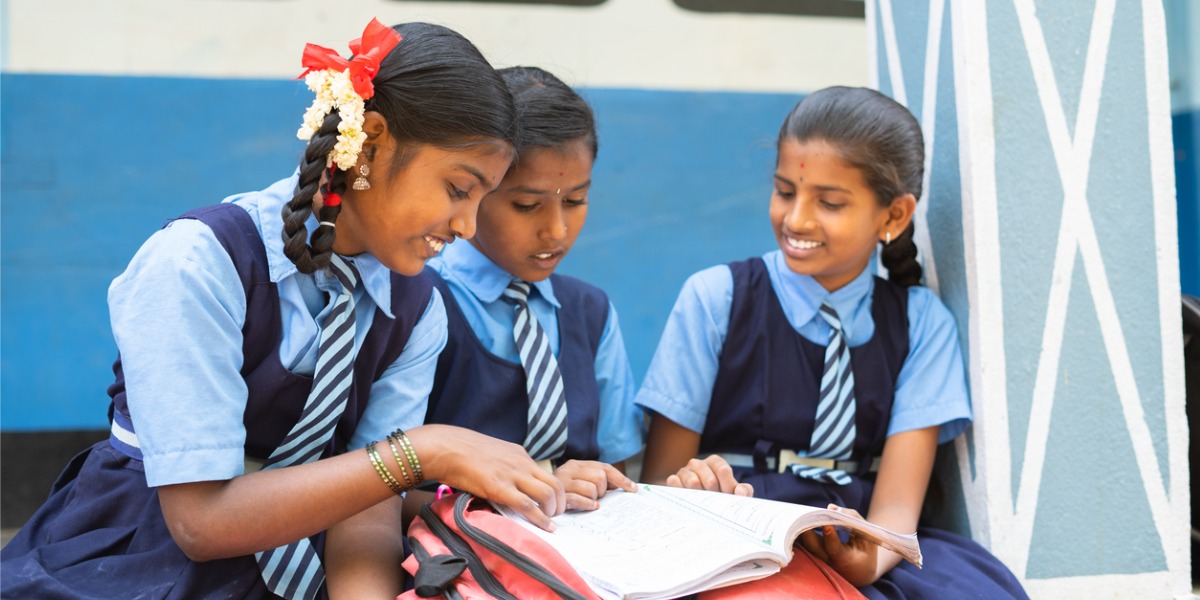
Chief Minister A Revanth Reddy said every student would be provided breakfast along with milk. (Representative pic/iStock)
Synopsis: Besides providing a nutritious breakfast, the government will also provide comprehensive school kits to all students, along with uniforms and textbooks.
The Telangana government will reintroduce the Breakfast Scheme in all government schools from the 2026–27 academic year.
Introduced by the previous BRS government, the scheme was halted in December 2023 after the Congress had come to power.
Announcing the decision at a high-level education policy review on Thursday, 26 February, Chief Minister A Revanth Reddy said every student would be provided breakfast along with milk.
Milk procurement will be undertaken through Vijaya Dairy. Officials have been directed to employ technology-based systems to monitor calorie intake levels to ensure nutritional standards are maintained.
The breakfast initiative was originally introduced by the previous K Chandrashekar Rao-led BRS government. Officially known as the Chief Minister’s Breakfast Scheme, it was launched on 6 October 2023, followed by its statewide rollout on 24 October, around the Dasara festival.
The scheme aimed to provide free nutritious breakfast to students from Classes 1 to 10 in government schools. It was estimated to benefit nearly 20 to 23 lakh students in approximately 43,000 schools.
The menu included items such as idlis with sambar, pongal and upma, with two options offered daily on a rotating basis. The annual budget allocation for the programme was around ₹400 crore.
After the Congress government assumed office in December 2023, the scheme was reportedly discontinued, drawing criticism from BRS leaders. The present government has now decided to revive the programme with modifications.
At Thursday’s review meeting held at the Command Control Centre, the chief minister also directed that comprehensive school kits be distributed to all students from this academic year, along with uniforms and textbooks.
The kit will include a schoolbag, pens, pencils, sharpeners, colour pencils, a geometry box, a dictionary, shoes and socks. Necessary budgetary allocations are to be ensured.
A committee headed by a retired judge or retired chief secretary will make decisions on fee regulation in schools.
The chief minister directed district-level inspections under the supervision of district collectors and district education officers to examine fee structures and submit reports.
The decision was taken based on the report of the Telangana Private School Fee Regulatory and Monitoring Commissioner. The report outlined fee regulation models followed in other States and recommended measures suited for Telangana.
Draft proposals will be placed in the public domain to invite suggestions from parents, intellectuals and civil society members before finalisation.
The government has also decided to launch 100 Telangana Public Schools in as many Assembly constituencies outside Hyderabad city from this academic year. One model school will be developed in each constituency on a pilot basis.
The chief minister said these institutions should be developed on the lines of the Arutla Telangana Public School in Manchal mandal of the Rangareddy district. They must have comprehensive infrastructure, including modern classrooms, playgrounds, adequate teaching staff and transportation facilities.
Under the Core Urban Region Economy (CURE) programme, engineers will design and build government schools on a par with corporate institutions using modern technology.
Twelve integrated schools proposed under CURE are to be completed within a year. These institutions are expected to match standards comparable to reputed schools such as Bharatiya Vidya Bhavan and Jubilee Hills Public School in Hyderabad.
Additionally, 17 schools will be upgraded, while infrastructure improvements, including additional classrooms, will be provided to 164 schools under the CURE initiative.
As part of the government’s 99-day programme, one full week will be dedicated to education. Public representatives and officials will visit schools and colleges to identify infrastructure gaps and resolve any existing issues.
Emphasising the impact of Artificial Intelligence (AI), the chief minister directed that AI education be introduced from the school level. Short-term training programmes will be organised to equip teachers and lecturers with AI knowledge.
AI-based courses are to be introduced immediately in polytechnic colleges and Advanced Technical Centres (ATCs). Outdated courses will be dropped. The focus will be on ensuring that students graduating from polytechnics and ATCs secure immediate employment opportunities.
Reiterating the government’s commitment to higher education, the chief minister referred to the ₹1,000 crore already allocated to Osmania University. He asked Higher Education Council Chairman Prof Balakrishna Reddy to submit a detailed report on the financial needs of other State universities.
Telangana Education Commission Chairman Akunuri Murali and members presented their education policy report. The Commission said it examined best practices from countries such as the United States, Vietnam and Malaysia, as well as successful models from various Indian States.
Following the presentation, the chief minister assigned a committee headed by Government Advisor K Keshava Rao to identify provisions requiring statutory backing and those that can be implemented from the next academic year.
The meeting concluded with a renewed emphasis on strengthening public education infrastructure, ensuring nutrition security for students and aligning Telangana’s education system with global standards.
(Edited by Majnu Babu).


