

Published Apr 01, 2026 | 7:33 PM ⚊ Updated Apr 01, 2026 | 7:33 PM

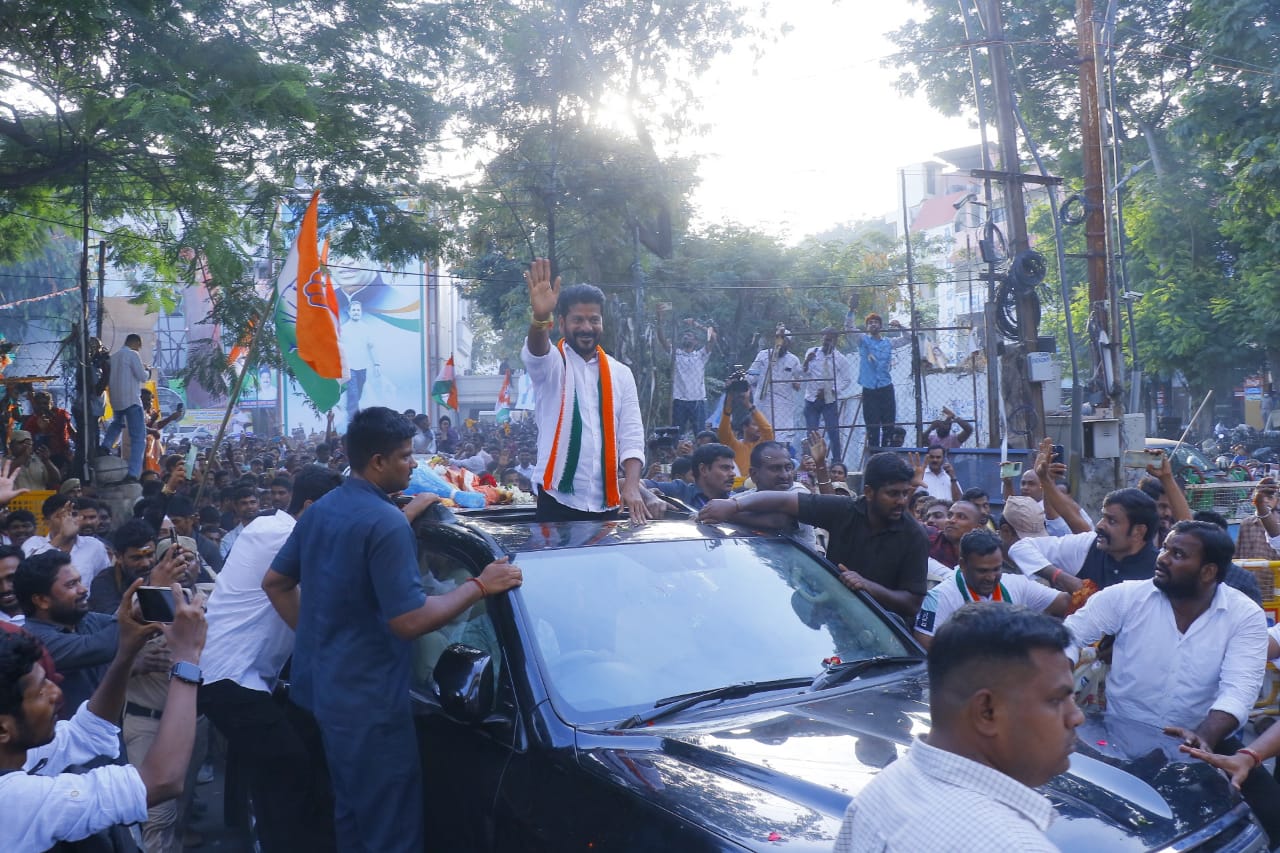
Telangana Congress President A Revanth Reddy in a victory rally post Congress win in Telangana.
Synopsis: Telangana Chief Minister A Revanth Reddy assumed power, promising democratic governance. However, the actions of the state government indicate otherwise. Now, with the introduction of the hate speech Bill in the Assembly, the Congress government seems to be creating a legal backing for its actions against critics, including political opponents, social media activists, and online journalists.
Shortly after the Assembly election results were declared in Telangana on 3 December 2023, Revanth Reddy issued a statement: “In addition to the Congress party’s six guarantees, we promised democratic governance as a seventh guarantee. Standing by that word, we once again pledge to the people that we will make no compromises in upholding democratic values.”
This was the essence of that statement.
In reality, democratic governance prevailed in Telangana for 10 years under the leadership of KCR (BRS chief K Chandrasekhar Rao). However, certain individuals deliberately exaggerated minor issues into major controversies and engaged in sustained malicious propaganda.
As anticipated, from the very moment Revanth Reddy assumed office as the chief minister, the trampling of this seventh guarantee — along with the six previously promised guarantees — began in earnest.
The ruling Congress party has resorted to filing cases against political opponents, arresting them, and sending them to jail. In some instances, there have even been incidents of physical violence resulting in the deaths of several BRS activists.
As the voices questioning the government refused to be silenced despite the numerous cases filed against them, Revanth Reddy began asserting that his administration intended to introduce a new law to regulate social media.
True to this assertion, the government introduced the Telangana Prevention of Hate Speech and Hate Crimes Bill–2026 in the state Assembly on 30 March, drawing clear parallels with the legislation recently introduced in the Karnataka Assembly.
While the title of the Bill suggests an intention to curb hate speech, a careful reading of its provisions — and the speeches delivered by Congress ministers and MLAs during its introduction — reveals what appears to be a different objective. The primary purpose of this legislation seems to be targeting political opponents, social media activists, and online journalists.
The bill contains several provisions that raise concerns about potential infringement on the fundamental right to freedom of expression. Through this legislation, the state government seeks to acquire sweeping powers to register cases against individuals based on what they speak, write or broadcast. The proposed law appears to undermine the freedom of expression guaranteed under Article 19 of the Constitution and risks becoming a tool for political retaliation against ordinary citizens.
Despite the Bharatiya Nyaya Sanhita (BNS) already defining what constitutes hate speech and prescribing penalties for such offences, the Telangana government has chosen to introduce a new law with fresh definitions and additional punitive provisions.
Over the past two and a half years, the Congress government has registered numerous cases against online journalists and social media activists across the state. A few months ago, the Telangana High Court expressed serious concern over such cases, observing that they amounted to an infringement of freedom of expression. It issued clear guidelines to be followed before registering future cases related to social media activity.
However, instead of complying with these directions, the state government challenged the judgement in the Supreme Court. However, the Supreme Court also upheld the verdict and delivered a stern rebuke to the state government.
Therefore, many observers believe that the Revanth Reddy government — having found its ability to file new cases against social media activists restricted by judicial intervention — is now attempting to create an alternative legal mechanism through this new legislation.
The government’s intent is particularly evident in the definition of the term “habitual offender”. The legislation empowers authorities to categorise anyone with more than one pending case as a habitual offender, enabling stricter punitive action.
Given that cases have reportedly been filed even for posts such as “There is a power outage in my area” or statements regarding demolitions carried out by HYDRAA (Hyderabad Disaster Response and Asset Protection Agency), the inclusion of such provisions naturally raises serious concerns.
There is apprehension that online journalists and social media activists already facing cases could be branded as habitual offenders and subjected to further legal harassment.
By granting legal protection to officials registering cases under this legislation, the bill may create conditions that encourage misuse of authority for political purposes.
The tabling of the Hate Speech Bill immediately after suspending members of the principal Opposition party, the BRS, represents what many view as a troubling development from a democratic standpoint.
However, it is noteworthy that the CPI and the BJP, along with several members within the Congress party itself, have voiced opposition to the bill. In response to this situation, the Speaker announced that the bill would be referred to an Assembly Select Committee for further scrutiny.
On one hand, Rahul Gandhi begins his day holding a copy of the Constitution and speaking about democratic values. On the other hand, his party colleague Revanth Reddy appears to be moving toward introducing laws that critics argue could suppress dissent.
Having come to power under the slogan of ushering in “Indiramma Rajyam,” the present administration is now being compared by some observers to governance practices reminiscent of the Emergency era.
At a time when hate speech targeting religion, caste, gender, and other sensitive issues is increasing on social media platforms, no one would oppose reasonable measures to curb such content. However, instead of strengthening the implementation of existing legal provisions, the government has chosen to introduce stricter legislation, raising questions about its intent.
Intellectuals across Telangana must carefully examine the implications of this development. Civil society representatives who supported the Congress party before the 2023 elections must now at least break their silence and express their views on this legislation. If they remain indifferent today, there may be no one left to speak up tomorrow should such laws be used against them.
When the Congress government in Karnataka introduced similar legislation, civil society groups, media organisations, and Opposition parties expressed serious concerns about its potential impact on civil liberties and freedom of expression. Despite this opposition, the Siddaramaiah administration passed the bill in the Legislative Assembly.
However, even after more than three months, the Governor has not yet granted assent. Several activists and civil society organisations in Karnataka are prepared to challenge the legislation in court if it becomes law.
Since the Telangana government has largely replicated the Karnataka model, it appears likely that a similar situation could unfold here as well.
(Views are personal. Edited by Muhammed Fazil.)


